Drug Wars Wounding HIV Prevention in Brazil
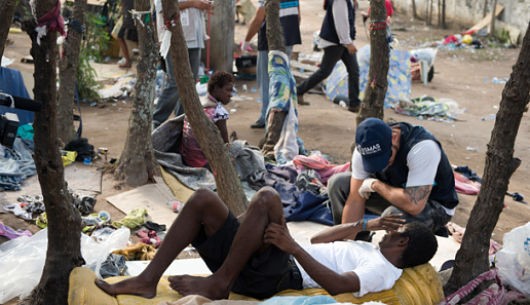 In 2006, the Brazilian government made attempts to crack down on the drug problem that has ravaged most of South America. The Brazilian Congress did this by passing a law, known simply as the Drug Law. The strategy depersonalized drug possession for personal consumption and attempted to address it as a healthcare issue.
The strategy meant that citizens who would be caught using drugs, such as crack, would be sent to health facilities to be rehabbed, thus allowing law enforcement to deal with more pressing concerns, such as drug trafficking cartels.
Brazil is known to be one of the most dangerous and captivating places in the world. It is also one of the most active drug trafficking countries in the world. According to a United Nations Office on Drugs and Crime report, Brazil has become the largest cocaine market in South America.
In 2014, the Brazilian government allocated over $2 billion on the “Crack: É Possível Vencer” law, which literally translates to “Crack: It Can Be Overcome.” The law is supposed to be managed by the healthcare, education and social justice ministry, but also includes funds for drug interdiction along Brazil’s borders.
Providing drug users with treatment would allow them to rejuvenate their life and help strengthen their communities. Unfortunately, standards such as the crack law have led to blurred policies that are crippling the healthcare system, specifically in Rio de Janeiro and Sao Paulo.
Police raids have led to many youths being incarcerated in the two cities. Most of these children are petty users or traffickers for bigger cartels. The police remove them off the streets and pressure them to feel that they need rehabilitation and treatment.
In turn, pressure from politicians in the city forces medical personnel to give these children medical treatment, even when it is unnecessary. Although it is campaigned as a successful and strategic method to clean up the city, it is in fact wasting precious resources that could be used to successfully fight problematic drug abuse or other diseases, such as HIV.
Brazil has one of the highest HIV rates in Latin America. This is troubling especially in light of the fact that it is considered to be one of the most developed countries in all of South and Central America. According to UNAIDS, Brazil, whose total population was about 200 million, had an HIV/AIDS population of 730,000 in 2013. Compare this to India, a country whose population is five times the size of Brazil’s but whose HIV/AIDS population is only 2.1 million.
HIV prevention and testing have suffered greatly due to these policies. There was a 32% increase in HIV testing between 2004 and 2013. By 2014, that progress had decreased by almost 13%. This is because resources are being strained by the drug prevention laws.
A shift in policies and implementation is needed in order to combat the real health issues in Brazil, which are diseases such as HIV. If the Brazilian government does not allocate resources correctly, the war on drugs will have failed on both fronts: Brazil will have failed to prevent both drugs from entering the country and HIV populations from increasing.
– Adnan Khalid
Sources: UNAIDS 1, UNAIDS 2, UNAIDS 3, UNODC, Washington Office of Latin America
Photo: WBUR
