Education and Healthcare Access in Kenya
I will never forget hearing the story about the woman in Kenya who ran away when a soldier pulled out a condom. She had heard a rumor that if someone tried to use a condom, it meant that they had HIV.
In Kenya, healthcare and education about sex and general health is limited. Moreover, the small amount of health and sex education that does exist is often misguided.
In the past ten years, three people that my family and I were close to died of HIV. All three of them were parents and the breadwinners of the family. On Monday, my mother called to inform me that yet another person that we know is ill, and may be dying of HIV.
According to USAID, around 1.6 million people are living with HIV/AIDS in Kenya. In addition, about 1.1 million children in Kenya are orphans because of AIDS.
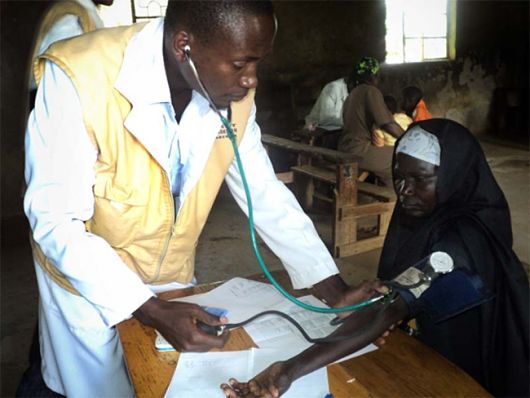
People in Kenya with HIV/AIDS, and those at risk, often lack access to healthcare.
In Kenya, healthcare is a constitutional right, but the cost is too high for a majority of Kenyans. In addition to the cost, the closest healthcare facility is often way too far away for poor Kenyans to reach.
According to the World Bank, “only 20 percent of Kenyans have access to some sort of medical coverage.” In April 2014, the Kenyan government launched the Health Insurance Subsidy Program in order to make healthcare more affordable for people in Kenya. While this is a good first step, it does not help the many people who are unable to reach a healthcare facility.
An article by Allianz states that if poor Kenyans living in rural areas are able to seek healthcare, they are often only able to find treatment at a primary care facility. These facilities are often under-staffed and under-equipped, and have limited medicines. One of the three people in my life who died of HIV/AIDs died in a hospital due to HIV-related dehydration. It is possible that he could have been saved by something as simple as an IV if the doctors had known what to do.
Luckily, organizations like USAID and the World Bank are working on treating and preventing HIV/AIDS and giving Kenyans greater access to healthcare.
In 2003, USAID launched the President’s Emergency Plan for AIDS Relief. The program is focused on prevention, treatment and care. These programs have made steps in the past 12 years. For instance, mother-to-child transmission rates have dropped from 28.3% to 8.5%.
However, transmission rates are not the only numbers that have been dropping. Between 2010 and 2013, USAID’s funding to Kenya was cut in half.
HIV/AIDS is continuing to spread in Kenya, and the people who need aid the most are not receiving it. The United States could be doing much more to aid the poor in Kenya. So why is the government decreasing funding, rather than continuing the work that has just begun?
– Clare Holtzman
Sources: Allianz Worldwide Care, USAID, The World Bank
Photo: Zakat
