Health Crisis in Yemen Escalates
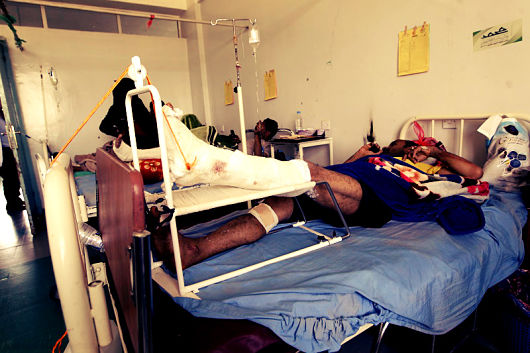
On June 15, 2015, United Nations Secretary-General Ban Ki-Moon urged the international community to work towards brokering lasting peace in Yemen, a country caught in a proxy war between Saudi Arabia and Iran.
Mr. Ban told reporters, “The region simply cannot sustain another open wound like Syria and Libya. We must find a way to end the suffering and begin the long road to peace.” The conflict has ravaged the poorest gulf nation and displaced more than one million people. The U.N. relief arm has therefore called for over US $1B in aid to support the country from completely collapsing.
One of the side effects of the devastating civil war in Yemen is the escalating health crisis. According to the World Health Organization (WHO), 15 million Yemenis are in dire need of health services. Those services become even harder to provide due to at least 53 health facilities being damaged – including 17 hospitals, as well as the Operations Room of the Ministry of Health in Sana’a, which manages all the emergency operations in Yemen.
The lack of adequate medical treatment, combined with terrified fleeing civilians leaving behind uncovered drinking water, has led to outbreaks of many diseases including malaria, pneumonia, diarrheal diseases, and dengue fever. Al-Khedhar Nasser Laswar, director of the Aden province’s Ministry of Health Office, stated that since the start of the conflict, over 4000 people have contracted dengue fever and over 140 people have died.
Dengue fever is endemic with annual spikes in the summer months. According to the latest WHO situation report of Yemen, last year’s dengue fever trended 55 cases by week 20. This year, over 300 cases had been reported in the same time frame. As the political situation worsens, those numbers have significantly increased with 38 new cases in week 24 (June 2015) of this year alone.
Unfortunately, providing adequate treatment is not the most daunting challenge health workers face. Aref Ahmed Ali, a coordinator of Yemen’s malaria control program said, “We do not know whether these fevers are coronavirus or something else.” The lack of medical equipment has made proper disease diagnosis currently unmanageable.
As patients enter the hospital, the inability to properly diagnose them has led to cases where some individuals have died within 24 hours of contracting acute fevers. This is on top of those suffering from dengue fever and typhoid. Such has caused alarming concern to spread among healthcare workers and patients alike.
The current health crisis in Yemen is a disaster and will continue to decline unless more aid is sent. Healthcare workers are in urgent need of trauma kits, vaccines, medical and surgical supplies, and fuel to run hospitals. The main concern of these workers is the well-being of their patients, who are also suffering from acute food shortages, crippling their natural ability to fight diseases.
Currently, WHO has revised its humanitarian response plan for June 2015 and requested a total of US $152M to meet the needs of the 15 million Yemenis they hope to serve. WHO’s response to the health crisis in Yemen has been supported by the governments of Japan, Russia, Finland and the Central Emergency Response Fund.
The United States must also answer the call and send foreign aid to help fight the escalating health crisis in Yemen. If the U.S. does not respond, the international community will have to be ready to deal with another full blown humanitarian crisis, perhaps worse than Syria and Libya as Mr. Ban has warned.
– Adnan Khalid
Sources: Al Jazeera, Reuters, UN 1, UN 2, World Health Organization 1, World Health Organization 2
Photo: Malaysian insider
