How a New Program is Providing Safer Schools for the World’s Poor
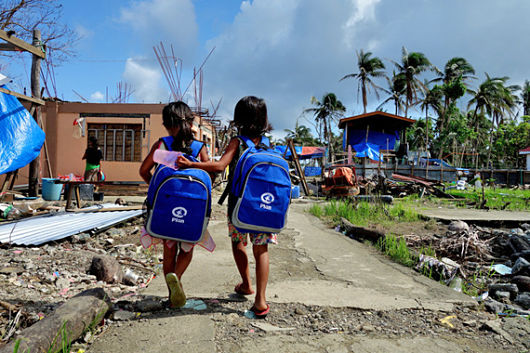
On April 25, 2015 a 7.8 magnitude earthquake hit Nepal. Two thousand schools collapsed, and five thousand others were damaged, forcing children to abandon their studies.
In the developing world nothing is more important than education, and when an already weak infrastructure crumbles under a natural disaster, it can be devastating for schools and a catastrophic defeat in the fight against poverty.
The Nepal earthquake was not an isolated incident. Every year natural disasters wreak havoc on underdeveloped nations, destroying the lives and property of millions. In 2013 the Philippines was the victim of a destructive typhoon that damaged 2,500 schools and disrupted the critical studies of 1.4 million children. And two years later, in March 2015, Cyclone Pam dramatically affected the Republic of Vanuatu.
The Global Program for Safer Schools (GPSS), recently created to address these issues, is managed by the Global Facility for Disaster Reduction and Recovery (GFDRR). The new initiative is not only building demolished school buildings but also reinforcing and retrofitting schools at risk in catastrophe prone areas.
GPSS maintains relationships with a wide range of international partners, including the United Nations and agencies such as UNICEF, UNESCO and UNISDR, international NGOs like Save the Children and private sector companies such as Arup. Additionally, it works with ministries of finance, public works and education, integrating risk considerations and investing in large scale education benefits for communities.
The lack of education around the world is shocking, and its effect on poverty are staggering. Nearly a billion people entered the 21st century unable to read a book or sign their name. Less than 1 percent of what the world spent every year on weapons was needed to put every child into school by the year 2000. Yet it didn’t happen. Based on enrollment data, about 72 million children of primary school age in the developing world were not in school in 2005.
Clearly education is a necessity, playing a vital role in alleviating poverty around the globe, but it is a luxury much of the world does not have, perhaps more so for girls. The state of school facilities in the developing world can be extremely fragile, and protecting them could make an immense difference.
Maternal deaths could be reduced by two thirds in the world if all mothers completed school, saving 98,000 lives. An extra year of secondary school boosts girls’ eventual wages by 15-25 percent. When women and girls earn income, they reinvest 90 percent of it in their families – buying books, medicine and bed nets and ensuring education for their children. Girls who stay in school for seven or more years typically marry four years later and have two fewer children than girls who drop out. And fewer dependents per worker allows for greater economic growth.
As much as 55 percent of the reduction in hunger from 1970 to 1995 can be attributed to improvements in women’s education and their status in society. School-based HIV/AIDS education programs are effective in preventing HIV infection, reducing the burden of this disease on families and communities.
Education can be one of the greatest tools fighting global poverty today. The Global Program for Safer Schools, through rebuilding disaster stricken institutions and retrofitting those at risk, ensures that disadvantaged children around the world have a chance.
– Jason Zimmerman
Sources: World Bank, Global Facility for Disaster Reduction and Recovery, Global Facility for Disaster Reduction and Recovery, New Internationalist, UNICEF, United Nations
Photo: Plan
