Sand Dam Construction Brings Water to Driest Areas
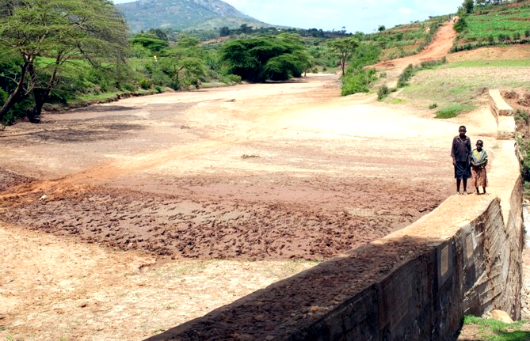
Dryland ecosystems are classified as having long periods of drought with very short seasons of intense, heavy rainfall. They cover approximately 40 percent of the earth’s surface, particularly in developing countries, where 1/3 of the global population lives.
Drylands have extremely limited access to clean drinking water. However, there has been a recent surge in the construction of sand dams, currently the most cost-effective technology in water collection.
Sand dams combine ancient rainwater collecting techniques, everyday building materials and local manpower to collect clean water that would otherwise become runoff, carrying away fertile topsoil essential to subsistence farming. A moderately sized dam can supply over 1,000 people with a consistent supply of filtered water, even during the year’s driest seasons.
According to reporter and producer Russell Beard, “A sand dam is a reinforced concrete wall built across a seasonal riverbed. Over three or four rainy seasons, sand is washed downstream and deposited in the reservoir behind the dam wall, which stores up to 40 percent of its volume as water. The sand slows evaporation, filters the water, and protects it from contamination by livestock or disease-carrying mosquitoes.”
Timber, rocks, cement, sand and water are the only raw materials needed to build a sand dam, all of which are supplied by donor funding. Local community members work together to build the dam structures and the women and girls are usually deemed responsible for water collection.
Excellent Development, a UK based nonprofit organization, has devoted its entire efforts to distributing sand dam technology to dryland areas, in hopes of providing stable water security to poor, rural populations all over Africa.
Excellent Development published a report, Sand Dams: The World’s Most Cost-Effective Method of Conserving Rainwater, which outlines the desperate need for sand dam construction.
The report states, “Drylands cover approximately 40% of the world’s land area and support 80% of the world’s poorest people, mostly in the rural areas of Africa and Asia. Approximately 10% of drylands display symptoms of land degradation: Water scarcity, sparse vegetation, soil erosion and nutrient depletion; further diminishing the ability of ecosystems to absorb and store rainwater.”
Sand dam construction not only provides clean drinking water, but also replenishes local ecosystems, increases food security and promotes community cooperation.
Executive Director of Excellent Development Simon Maddrell said, “Sand dams are the most cost-effective method of rainwater harvesting known. They have the potential to provide communities living in dryland areas with a clean local water supply for life, even during periods of drought. We know how much this is needed, especially in dryland areas of the world – where 80% of the world’s poorest people live. We also know that access to water in these areas is likely to worsen: Climate change is already altering rain patterns, creating more droughts, more floods and shorter, more intense rains.”
To date, Excellent Development has pioneered the construction of 838 sand dams, planted 935,000 trees, dug 1.5 million meters of terraces, built 43 community seed banks, built 51 school water tanks and brought fresh, filtered water to nearly one million people.
– Hanna Darroll
Sources: UNDP, The Water Project, Excellent Development
Photo: Excellent Development
