Brownsville, Texas: The Poorest U.S. City
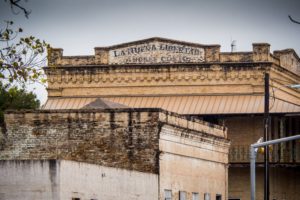 Last year, the United States Census Bureau, the federal statistical system that gathers information on the American people and economy, reevaluated a list of the country’s poorest cities. Topping the ranks was Brownsville, Texas, which passed McAllen, Texas, to become one of the most unprosperous places in the United States.
Brownsville is located at Texas’s southernmost tip, where it boarders Mexico and resides mere miles west from the Gulf of Mexico. Being so close to Mexico, Brownsville residents see immigration, as well as the often sorrowful lives of immigrants, firsthand. Violence from drug cartels is present as well.
Poverty, of course, is not restricted to non-U.S. citizens. The estimated median household income in Brownsville is only $29,619 per year. This is well below even Texas’ median income, which is $50,740.
To get a sense of the range in wealth of the states, look at median incomes across the board; Maryland is the wealthiest state, with a median household income of $70,004, while Mississippi is the poorest, with a median household income of $36,919. These statistics were updated in 2011. Even $36,919, the poorest state median, is well over Brownsville’s average.
Although income is not always a precise correlate to poverty, there is overlap. For one, low income may reflect low levels of education. In Brownsville, only 17.9 percent of residents over the age of 25 have a bachelor’s degree or anything of equivalent academic value; 4.9 percent have graduate or professional degrees and 14.5 percent are unemployed.
In 2012, the per capita income was $14,313, putting roughly 36 percent of Brownsville’s population below the poverty line. For a four-person family consisting of two adults and two children, the threshold for census reported impoverishment is an annual income of $23,283, nearly nine grand over Brownsville’s per capita income. This figure is not, however, in per capita terms.
Difficulties arise when comparing this kind of poverty, impoverishment within the American border, to poverty within developing nations. On the surface, and with much accuracy, destitute conditions in sub-saharan Africa dwarf the problems of Texans making $15,000 per year.
Yet there’s another way of inspecting the two tremendously unfortunate situations, in an attempt to compare them. Ask the question, “what is the norm, and how far from it does the community fall?”
In American, an industrialized, economic-powerhouse, living in a place like Brownsville should qualify as living among severe poverty. In other, less-developed parts of the world, places where industrialization has not occurred and the economies are relatively small, the rich may by American standards look as impoverished as Brownsville residents, for whatever cultural, geographical or socioeconomic reason. Being impoverished in that nation, then, takes on another light and drastically different imagery.
This is not to say that Brownsville residents have it worst off or even as bad as those living in the slums of Nigeria, for example. Clearly the latter, without access to medical care, a good education, a stable environment or a supportive social network of family members suffers from a barrage of insurmountable hurdles.
It is to say, however, that poverty happens everywhere, and that poverty should be addressed everywhere. No nation should, or will be able to, hide from it. If one does, it is negligence that fuels the problem.
— Adam Kaminski
Sources: City of Brownsville, 24/7 Wall Street, Chron
Photo: Flickr
