“Smart Tractors” Help Small Farmers Grow Profits
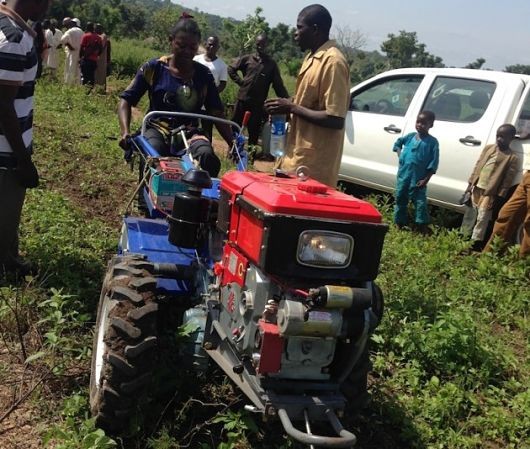
Nigeria is home to 35 million small farmers, 80 percent of whom hire laborers to help cultivate their fields. However, a shortage of labor combined with the expense of maintaining their land leads to vast under-cultivation, late planting and lost profits.
Access to better farming equipment would combat the labor shortages, but Nigerian farmers by and large cannot afford individual tractor ownership. The country lags an estimated 750,000 tractors behind the global average of tractors per 100 square kilometers of farmland.
A new company, Hello Tractor, believes they have a solution. Introducing a “smart tractor” designed for versatile use on small farms, Hello Tractor offers their product for $3,500, about the cost of cultivating 16 small farms in Nigeria.
Smart tractors are networked to the company’s cloud software, which connects tractor owners with farmers in need of equipment. Much like ride-sharing organization Uber, Hello Tractor’s sharing economy is designed to supply farmers with a low-cost, efficient alternative to time-consuming traditional labor.
“It takes about 40 days of manual labor to prepare the land,” said Jehiel Oliver, Hello Tractor founder. “Our tractors do it in eight hours.”
As with Uber, the Hello Tractor system operates by way of mobile technology, as the company clearly outlines: “A farmer simply sends a text requesting tractor service and our powerful software pairs that request with the nearest Smart Tractor owner in the market.”
Tractors then arrive within days of the request and enable farmers to complete the required labor 40 times more quickly than they would have been able to without tractor service. Farmers also use mobile banking to pay smart tractor owners for services, approximately one third of the cost of hiring manual laborers.
Hello Tractor asserts their smart tractors will enable higher land utilization as farmers more efficiently cultivate land, leading to a 25 percent increase in income and improved food security for Nigerian communities. The company believes that by its second year, use of smart tractors will enable 27,000 farmers to plant and harvest crops in a more timely and cost-effective manner.
They also estimate that 715 smart tractor owners and 2,500 service jobs will be created by the second year, offering those jobholders increased earning potential.
Hello Tractor also hopes to establish a lasting, sustainable system in Nigeria and other sub-Saharan countries. With farming resources often supplied by organizations dependent on grants and public funds, in Nigeria such equipment is limited in scale and impact. Oliver’s company hopes to promote economic growth from return on smart tractor investments and increased crop yields that will propel the nation toward greater self-sufficiency.
Based on Hello Tractor’s work, Oliver has been selected as a 2015 Echoing Green Fellow. Over the course of the next two years, fellows will receive funding ranging up to $90,000 to advance the implementation of their visions. Fellows also have the opportunity to participate in leadership development events and benefit from mentorship by top business professionals.
Oliver spoke fervently about Hello Tractor’s work: “We utilize technology to meet real needs for people that have been highly marginalized. These are women farmers who are living on, in some instances, two dollars a day or less. They have families.”
“For us to be able to bring technology to this population, to improve livelihoods, is powerful,” he continued. “And in a sustainable way. We’re really excited about it. We’re passionate about the cause.”
– Emma-Claire LaSaine
Sources: Hello Tractor, USAID, Echoing Green, ChicagoInno
Photo: ChicagoInno
