How the World Bank’s Financing Could Support Farmers in Congo
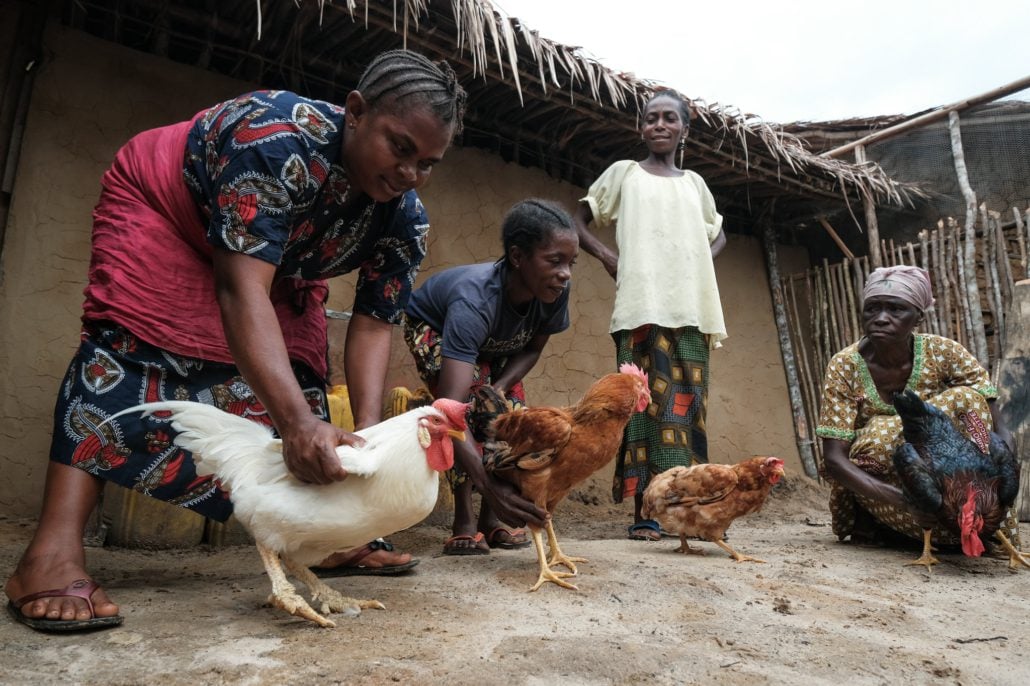
In August 2026, the World Bank Group approved $60 million in financing for the poultry and aquaculture industries in the Republic of Congo, also known as Congo-Brazzaville. The Poultry and Aquaculture Development Project aims to boost the competitiveness and resilience of these value chains. The World Bank’s financing is expected to boost local food production, create jobs and strengthen climate resilience.
Why is This Financing Needed?
In Congo-Brazzaville, a major poultry supply shortfall exists. Poultry imports were worth approximately $222 million in 2024, and domestic producers compete with imports from the United States, Brazil, Turkey and Poland. According to International Aquafeed’s reporting on World Bank project documents, imported poultry meat can reach the market at under $1,000 per metric ton, while local production costs can exceed $2,000 per metric ton.
Farmers Review Africa, citing the World Bank, reports that local poultry meat production meets only 0.4% of annual domestic demand.
Aquaculture also has room to develop. FAO data recorded 207 metric tons of aquaculture production in 2017. This is a historical figure, rather than a measure of production today.
In October 2026, Africanews reported that overfishing and pollution contributed to fish shortages in the Republic of Congo. It described giant catfish costing more than 7,000 CFA francs, compared with a minimum wage of 50,000 CFA francs, putting them beyond the reach of many low-income households. The report, citing FAO, put average fish consumption at about 25 kilograms per person each year and described aquaculture as a possible way to improve access.
The World Bank’s financing is expected to help domestic producers compete with imports by addressing obstacles such as limited access to finance, inadequate inputs, weak infrastructure and insufficient technical skills.
How is the $60 Million Set to Be Distributed?
International Aquafeed reports the following planned allocations: $23 million for competitively priced maize and soybeans for feed and commercial feed processing; $3 million for quality fingerlings and day-old chicks; and $2 million for technical skills, alongside upgrades to four agricultural stations as technology and innovation centers.
Farmers Review Africa also reports $12 million for productive, climate-resilient infrastructure in eight Protected Agricultural Zones, including power, solar energy, cold chains and digital connectivity; $9 million for policy and regulation; and $5 million for finance, agricultural insurance and digital services.
The project is also expected to provide grants for feed-production investments and help small and medium-sized feed manufacturers improve business planning and financial management. These measures could improve farmers’ resilience, but insurance and infrastructure cannot eliminate business or climate risks.
What Could This Money Provide?
The World Bank expects the project to generate more and better jobs for farmers, entrepreneurs, processors, traders and service providers, with particular attention to women and young people.
This focus matters for the Republic of Congo’s young population. A U.N. population projection puts the country’s median age at 18.7 years in 2026. World Bank data, using modeled ILO estimates, put youth unemployment at 40.5% in 2025. This measures unemployed people as a share of the labor force ages 15–24, rather than all young people. Creating opportunities in agribusiness could help more young people earn an income.
Looking Ahead
The World Bank’s financing aims to support a more diversified and resilient economy through stronger local food production. If it helps farmers become more competitive and expands opportunities to earn an income, it could contribute to poverty reduction. Its impact will depend on how effectively the planned investments are delivered and sustained.
– Malachi Thompson
Malachi is based in Birmingham, West Midlands, England and focuses on Business and New Markets for The Borgen Project.
Photo: Flickr
