Haiti’s Agriculture Revitalization
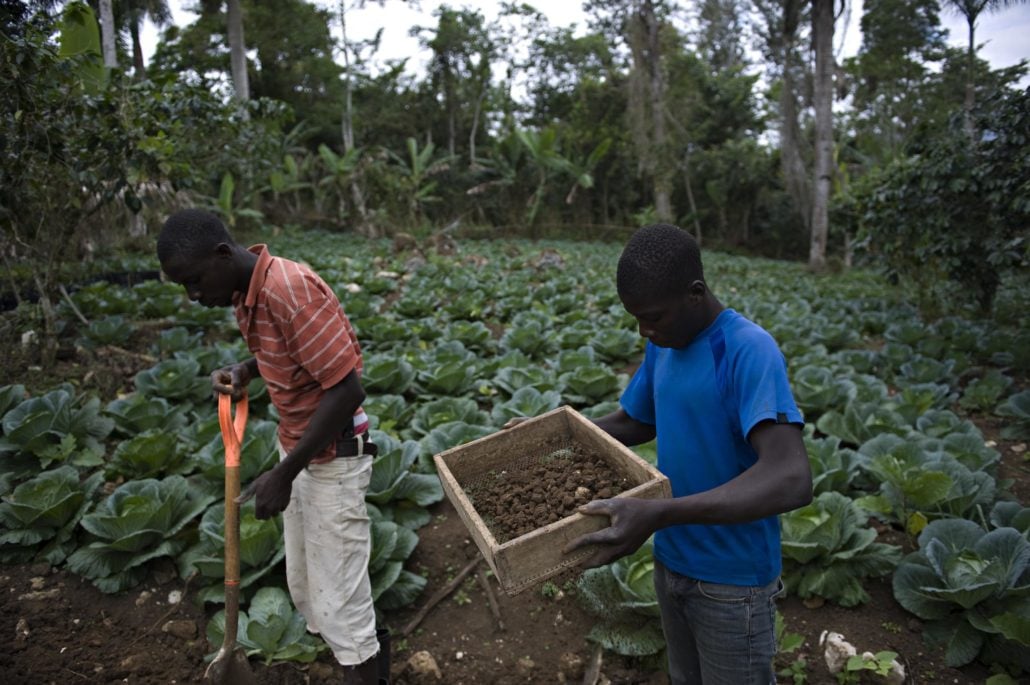
Haiti is considered the poorest country in Latin America and the Caribbean, with 27% of rural farmers living in extreme poverty at project preparation. Agriculture, their main source of income, severely lacks investment, leading to food insecurity. Combined with natural disasters, the country is in a state of economic peril. However, with international aid, local projects are supporting Haiti’s agriculture revitalization.
Natural Disasters
Michel Soy of the Dory Smallholder’s Association explained how the association’s irrigation system was severely damaged by the back-to-back natural disasters of Hurricane Matthew in 2016 and the 2021 earthquake. With World Bank project support, their dam was repaired. This repair led to the return of farming.
Farmers Against Poverty
Haiti Foundation Against Poverty (HFAP) is fighting to reduce food shortages by resurrecting agriculture, and it has been doing so since 2017. By focusing on farms and gardens in Haiti’s southern peninsula, which Hurricane Matthew and other natural disasters destroyed, crops are returning to these supported farms, and these crops are growing strong.
Farming
Having land rich in nutrients, Haiti can grow many different grains, fruits, vegetables, and coffee. Produce from these farms is being sold in local markets. HFAP is helping with preparing contracts with grocery stores and guest houses, and they plan to have melons, peppers, tomatoes and more sold inside stores in a nearby city, Jeremie.
HFAP reports that neighboring villages are interested in its farming program, as people want to be part of the sweet, delicious return of agriculture. HFAP has continued to aid them with equipment, and they even helped replant more than 400,000 coffee trees in the mountains of Jeremie.
HFAP also directs buyers to Avanti Coffee Company for coffee from its program.
Investment in Agriculture
While Haiti has land to grow the crops, the farmers lack the support to be self-sustainable. Haitian farmers and rural leaders have urged the government and international donors to help mold a $47.9 million agricultural investment. An investment in Haitian farmers could support their incomes, reduce food insecurity and contribute to Haiti’s agriculture revitalization. The Sept. 15, 2026, report described implementation as expected in 2027, with farmers seeking a role in shaping it.
On Aug. 29, 2026, more than 70 agricultural and community organizations made this demand at the seventh annual general assembly in Trou-du-Nord for the Organization of Peoples Working for the Development of Haiti (OPODHA). Farmers sought a role in designing, implementing and monitoring the HA-J0015 agricultural program for the North and Northeast regions.
The Inter-American Development Bank subsequently approved $38.7 million for HA-J0015 on Sept. 25, 2026. Its project page now lists the status as implementation. This is the IDB financing amount, distinct from the $47.9 million combined program described in the Sept. 15 report.
Florcie Larèche Fervil, director of OPODHA, stated, “Organizations cannot replace the state, but they are tools to support it. That is why we encourage involvement.”
Accomplishments in Farming
The World Bank reported these results from its supported project:
- About 4,267 farmers adopted improved agricultural technology, exceeding their targeted goal by 42%.
- Four sub-watersheds have participatory plans developed.
- One hundred and twelve farmer field schools have been established across the four supported sub-watersheds, and 2,800 farmers have participated in these schools. The schools provide training and community support.
- Twenty matching grants aided 1,511 farmers, improving access to local products in markets.
- Fifty 18 m³ capacity water tanks were built, benefiting 250 households.
- About 137,611 farmers received emergency relief, including 20,968 farmers receiving climate-resilient crop varieties/seeds.
These results show how farmers and supporting organizations are contributing to Haiti’s agriculture revitalization through local projects.
– Kelly Thomas
Kelly is based in Tallahassee, Florida, United States and focuses on Good News for The Borgen Project.
Photo: Flickr
