Educating Women in Guatemala Helps Eradicate Poverty
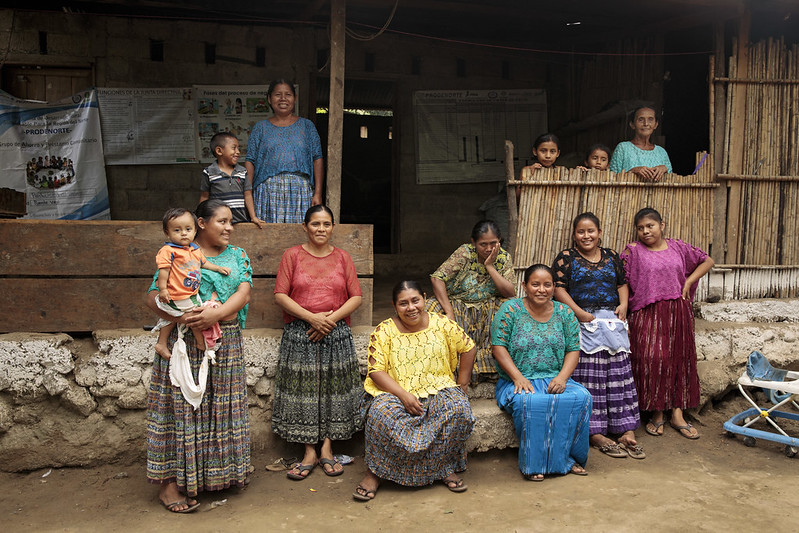
Educational programs could support women in Guatemala struggling in multidimensional poverty by enhancing their knowledge, supporting health needs and creating more possibilities for economic growth. Closing the gender gap by giving women the opportunity to work and develop their education can support productivity and economic growth over generations in any and all countries. As Angel Gurria, the secretary-general of the Organisation for Economic Co-operation and Development (OECD) noted, “Women are the most underutilized economic asset in the world’s economy.”
Guatemala’s Economy
Guatemala is a Central American country with a population of 17 million people and a GDP of $77.6 billion. According to the World Bank, it is the region’s leading economy. Yet despite these figures, poverty persists with Indigenous people experiencing a poverty rate of 79%.
There are nearly 4 million Indigenous women in Guatemala, however, the U.N. Women statistics show that only one in 10 Indigenous women works in the formal economy as many are unable to access educational opportunities. In rural areas where agriculture is the main source of work, reports show that women own only 7.8% of the land and also receive lower payment rates. If Indigenous women receive pay, their employers normally pay them 19% less than non-Indigenous women, according to the U.N. Women.
Native women are also the least likely to have literacy skills as 66.7% have the ability to read and write in comparison to 78% of non-Indigenous women and 78% of Indigenous men, the U.N. Women reported.
Casa Pa’nibal
The Borgen Project spoke with a Casa Pa’nibal’s volunteer Rodrigo Figueroa to learn more about efforts to help Indigenous women in Guatemala. Casa Pa’nibal is a small community center foundation just outside Antigua, one of Guatemala’s main cities. It began its work in 2014 as a foundation to support the education of Native women and girls within the country.
Figueroa stated that “the balance between men and women is complicated and many women leave school early due to other demands. We work with all Guatemalan women but a lot are from indigenous groups.”
The foundation has recently taken steps to focus on scholarships and further education. Figueroa expressed, “We want to focus more on their education programs so that we can help the women we support to get out of the situations that they are in and help their children too.”
In addition to Casa Pa’nibal, there are many small charities in Guatemala focusing on this line of work including such organizations as the Friendship Bridge, offering women a chance to gain microfinance, education and health services.
UNESCO Malala Fund
UNESCO Malala Fund for Girls’ Right to Education originated in 2012 to support girls and women in countries of conflict and disaster to have access to safe learning environments and better educational opportunities. In 2018, UNESCO came together with the Ministry of Education in Guatemala to open two UNESCO Malala centers in Guatemala. The aim of the centers has been to strengthen the education of women in Guatemala and provide tailor-made opportunities that are also gender-sensitive.
The UNESCO Malala Fund has reported helping more than 500 Indigenous women so far. It believes the project could have larger long-term effects by reaching more than 650,000 Indigenous women and 1 million female students.
There is clear evidence of the inequality between men and women in Guatemala in relation to education and economic opportunity, however, the country has been developing many projects both small and large to support these native women out of multidimensional poverty.
Through educational opportunities and micro-funding, the country could begin to close the gender and poverty gap supporting economic growth for these native women and the country as a whole.
– Amy Sergeant
Photo: Flickr
