How Water Scarcity Affects Women and Children
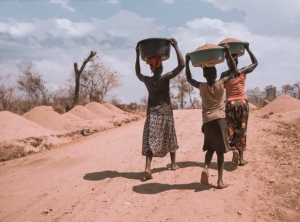
Multiple factors can cause water scarcity including “collapsed infrastructure, distribution systems, contamination, conflict, poor management of water resources, climate change and human interference” according to UNICEF. Water scarcity is common even in well-developed countries. Water scarcity limits access to clean water used for basic hygiene, cooking and cleaning.
The lack of water resources affects hospitals, homes, restaurants, schools and sewage systems. Additionally, water scarcity takes a toll on the economy because of its high value. However, it affects women and children more than anything. Women and children are the sole providers of water and often walk miles to retrieve it. Therefore, children are spending countless hours outside of school, exposing them to unsafe places and exploitation.
UN-Water Summary Progress Report July 2021
The U.N.-Water Summary Progress Report category of drinking water in 2020 stated that 26% of the global population or 2 billion people, did not have access to clean drinking water services. The sanitation category reported that 3.6 billion people or 46% of the global population lacked sanitation services with 494 million people openly defecating in 2020. Furthermore, 2.3 billion people lacked access to a handwashing system with soap and water in 2020. One final note from the hygiene category detailed that 44% of global wastewater did not receive adequate treatment in 2020.
The 2021 U.N.-Water Summary report also mentioned that there is inadequate research on the safety of our groundwater coming from lakes, rivers, streams, etc. Global water-use efficiency has only improved by 10% since 2015. The water stress category outlined that 2.3 billion people live in water-stressed areas in 2020. In the 2020 integrated-water management category, U.N.-Water detailed how 107 countries are not on track to have achieved sustainable water sources by 2030. From 2015 to 2019, there was only a 9% increase in international cooperation with 14 out of 109 countries participating in water and sanitation decision-making.
UNICEF Water Scarcity Key Facts
- At least one month every year, 4 billion people, two-thirds of the world’s population, experience severe water scarcity.
- In countries where water supply is deficient, 2 billion people may experience water shortages.
- As soon as 2025, half of the global population could potentially reside in areas experiencing water scarcity.
- In 2030, a proposed 7 million people could face displacement from water scarcity.
UNICEF Water Scarcity Response
While there are many reasons for water shortages, UNICEF is working to provide new technology that reaches countries where people are experiencing water scarcity in seven ways. As a first glance, UNICEF is working to identify new water resources through remote sensing, geographical surveys and field investigations. Also, UNICEF is striving to produce efficient water sources that “reduce water leakage and contamination promoting wastewater reuse for agriculture to protect groundwater.”
Furthermore, UNICEF is planning for future water scarcity needs. For instance, UNICEF is expanding technologies to support water sources that can withstand our changing climate. With this in mind, UNICEF is educating schools and communities on water scarcity. On a larger scale, UNICEF is preparing for “national water needs” for domestic, health and sanitation use. Lastly, UNICEF is “supporting the WASH sector” through creating online programs, technical guidance and manuals to improve standards for accessing water.
Organizations Helping People Reach Clean Water
Due to social and cultural inequality, women and children bear the brunt of water-borne illnesses. Hence, the reason organizations similar to The Water Project and Water.org exist. The Water Project has been providing access to clean water to remote villages located in sub-Saharan Africa since 2006. As of May 2022, The Water Project has reached 714,350 people with a 96% water flow status.
For the past 30 years, the founders of Water.org, Gary White and Matt Damon, have been offering financial solutions to the global water scarcity issue. It all began in 1990 when Gary White started helping Latin communities impacted by water scarcity. Later in 2003, their WaterCredit Initiative launched which enables Water.org to financially assist places affected by water scarcity. In 2009, Matt Damon joined the Water.org team as a co-founder. So far, Water.org reported having improved 45 million lives across 17 countries with access to clean water.
Looking Ahead
Thanks to the organizations and the dedication of U.N.-Water and UNICEF, water scarcity is becoming less of an issue. Hopefully, this issue will reduce, so that women and children may experience safety, good health and education without having to walk miles for water.
– Kaley Anderson
Photo: Flickr
