USAID Programs in Côte d’Ivoire
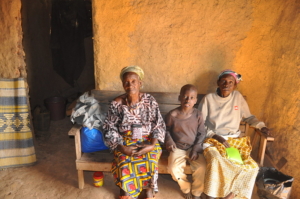 From its establishment in 1961, the United States Agency for International Development (USAID) has been at the forefront of civilian aid and assistance for developing countries. USAID programs in Côte d’Ivoire have increased health, peace, education, political stability and gender inclusivity. But, the nation still has many major problems, from malaria incidence to domestic tranquility, to overcome with the help of USAID. Since the agency’s dissolution, data and documents about its work have become increasingly scarce.
Health Initiatives in Côte d’Ivoire
Côte d’Ivoire has many health issues. Malaria and maternal mortality are specific challenges to the country’s health security. USAID programs in Côte d’Ivoire are focusing on its health security by tackling these and other problems such as HIV/AIDS and child health. USAID training and education initiatives have rapidly increased the learning and adaptation of medical practices, even while the country spends just 3.13% of its GDP on health care. This has led to a more resilient and adept health care system which is seeing better performance every year.
Two Food for Progress USAID programs began that increase food security for the country by processing crops locally instead of exporting raw crops to be processed. This incentivizes more regional trade and partnerships that unify the economic activities of the regions.
Promoting Peace & Education Côte d’Ivoire
Côte d’Ivoire is still healing its wounds from the Second Ivorian Civil War that began with post-election conflict and ended in 2011, which resulted in a UN/French/Ouattara victory (Ouattara being the current illegitimate president’s opposition leader). The U.S. Secretary has recently provided more than $45 million “to help Côte d’Ivoire and its neighbors prevent conflict and promote stability in the face of regional threats.” The U.S. has recently been successful in laxing tensions in the Coastal West Africa region and has provided nearly $300 million in assistance to accomplish such.
The new Millennium Challenge Corporation Compact with the Côte d’Ivoire, valued at $536.7 million, has two major parts:
- Accelerate transportation projects aimed at stimulating the country’s short-term economic growth and employment.
- Fund educational initiatives to support projects and programs for the youth of the country.
In the education sector, Côte d’Ivoire has successfully brought its primary school enrollment to 102% of the gross population considered of age to be going to primary school. This figure is up from 55% in 1970. The U.S. embassy in Abidjan also offers educational programs for the nation to advance their studies in the U.S. or abroad, including Fulbright Fellowships, Mandela-Washington Fellowship and EducationUSA.
Political Transition & Inclusion in Côte d’Ivoire
The U.S. is strengthening democracy and governance in Côte d’Ivoire through institution building. Politically, there is a major emphasis on greater inclusion of women and youth as these historically marginalized groups will be playing a larger role as the country further develops. Protecting and promoting their rights concurrently increases the country’s political stability and security.
USAID programs in Côte d’Ivoire were actively enabling the $14.2 million Political Transition and Inclusion program, whose goal is to support “national and local government efforts to be more inclusive of citizens’ democratic ambitions, and responsive to their needs and concerns.” This program specifically identified the disconnect between the government and citizens being the most significant challenge the country faces. No current data or documents could be found about the program’s current performance. Beyond this and other USAID initiatives, many more projects exist that incentivize community resilience, modernizing the justice system, and free and fair elections.
Final Thoughts
Côte d’Ivoire has made significant developmental progress, specifically within health care and domestic stability. Whether USAID programs in Côte d’Ivoire make a lasting impact will be seen in the 2025 October elections and future equity and economic metrics.
– Aedan Bingham
Aedan is based in Worcester, MA, USA and focuses on Business and Global Health for The Borgen Project.
Photo: Flickr
