Supporting Underrepresented Communities in Southern Morocco
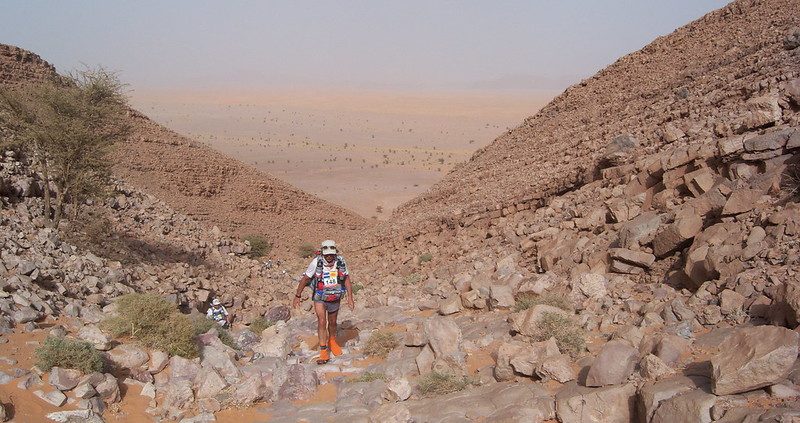 The Marathon Des Sables is a race that tests the boundaries of human capability. Participants endure a grueling multi-day ultra-marathon, running 254 kilometers over the unforgiving sands of the Sahara Desert in Morocco. The longest stage, a punishing 91-kilometer stint, has marathoners baking for hours in the equatorial desert sun, covering kilometers of distance over the parched sands. The marathon spotlights an incredible feat of human grit and determination, but it also races toward life-changing humanitarian milestones for the rural, desert communities of Morocco.
The Race Begins
Patrick Bauer, the founder of the famous Marathon des Sables, continues to prioritize helping support children and underrepresented communities in Southern Morocco. The official associated charity, Solidarité, focuses on the education and support of hundreds of underprivileged families. Through charity places and the minimum target of £500 participants must raise to secure their position on the start line, Solidarité, along with other associated charities, has implemented initiatives to provide education primarily through sport.
Despite national multidimensional poverty rates falling to 6.8% in 2024, rural inequalities persist. Among the population living in poverty, 72% were from rural communities. These rural, underrepresented communities experience four times the poverty rate compared to urban areas. The efforts of the Marathon des Sables offer a glimpse at a remedy. Multidimensional poverty rates provide insight into poverty not purely from an income perspective, but through equitable access to health care, education, housing and other basic services. Within underrepresented communities in Southern Morocco, the Marathon des Sables strengthens access to these necessities, mitigating the serious risk rural families face of slipping back into poverty.
Sport Used as Support
Since 2010, donors, Solidarité, and supporting NGO Almayuda have constructed a sports center for the children of Isfoutalil and Tasassinte, the outlying neighbors of Ouarzazate. The center welcomes children free of charge, offering supervision, computer science lessons and sports instruction, along with educational supplies and snacks. The initiative is now expanding to aid the mothers of these children, with the inclusion of a lending library, free Arabic literary lessons and French lessons. Gender inequality is particularly pernicious within the Moroccan job market; Morocco has one of the world’s lowest labor force participation rates for women and rural communities are disproportionately affected. These efforts, facilitated by the Marathon des Sables, align with the aims of the government to prioritize job creation and access, particularly for rural employment and investment support.
Since the introduction of upskilling efforts at the Solidarité Almayuda sports center, 12 mothers have created a business cooperative to create fashion accessories and home decor. This is just one example of the positive impact funding is creating.
Alongside the efforts of the marathon’s associated charities, the race itself has prompted a hugely impactful humanitarian effort. More than 38 attending doctors present for the duration of the race, visit the residents of local villages the marathoners pass through and offer medical care to anyone who wants it. Organizers also select and complete one development project within the rural communities that fall in the race perimeter. From equipping schools in the villages of Tarricht and Amougger to installing water pumps and sanitation facilities in isolated villages to the donation of vehicles to a home for the handicapped in Ouarzazate, approaches are targeted and holistic, prompting accessibility within these underrepresented communities in Southern Morocco.
It Is More Than a Race
Alongside the positive environmental and humanitarian efforts the marathon has fostered, the world-renowned race brings much-needed visibility to a hugely underrepresented region of Southern Morocco. With the race route meandering across the arid desert plains and through villages carved into the endless desert sands, the Marathon des Sables showcases the raw, unforgiving beauty of the Sahara Desert and its enduring communities.
As sponsor Oliver Gilbert remarks, it is also a chance to provide members of underrepresented desert communities an opportunity to tackle the sands of their native land. “Many runners who are natives of southern Morocco,” he comments, “who would not have been able to pay for registration or their kit, have their expenses covered by donors.” As such, “the winners for the past few years have been two brothers from a modest rural background in the region of Draa.” This race is both strengthening and a display of the strength of these incredibly durable and resilient communities living attuned to the sands of the world’s most inhospitable environment.
– Millie Lavington-Owen
Millie is based in London, UK and focuses on Good News and Technology for The Borgen Project.
Photo: Flickr
