Top 8 Facts About Education in Slovenia
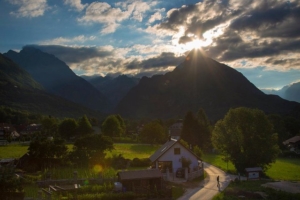
Slovenia is a small Central European country known for its mountainous landscape and strong economy. Since gaining independence from Yugoslavia in 1991, the country has developed a comprehensive education system that provides compulsory schooling and multiple pathways for students. Here are eight facts about education in Slovenia that reveal the inner workings of this economically developed nation.
Top 8 Facts About Education in Slovenia
- The country’s overarching educational framework is organized across three progressive tiers. The initial tier is compulsory basic schooling, a single-structure nine-year phase mandatory for all citizens between the ages of 6 and 15. Upon completing this fundamental stage, individuals advance to upper secondary options. This intermediate level features pathways designed to propel participants toward the final tier: higher education. Depending on their secondary achievements, individuals can choose between vocational training or university.
- Slovenia has three paths for secondary schooling, structuring its upper secondary tier into three distinct pathways: vocational, technical and general programs. Vocational courses focus heavily on immediate workplace integration. Technical tracks span four years and bridge the gap between practical skills and broader academic concepts. Meanwhile, general tracks provide a rigorous academic curriculum that readies individuals for external maturation assessments and higher learning.
- The educational system is primarily managed by the National Education Institute of Slovenia (NEI), which works alongside the Ministry of Education to oversee the country’s school network. The NEI focuses on maintaining and improving educational quality through teacher development, curriculum support and monitoring school performance and operational standards.
- Slovenia recently introduced amendments to the Placement of Children with Special Needs Act in February 2026. These amendments include measures such as a digital repository of learning resources explicitly designed to support inclusive schooling for children with special educational needs, the adaptation of standard learning resources to accommodate children with special needs, and the use of Slovenian Sign Language to allow everyone to learn.
- Following a notable downward trajectory in the 2010s, enrollment figures for higher learning have experienced a resurgence. Official data from the Statistical Office of the Republic of Slovenia (SURS) confirms that 82,388 students enrolled in tertiary institutions for the 2024/2025 academic session. This represents a 2.2% expansion compared to the prior year, although there are still tens of thousands fewer students than there were in the 2000s.
- Citizens do not have to pay tuition for tertiary school (as long as they are full-time students). Nor do citizens of EU member states or countries near Slovenia, including Bosnia and Herzegovina, Montenegro, Kosovo, the Republics of Macedonia and Serbia. For other international students, Bachelor’s degree programs generally range from 2,000 to 11,000 euros annually — far lower than tuition at many U.S. institutions.
- Slovenia’s education system reports strong educational outcomes. In the Organization for Economic Co-operation and Development, the average proportion of young adults who have not completed upper secondary school is 13%; in Slovenia, this number is 7% (although it did increase between 2019 and 2024). Also, STEM fields (Science, Technology, Engineering, Math) are the most common ones from which Slovenian students graduate: 28% of Bachelor’s graduates studied one of those fields. High STEM graduation rates are usually very desirable due to the ability of such graduates to perform important jobs in the workforce.
- Women make up a larger share of the tertiary school population than men, accounting for 57.6% of tertiary students. Furthermore, women are far more likely to graduate on time than men, with 69% of female Bachelor’s students earning their degree on time compared to just 54% of their male counterparts.
Looking Ahead
Despite its compact borders, Slovenia commands a robust educational framework. Mandatory primary structures guarantee equal opportunities for all children from an early age, while the nuanced division at the secondary level effectively supports both academic excellence and heavy industrial development. The country is able to equip its youth with optimal tools for lifelong advancement.
– Eleanora Kamerow, Jackson Mayer
Photo: Flickr
