The Top 3 Barriers to Education
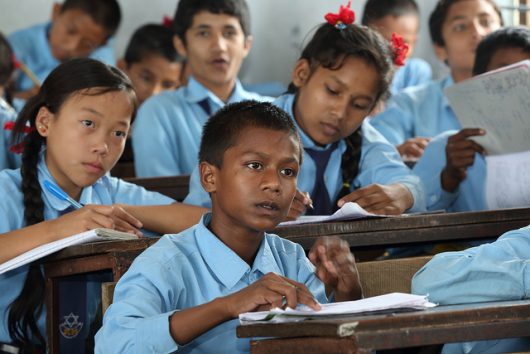
Much of the world is completely unaware of the current global education crisis. Although education is an inalienable right according to the Universal Declaration of Human Rights (UDH), there are currently 263 million children out of school. There are multiple barriers to education that need to be addressed to end this crisis.
Here are the three top barriers to education:
Affordability
The most apparent barrier to education is affordability, even though the UDH states that free basic education is every child’s right. Many developing nations have abolished formal school fees, but informal fees continue to prevent children from receiving an education. Informal fees include required uniforms, textbooks and additional school materials. In developing countries, “children from the poorest 20 percent of households are four times less likely to attend school than the wealthiest 20%.” The inability to afford formal and informal fees perpetuates a cycle of poverty amongst the poor, as children remain home to support their families.
Lack of Trained Teachers
Lack of trained teachers is a barrier to education that affects even those in developing countries that can afford schooling. Not only are there not enough teachers worldwide to achieve universal education, but their training is either poor or nonexistent. In 2016, the U.N. reported that 69 million trained teachers are necessary to achieve global universal education by 2030. With many teachers in developing nations failing to meet national standards, children lack basic education.
Gender Inequality
The UDH states that every child has the right to education, but unfortunately, being the ‘wrong’ gender is a barrier to education. In developing countries, girls are significantly less likely to receive an education than boys. This is due to entrenched gender norms that maintain that households should not educate their daughters. Many impoverished families must make a choice of which of their children to send to school. In this case, households are much more likely to send their sons to school than their daughters because of social norms. Instead of attending school, many girls are sent to work or kept at home to provide and care for the family.
Addressing barriers to education is critical in obtaining universal education by 2030. Towards this goal, many organizations concentrate on establishing specific barriers. Such organizations include CARE, 60 Million Girls, the Global Partnership for Education and Educate a Child. These organizations and others like them work to educate people about the crisis and propose potential solutions. Possible solutions include additional and proper use of funding for education; strengthening educational systems and recruiting and providing training for teachers.
Knowing the barriers to education is the first step to providing every child with their inalienable right to education. The next step is to work together and tackle each barrier one by one.
– Haley Hurtt
Photo: Flickr
