The Cost of Childhood: Why Child Marriage in Pakistan Persists
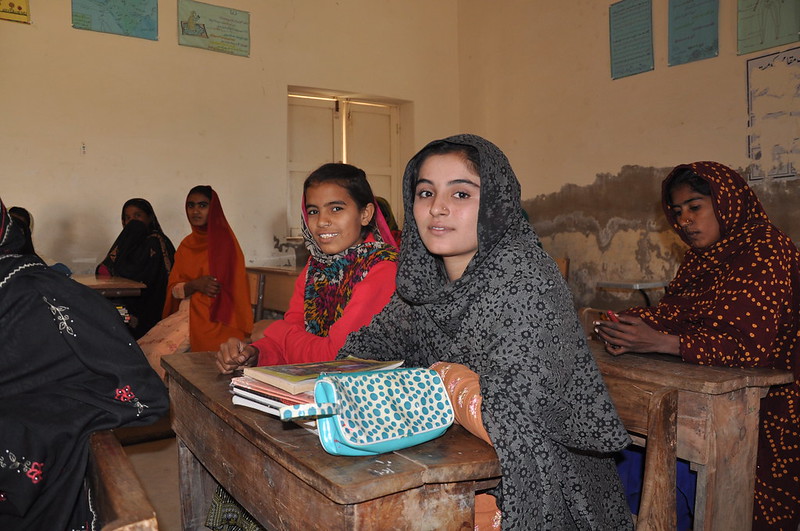 Qubra, a 13-year-old Pakistani girl, was forced to become a child bride because of “her father’s beliefs.” In an interview with VOA News, she revealed, “My father believed that it was sinful for a daughter to remain unwedded once she reached puberty.” According to data from a 2017-2018 survey, 18% of Pakistani girls got married before the age of 18 and 4% before the age of 15. Child marriage in Pakistan continues to persist due to tradition and cultural practices.
Driving Forces Behind Child Marriage
According to UNICEF, in 2018, Pakistan ranked sixth in the world for the highest child marriage rates. The driving causes of child marriage in Pakistan are customs and traditions, poor living conditions, gender norms and lack of education and awareness.
Poverty. One of the key drivers of child marriage in Pakistan is poverty. The Asian Development Bank estimated in 2018 that the number of people in Pakistan living below the poverty line stood at 21.9%. In a study published in 2020 by Girls Not Brides, findings in Punjab revealed that low-income households are more likely to marry their daughters off earlier than well-off households. Rural areas are also more likely to practice child marriages and do so due to the belief that marriage eases a family’s economic burdens.
Customs. Social norms also stand as a key factor, with cultural and religious traditions both playing an equally significant part. Pakistani society considers females the family honor and marrying them early helps preserve this honor. This holds particular weight if young girls have experienced some sort of sexual assault or engaged in premarital sex. According to Islam, marriage is obligatory and different factions argue that early marriage for girls is mandatory as a religious practice. Because of the prevalence of such norms, child marriage deeply embeds itself into the social fabric of Pakistani society.
Lack of Education. According to the World Bank, the literacy rate of females 15 and older in Pakistan stood at 46% in 2019. Many girls do not receive a full education because their parents force them to drop out of school early to marry and do housework. This lack of education means girls have no decision-making powers and are often unaware of their legal rights.
Facts About Child Marriage in Pakistan
Child marriage can have an adverse impact on the future of young girls. Child marriage makes girls more likely to drop out of school and increases the risk of domestic violence and abuse. In addition, child brides face higher chances of at-risk pregnancies and complications during childbirth because their bodies have not fully developed. Child marriage also reduces a female’s independence and ability to have a say in important decisions.
A report by the World Bank and the International Center for Research on Women (ICRW) in 2017 estimates that incidences of child marriage will bring about “trillions of dollars” in costs for developing nations. The same study highlights that “ending child marriage in Pakistan could see a 13% rise in earnings and productivity for Pakistani women.”
Steps to Address Child Marriage in Pakistan
Child marriage is a difficult topic to address in Pakistan for many reasons: First, there is extreme institutionalization of social and religious norms. In addition, many provincial laws do not align with national law, and laws, in general, are very poorly enforced. Furthermore, Pakistani courts apply Sharia Law, which says that postpubescent girls can enter into marriage.
Regardless, progress is visible. According to Girls Not Brides, Pakistan agreed to end all marriages under 18 by 2030 in order to achieve the U.N. Sustainable Development Goals. In 2019, the National Commission on the Status of Women (NCSW) told the Committee on the Elimination of Discrimination against Women (CEDAW) that it established a National Consultation on Child Marriage with the support of key human rights groups.
Civil society has played a huge role since 2013 by pushing for stricter marriage laws and working with both law enforcement agencies and religious scholars to tackle this issue at the local level. Organizations like the Malala Fund are working to increase access to education for young girls to combat child marriage, while others, like Girls Not Brides, specifically focus on the issue of child marriages and advocates against it.
Future Action Required
Despite progress, the government and organizations must still take further action to reduce the prevalence of child marriage. Any program or movement that seeks to eradicate child marriage needs to work with institutions, law enforcement, religious leaders and families to change attitudes as well as laws. Such a multidimensional approach is the only way to reduce child marriage in Pakistan.
–Umaima Munir
Photo: Flickr
