STEMINC Transforming STEM Education in Ghana
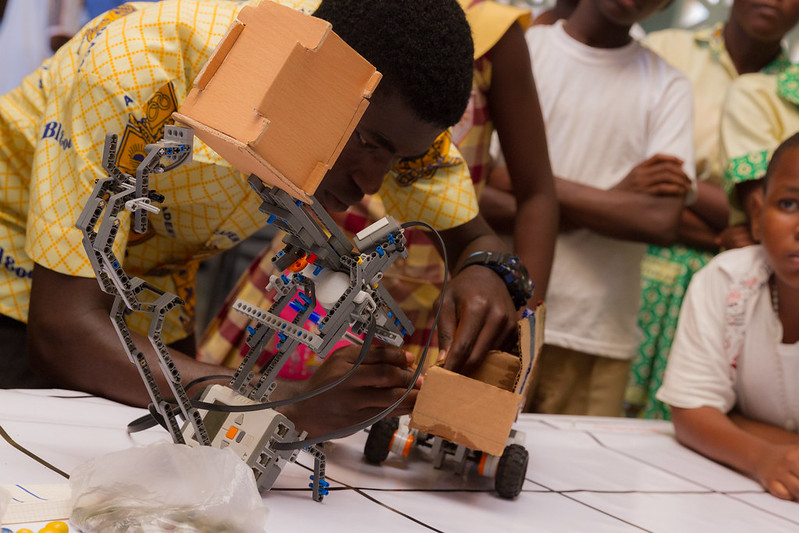 Science and technology shape everything from communication to combating disease and building resilient economies. Yet, in many parts of Ghana, access to quality Science, Technology, Engineering and Mathematics (STEM) education remains deeply unequal. Despite the government’s push to prioritize STEM through policies like the Education Strategic Plan (2018–2030) and the rollout of STEM-designated senior high schools, interest remains low. In 2023, only 9.4% of candidates from public basic schools in the Prestea Huni‑Valley Municipality opted for STEM-related programs in the BECE exam. These figures reveal a gap between policy and participation.
The Significance of STEM
Around the globe, STEM fields are engines of innovation, economic growth and job creation. For developing countries like Ghana, investing in STEM is not just about keeping up with the digital age, it’s about tackling youth unemployment, improving health care, strengthening infrastructure and reducing poverty. According to the World Bank, enhancing STEM skills across Africa can power economic growth and innovation in sectors like green energy, climate resilience, cybersecurity and health systems.
The Ghanaian government has recognized this through recent policy reforms, including the construction of STEM-focused senior high schools and curriculum upgrades that integrate coding and robotics. However, access to quality STEM education is still a privilege, not a guarantee, especially for students in underserved and rural areas. According to Africa Education Watch, only 2% of deprived basic schools in Ghana have functioning ICT labs, compared to just 8% in better-endowed schools, severely limiting students’ ability to engage with STEM subjects.
According to the United Nations Educational, Scientific and Cultural Organization’s (UNESCO) 2023 Global Education Monitoring Report, only about 47% of primary schools, 50% of lower-secondary schools and 65% of upper-secondary schools in Sub‑Saharan Africa have internet access. This highlights significant gaps in basic Information and Communication Technology (ICT) infrastructure in the region. Even in urban areas, disparities persist along gender and socio-economic lines, with girls and low-income students often left behind.
The Role of STEMINC: Equity Through Innovation
Founded to address ongoing challenges, STEM Inclusion Ghana (STEMINC) is a nonprofit on a mission: to democratize STEM education for all Ghanaian students regardless of background, gender, or location. Through a growing number of projects, STEMINC offers hands-on training in coding, robotics and Internet of Things (IoT) technologies. It provides teacher support and digital resources to build classroom capacity, hosts community workshops to demystify STEM and inspire student curiosity and runs gender-inclusive programs to ensure girls have equal opportunities to explore and succeed in STEM fields.
The organization’s model brings STEM to the student, rather than the student to STEM. Whether it’s hosting robotics competitions in underserved districts or providing offline coding kits for schools with no internet, STEMINC meets learners where they are. STEMINC staff emphasize that STEM initiatives can be life-changing for students who previously had no exposure to computing, many go on to build websites or code robots, illustrating real transformation
The Challenge Beneath the Progress
Despite the momentum so far, systemic barriers remain. According to the 2024 Africa Education Watch Policy Brief, just 13% of public junior high schools in Ghana have functional ICT facilities and many teachers still lack formal training in digital tools. Electricity access in schools remains below 50% in a deprived district. For students, a lack of role models, peer encouragement or even access to basic tools like calculators or computer labs can discourage continued STEM participation, especially for girls. Cultural expectations and economic pressures add another layer, making early dropout rates and career redirection common among even promising young learners.
Looking Ahead
“The African continent holds a huge potential to transform its education sector and labour market through science, technology and innovation. We need to unlock the potential of STEM education across Africa. And African girls represent the greatest untapped population to become the next generation of innovators,” said Stefania Giannini, UNESCO Assistant Director-General for Education.
According to UNESCO’s 2023 Global Education Monitoring (GEM) Report on Technology in Education, equitable access to technology in schools is essential to progress toward SDG 4 and broader educational outcomes. Speaking at the Ghana Philanthropy Conference in 2023, the Country Director of the Global Volunteers Corps (GVC), Ms. Ackah, emphasized the need for grassroots efforts. “We believe that every action, no matter how small, can have a ripple effect, touching the lives of individuals and communities far beyond our immediate reach. When we volunteer, we become agents of change,” Ackah said.
– Dela Michel
Dela is based in Rockville, MD USA and focuses on Technology and Solutions for The Borgen Project.
Photo: Flickr
