Rohingya Education Is Critical to Children’s Mental Health
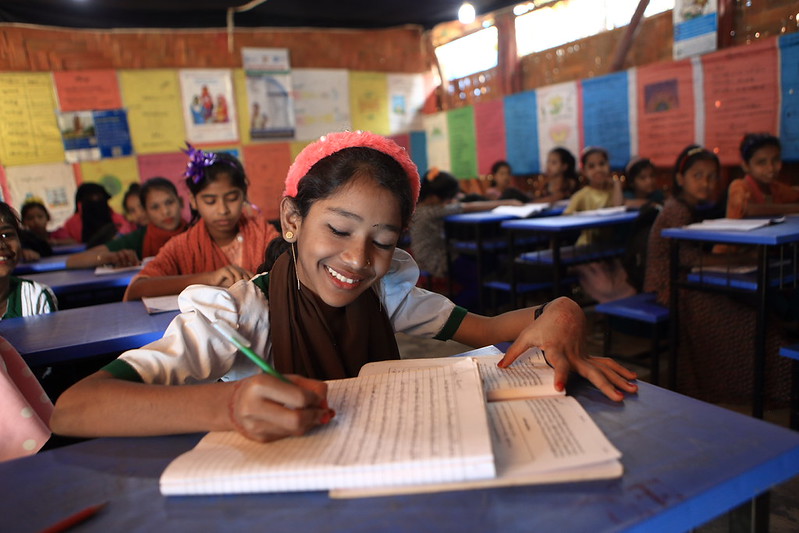 The Rohingya are a Muslim ethnic minority from Myanmar’s Rakhine State who have faced decades of discrimination, statelessness and restricted access to basic rights, including education. In August 2017, widespread violence forced more than 700,000 Rohingya to flee to neighboring Bangladesh, creating one of the largest refugee crises in the world. Today, more than one million Rohingya refugees live in camps in Cox’s Bazar, many of them children who have experienced displacement, trauma and prolonged uncertainty.
Education Restrictions in Bangladesh
In Bangladesh, access to education for Rohingya children is shaped by government policy, influenced by the expectation that refugees will eventually return to Myanmar. To prevent long-term integration, authorities have restricted formal schooling, prohibited accredited curricula and limited language instruction. As a result, most children are confined to informal learning centers that do not lead to recognized qualifications, and access to secondary education remains extremely limited.
In addition to limited access to education, Rohingya children face strict movement restrictions and are confined to overcrowded refugee camps, with few opportunities to integrate into broader society. They cannot enroll in formal Bangladeshi schools or access the national curriculum, which further limits their future opportunities. Without access to recognized education or employment pathways, many children grow up with increasing uncertainty about their future, reinforcing cycles of vulnerability and exclusion.
Funding Cuts and Growing Risks
As of 2025 and early 2026, the situation has worsened due to major funding cuts. Thousands of learning centers have closed, leaving hundreds of thousands of children without access to education and raising concerns about a “lost generation.” Reduced access to schooling has also led to increases in child labour and early marriage. Although the Bangladesh government has begun funding Rohingya education with support from the World Bank, access remains limited—especially for adolescents—and pathways to accredited or higher education are still largely unavailable.
Restoring Hope Through Learning Programs
At a UNICEF-supported multi-purpose centre in Kutupalong, 13-year-old Nur is learning solar panel repair after years of displacement. He had always dreamed of becoming a teacher, but limited access to education left him feeling uncertain and without direction. Like many Rohingya children, he experienced a sense of hopelessness as opportunities to learn remained out of reach. Through structured learning and skills-based training, these programs are helping children like Nur regain confidence and begin to imagine a different future.
Children make up a large share of the Rohingya population, many of whom face risks such as child labor, domestic violence and early marriage. These experiences can contribute to anxiety, stress and emotional distress. When access to education declines, the consequences extend beyond learning, increasing vulnerability and weakening protection systems within the camps.
UNICEF Programs and Community Impact
UNICEF-supported learning centers provide structured environments where children can learn, interact with peers and access psychosocial support. These spaces create routine and safety, both essential for emotional stability. Multi-purpose centers further expand opportunities by combining learning with skills-based training, helping children regain a sense of purpose.
Building on these efforts, child-friendly spaces and trained facilitators play a key role in supporting children’s mental health. These programs provide safe environments for play, creativity and emotional expression, while educators trained in psychosocial support help identify distress and foster inclusive, supportive spaces.
Expanding Access and Future Opportunities
Addressing these challenges requires sustained policy and funding commitments. As the host country, Bangladesh plays a central role in expanding access to meaningful and continuous education. Increasing opportunities for secondary learning, certification pathways and teacher support could significantly improve outcomes. Continued collaboration with international organizations and donors may help stabilize services and expand opportunities for children who have already lost years of schooling.
Education programs in the camps demonstrate how learning can support protection, recovery and long-term resilience. For Rohingya children like Nur, access to safe and structured environments is helping restore hope and bring the possibility of achieving their dreams—such as becoming a teacher—within reach.
– Isil Ertas Senturk
Isil is based in Oakville, Ontario, Canada and focuses on Good News for The Borgen Project.
Photo: Flickr
