Right to Play’s Impact on Ghana’s Children’s Access to Education
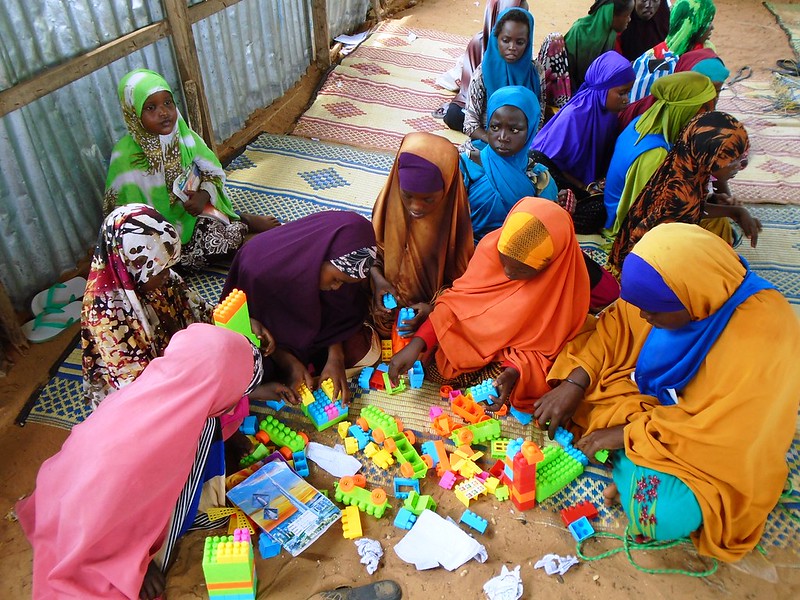 “Protect. Educate. Empower.” This is Right to Play’s mission to help more than 1.52 million children overcome adversity yearly through the power of play. Olympian Johann Olav Koss founded the organization that now operates within 15 countries across the globe, using all kinds of play in education to help children develop important social and emotional learning skills. Sports, games and arts are all crucial elements of play that support such development of skills for a child to become an agent of change for themselves and their communities.
5 Facts Highlighting Why Play is Important for a Child’s Development
- Dr. Sam Wang and Dr. Sandra Aamodt found that play can reduce stress by activating neurotransmitters such as norepinephrine, which improves brain plasticity, increases alertness and can boost one’s mood.
- When children “free-play,” they can assert their agency and control over their experience and can promote their imagination.
- When a child plays games or learns a new dance move, they are developing their cognition. This means they are improving in different forms of knowledge and perception, according to UNICEF.
- Edutopia asserts that guided play, play with the supervision of adults, is beneficial to promoting kids’ problem-solving and recall of information skills when open-ended questions are involved. For example, questions starting with “Tell me about” encourage children to reflect upon their thinking as well as challenge their communication skills.
- Peter K. Smith and Jennifer M. StGeorge learned that kids who participate in “rough and tumble play” both with their parents and their peers are more likely to be able to “self-regulate” and have increased levels of “social-emotional adjustment,” and this enables the child to benefit from further learning opportunities offered to them.
Right to Play’s Work in Ghana
Ghana has made great improvements in its education system over the past decades, including higher rates of attendance in primary school, which have increased by 20% since 2002. Still, there are barriers affecting schoolchildren. There is a wealth disparity among children, with 1.6 times more of the country’s richest children completing primary school compared to the poorest in 2020. Indeed, the poorest children accounted for 20% of the school-aged population whilst simultaneously accounting for the greater part of children aged 6-15 out of school.
The fact that around a fifth of children aged 5-17 are involved in child labor, usually working in agriculture, fishing and cocoa production, which is highly strenuous work, further shapes this disparity in accessing education. Most of these children are working for their family’s survival, and this negatively sustains a vicious cycle of poverty, as those affected are unable to return to school and seize learning opportunities.
How is Right to Play Helping?
Beyond working directly with 495 schools within seven target districts in the country, Right to Play, in collaboration with The LEGO Foundation, has been supporting Ghana’s Ministry of Education through implementing play-based approaches within “in-service education and training and school-level professional development plans.”
By 2025, Right to Play aims to reach 12,758,600 children and youth and 368,336 educators across 10,000 schools selected for the Ghana Accountability for Learning Outcomes Project (GALOP).
So far, Right to Play’s program implementation in schools has had notable impacts. Not only are teachers better at engaging students through “child-centered learning,” with female teachers accounting for a 48.5% increase in engagement in lessons, but Right to Play program leaders were able to address 95% of cases of child laborers in the targeted districts, allowing for many children to access opportunities that allow them to escape the vicious cycle of poverty.
Looking Ahead
Right to Play’s mission of using play to protect, educate and empower children is making a significant impact in Ghana. By collaborating with the Ministry of Education and implementing play-based approaches, the organization is improving education outcomes and addressing the challenges faced by disadvantaged children, including child labor. The positive results, such as increased student engagement and reduced child labor cases, demonstrate the effectiveness of Right to Play’s programs in breaking the cycle of poverty and providing opportunities for children to thrive.
– Lucy Gebbie
Photo: Flickr
