Renewable Energy in Myanmar
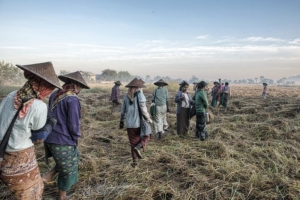 Myanmar is a Southeast Asian nation with approximately 55 million people. While Myanmar has faced economic and political challenges and is currently facing civil conflict, its renewable energy resources offer hope for sustainable development and improved living standards. Currently, the country has the lowest electrification rate in Southeast Asia, with around 70% of its population having access to electricity.
Solar, wind and hydropower investments are transforming lives by increasing electricity access in rural areas and reducing reliance on fossil fuels. The country aims to achieve 100% electrification by 2030, relying heavily on renewable sources to bridge its energy gaps.
Current Renewables
Hydropower dominates Myanmar’s renewable capacity, contributing around 45% to the national grid. The country boasts an estimated potential of more than 100 gigawatts (GW) in hydropower. However, development faces challenges such as environmental impacts and high implementation costs. Additionally, Myanmar encourages private sector involvement by permitting 100% foreign ownership of renewable projects and offering supportive policies. Some of these policies include streamlined power purchase agreements (PPAs) tailored for hydroelectric and other renewable initiatives.
One of the current projects in development is the Minbu Solar Power Plant, located in the Magway Region. This project is Myanmar’s first large-scale solar facility, which began operations in its initial phase and has plans to expand further. It represents a significant step in integrating solar energy into the national grid. Finally, concurrently, China plays a key role in supporting renewable energy initiatives in Myanmar, particularly in wind and solar projects. However, the political situation following the 2021 coup poses challenges to investment and implementation.
Power of Solar
Renewable energy has transformed lives in Hin Ka Pi, a remote village in Myanmar’s mountainous border region. A group of five women, including Naw Yoe Lay, trained in India as solar engineers or “Solar Mamas” through a World Wildlife Fund (WWF) initiative, returned to bring electricity to their communities. With newfound skills, they installed solar-powered systems, creating access to light and energy for the first time. Families now cook, sew and study safely at night without fearing venomous snakes or the unreliability of candles. The project provided light and empowered women like Naw Yoe Lay, earning them respect and pride as changemakers in their villages.
Future Potential
Myanmar is rich in renewable energy resources, from wind to hydropower to holding 20% of the world’s rare earth elements. These resources are key to addressing Myanmar’s electricity challenges and reducing carbon emissions. Myanmar has significant solar and wind energy potential, with estimated capacities of 26.96 GW and 33.83 GW, respectively. Initiatives like solar mini-grids and wind projects are being developed to address electricity shortages, especially in rural areas.
In addition, the government has outlined ambitious goals, such as achieving 53.5% renewable energy in its power mix by 2030 and providing electricity access to 100% of households. Large-scale projects, such as a wind farm in Chaung Thar and solar farms in the dry zones, are currently under development to meet these goals.
– Avery Hazard
Avery is based in Segovia, Spain and focuses on Technology and Solutions for The Borgen Project.
Photo: Flickr
