How Recycling Ghost Nets Fights Poverty Globally
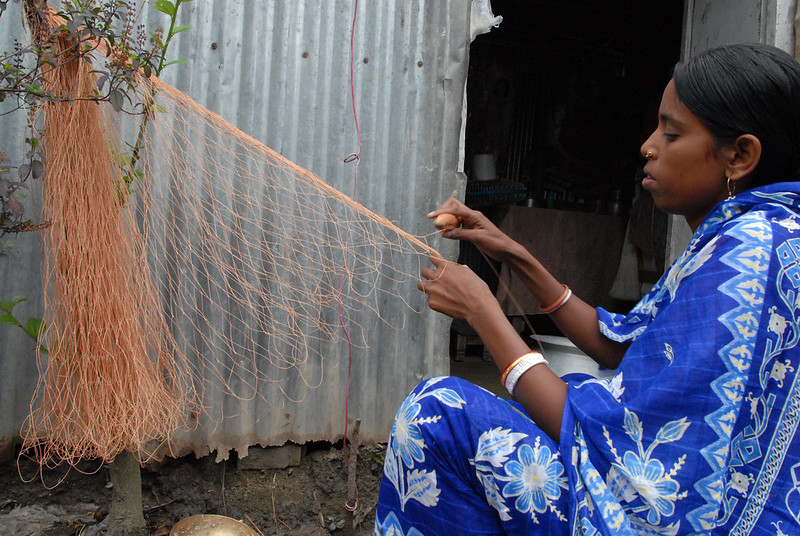 Abandoned fishing nets, nicknamed ghost nets, are a significant source of marine waste contributing to environmental problems. All the way from Asia to Africa, innovative people and organizations around the world are recycling ghost nets that would otherwise be destroying the habitats of marine life and the livelihoods of locals. Their efforts serve two worthy goals; besides helping to save the planet, recycling ghost nets fights poverty by creating jobs in underserved nations.
Ghost Net to Soccer Net in the Caribbean
Sandals Foundation, owned by Sandals Resorts (a chain of resorts based in the Caribbean), started a program called Future Goals. It works to pick up environmentally-damaging ghost nets discarded in coral reefs, repurposing them into soccer nets for local kids beginning in the island of Curaçao.
They want to encourage more kids throughout the Caribbean to play soccer (locally known as football). The program hopes to foster life skills in disadvantaged youth, opening opportunities in their futures. Simultaneously, the Future Goals program promotes environmental sustainability in Caribbean communities.
From Under the Sea to (Magic) Carpet in the Philippines
In the Philippines, commercial fishing once sustained the local economy. However, now, most of the fish supply is depleted and only the plastic waste remains, leaving local communities without a living, and thus 60% are below the poverty line.
With the help of organizations like NetWorks, Filipino fishermen clean up the waste and recycle the fishing nets by turning them into carpets. Both retrieving the materials from the ocean and making these carpets out of recycled materials provide these Filipinos with jobs and a source of income. The process has been so successful that it has spread across communities in the Philippines.
One Man’s Trash Is Another’s Treasure in Cameroon
When invasive plant species disrupted the ecosystem in one fishing village in Cameroon, the livelihoods of local communities quickly became unstable, and countless fishermen lost their jobs. NetWorks also established a program in Cameroon, providing them with jobs retrieving fishing nets from the water to be recycled. In return, they receive stamps, which they can exchange to pay for fundamental services like health care and even their education.
Fishing Nets in Seychelles to Patagonia Shorts
Seychelles, an island nation in the Indian Ocean, constantly experiences firsthand the effects of ocean pollution with ghost nets washing up on shore. One startup, Brikole, receives old fishing nets from Spanish and French fishing companies and then employs locals to process the materials and ship them to a company that makes products for big-name clothing companies including Patagonia. Each sustainable step of the way, recycling ghost nets fights poverty.
Plastic is infamous. With a decomposition date hundreds of years in the future, each neglected plastic bag, thrown-away bottle, and discarded fishing net contributes to global environmental concerns. Simultaneously, the news constantly recycles a gloomy narrative that global poverty is a hopeless situation. Yet innovative people around the world have found a solution fighting both problems rather than giving up hope. Surprisingly, their efforts have proven how recycling ghost nets fights poverty in diverse places–the Caribbean, the Philippines, Cameroon, and Seychelles. These repurposed fishing nets have transformed into employment opportunities for locals, acting as a buoy while poverty threatens to capsize low-income communities in developing countries.
– Klara Jones
Klara is based in Los Angeles, CA, USA and focuses on Good News and Technology for The Borgen Project.
Photo: Flickr
