Poverty and Health in Sierra Leone Following the Civil War
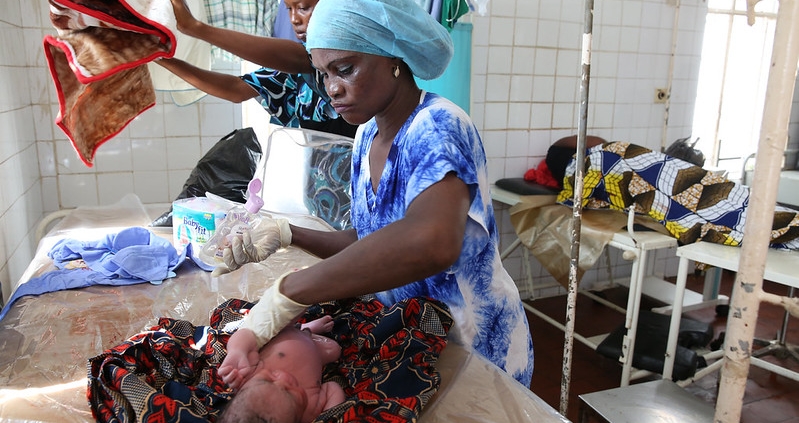 In January 2002, the 11-year civil war of Sierra Leone came to an end, leaving behind one of the worst humanitarian catastrophes the country had seen since gaining its independence in 1961. Up to 4.5 million people faced displacement and 100,000 people had been mutilated by rebel forces.
The country’s economy was left in pieces, and its people carried the weight of psychological and physical trauma. Despite this, in the face of adversity following the civil war, the people of Sierra Leone have continued to show a desire to overcome the struggles they encountered. As January 2026 marks 24 years since the end of the civil war, this article reflects on poverty and health in Sierra Leone and how the country has progressed.
The Immediate Response
Following the end of the civil war, the international response was swift and targeted. Nongovernmental organizations (NGOs) such as Médecins Sans Frontières (MSF), which had been active within conflict zones in Sierra Leone from 1995, provided the country with significant support, including malaria vaccination campaigns and medical care in a country that no longer had the infrastructure required to support its population’s health.
In 2004, MSF reduced its presence in Sierra Leone, stating that although many people still lived in poverty, the country was no longer undergoing a humanitarian crisis.
With that departure, the Ministry of Health in Sierra Leone took on responsibility for basic health care and hospital programs, and the country began rebuilding through different initiatives. Although Sierra Leone ranked as one of the poorest countries in the world, the health sector introduced schemes such as the cost recovery scheme in 2006 and the Free Health Care Initiative (FHCI) in 2010, and the sector began to see economic recovery.
The road to escaping poverty and rebuilding health care in Sierra Leone was not without turbulence. In 2014, the Ebola epidemic created further setbacks in the landscape of poverty and health in the country.
Solving the Poverty Paradox
The economic recovery of Sierra Leone following the civil war required both the help of NGOs and a population willing to put in the work, in part to avoid creating an overdependence on aid. While NGO activity started as wholly philanthropic, it eventually helped inspire the country’s population to cultivate its own agriculture and economy.
A prime example of a collaboration between NGOs and the Sierra Leonean population was the Kalangba-based Sierra Leone Children’s Fund. The fund allowed community farms to be created, providing jobs for people living in the area and increasing local trading.
Initiatives such as these allowed the country to develop its own economic landscape and provided a level of development that deploying aid alone could not achieve.
Public Resilience
For many of the population, health and poverty in Sierra Leone have always existed alongside struggle. That struggle, however, has also created a desire to foster independence.
In an interview with The Borgen Project, a Civil Affairs Officer who worked with the United Nations in Sierra Leone in the years following the civil war said that the people of Sierra Leone have “shaken off the desperation to be helped” when asked about whether international organizations’ involvement in the country’s rehabilitation has created dependency.
Looking Ahead
Poverty and health in Sierra Leone still have a long way to go in terms of promoting health care and reducing poverty following the civil war. The country is still rebuilding its economy. Despite this, in many ways, the country is adapting to its own economic conditions. In 2025, the World Bank Group reported that in the face of global insecurity, Sierra Leone’s economy had remained stable.
Health care in Sierra Leone also continues to grow, with the introduction of new facilities across the country.
These new implementations and improvements reflect the resilience of Sierra Leoneans following the civil war, who, in the face of adversity, have remained committed to rebuilding their country.
– Bernice Attawia
Bernice is based in London, UK and focuses on Global Health and Politics for The Borgen Project.
Photo: Flickr
