How Oral Rehydration Therapy is Saving Lives
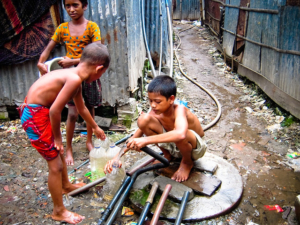 Diarrhea is both preventable and treatable, yet 1.6 million children die a year from diarrheal disease. Survivors are more susceptible to malnutrition, stunted growth and learning disabilities. In direct relation to poor sanitation, inadequate access to clean water and limited education, diarrhea has a particularly devastating impact in impoverished areas.
Background
Children in impoverished countries are diagnosed with dehydrating diarrhea approximately four times per year. Most cases of diarrheal diseases can be prevented with proper hygiene, sanitation and access to clean water. However, when prevention efforts fail, oral rehydration therapy has proven to be an effective treatment option for diarrhea.
Treatment
Oral rehydration therapy (ORT) uses available fluids such as breastmilk or rice water mixed with salt to rehydrate the ill. Oral rehydration solutions or ORS is a specific way of delivering ORT. Discovered in the 1970s, ORS is a mixture of sugar, salt and water that can be made at home to replenish electrolytes. In 2001, a new version of ORS, with reduced sodium and glucose, was packaged and distributed in powdered form.
The 2001 low-osmolality ORS reported decreases in stool volume and vomiting by 25 and 30 percent, respectively. Since the implementation of ORT in the 70s, it has saved 50 million lives at an individual cost of less than 30 cents per package. Further, supplementary zinc treatments have proven to reduce the duration and recurrence of diarrheal illness, and provide strong supplementation to oral rehydration solutions.
However, ORT use between 1992 and 2005 decreased in 23 developing countries because they had no knowledge nor access to oral rehydration solutions. The World Health Organization (WHO) estimates that ORT has the potential to save an additional 300,000 children’s lives each year with ORT and zinc supplementation, but, currently, only 42 percent of children in prioritized countries are receiving ORT treatment. Further, only 7 percent receive both ORS and zinc.
Even though oral rehydration solutions sell for only 25 cents, impoverished families living on less than $1 a day cannot afford these costs. Additionally, there are common misconceptions in poor, less educated, communities that those suffering from diarrhea should be restricted from the consumption of food and fluids including oral rehydration solutions.
Solution
The Global Maternal, Child Health Network and the American Public Health Association have worked together to create a strategy involving international policymakers and health organizations with four main components:
- They must appoint a U.S. agency within one year to assume the role of global “children’s champion.” Their job is to coordinate efforts among United States’ and international, public and private, organizations.
- The WHO and UNICEF must update their 2004 recommendation for diarrhea treatment to include new information about oral rehydration therapy and zinc. Additionally, they should provide training for local health providers, and fund maternal education and community case management programs.
- They must refocus efforts to improve health standards for children under five with a coordinated strategy across many organizations, so no children die from a preventable disease such as diarrhea.
- Funding for diarrhea treatment and prevention must be allocated under universal health coverage. Funding should include the co-packaging of zinc and ORS as home-based diarrheal treatment.
While prevention efforts such as improving hygiene and sanitation should remain a priority, it is not always possible to address the consequences of poverty. Approximately, 58 percent of diarrhea fatalities in low and middle-income countries is a result of poor sanitation and inadequate access to clean water. This problem cannot be fixed overnight, however, if provided to everyone, oral rehydration therapy is an affordable treatment that could prevent 93 percent of diarrhea deaths.
– Haley Myers
Photo: Flickr
