Oil and Poverty in Nigeria
 Nigeria is estimated to have a GDP of over $350 billion, making it one of the largest economies in Africa. A significant amount of that wealth is generated by the oil trade; Nigeria is home to one of the richest oil resource centers in the world, and recent statistics confirm it remains the largest oil producer in Africa, making up the overwhelming majority of the country’s exports and generating two-thirds of its total revenue.
Despite the wealth brought in by the oil trade, poverty remains endemic in Nigeria. More than 40% of the country’s population of 210 million is considered to be living in extreme poverty (that is, living below $3 per person per day), giving it the second-largest poor population in the world after India. While this is 10% less than the poverty rate in 1985, that decrease is not proportional to the considerable economic growth Nigeria has experienced in those years, with the country having seen an average of 3.89% in annual growth since 2011. Although the oil trade has elevated Nigeria economically, it may have exacerbated poverty rather than alleviated it.
The Resource Curse
One of the paradoxes of Nigeria’s economy is that the country’s abundance of natural resources has not translated into wealth for most of its citizens. Much of the wealth is generated from the export of oil and the leasing of oil fields to multinational corporations, with relatively little oil extracted for Nigeria’s own direct benefit. Prioritizing the oil trade has been detrimental to agricultural industries that could have capitalized on alternatives such as gold, timber and crops.
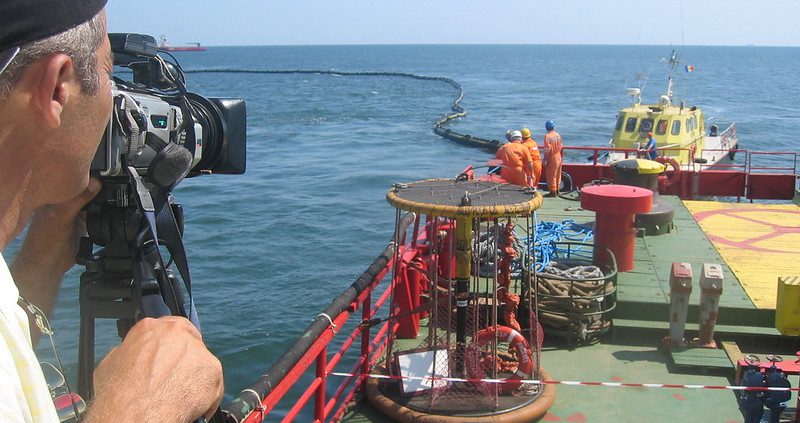
Oil spills have made Nigeria one of the worst areas affected by oil pollution, with nearly 500 incidents reported in 2025 alone. The impact has been disastrous for the country’s rainforests and rivers, as well as for communities dependent on natural resources. The Niger Delta has been the most heavily impacted, resulting in infertile farmlands, losses in vegetative biodiversity and declining fish populations, rendering local farmers and fishermen unable to support themselves.
Institutional Corruption
Corruption has been a long-standing issue in Nigeria’s governance and administration, and consequently much of the wealth generated by oil has not been invested into areas where it is most needed, such as public services, infrastructure and job creation. Manifestations of such corruption in the oil industry include fiscal leakages, where large amounts of revenue collected by state-owned entities go unreported; bribery, where government officials accept payments from oil companies in exchange for favorable deals and licenses; and negligence, where insufficient oversight and regulation enable further corruption.
Oil Bunkering
At the heart of the oil trade in Nigeria is a practice known as oil bunkering, which refers to the theft of crude oil from pipelines to be smuggled or illegally refined. This can occur in the form of an amateur operation or a highly organized enterprise practiced by professionals with the cooperation of corrupt officials. Bunkering is regarded as a profitable venture and is estimated to cost the country 200,000-300,000 barrels of oil per day, about 10% of Nigeria’s daily production. In addition to the loss in revenue that could otherwise be invested in alleviating poverty, oil bunkering contributes to greater instability and criminality that make these collective issues harder to address.
Ongoing Efforts
In recent years, several steps have been taken to address the complicated problems surrounding oil and poverty in Nigeria.
- Economic Diversification: Dwindling oil prices have compelled the Nigerian government to decrease its dependency on oil and prioritize other forms of revenue. Industries identified for investment include agriculture, mining and manufacturing. In line with this objective, President Muhammadu Buhari pledged at COP26 for Nigeria to transition to renewable energy sources and attain carbon neutrality by 2060.
- Compensation and Remediation: Local communities are seeking reparations and corrective action from entities responsible for environmental damage caused by oil spills. The most high-profile case at the time of writing was launched by residents of Bille and Ogale, near the Niger Delta, against Shell plc. For the 7,000 spills that Shell is alleged to have caused since 1958, the communities are seeking $1 billion in damages, $750 million of which would be used to clean up the environmental damage.
- Activism and Awareness: Non-governmental organizations (NGOs) such as Amnesty International, ENACT Africa and Oxfam are working to raise awareness about the harms exacerbated by the oil trade in Nigeria and to advocate for urgently needed solutions. The Together Against Poverty (TAP) project, for example, is working to hold the Nigerian government accountable for its commitment toward poverty alleviation and to secure greater contributions from major international donors such as the European Union.
Looking Ahead
Some actions have led to improvements; for example, Nigeria’s investment in solar power has already led to lower living costs and improved quality of life on the local level. However, much more needs to be done to fully address the enormity of the problems surrounding the oil trade in Nigeria and the contributions it has made to poverty.
– Aled Warren
Aled is based in London, UK and focuses on Good News and Politics for The Borgen Project.
Photo: Flickr
