Morocco’s Noor Solar Project: Redefining Renewable Growth
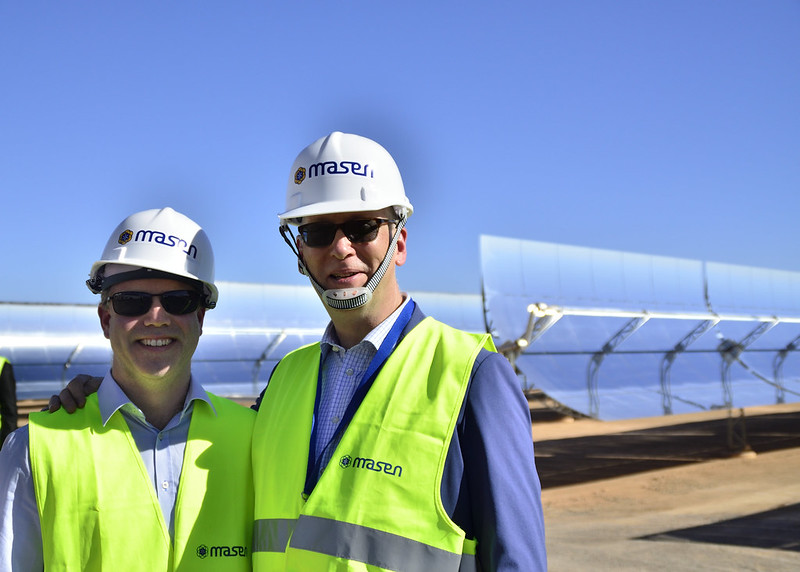 The Noor Ouarzazate Solar Complex project in Morocco stands as a blueprint for sustainable innovation and alternative energy resources internationally. Set against the arid backdrop of the Sahara’s gateway, this solar giant does more than generate energy, but is building a model for clean development that blends technology, climate action and economic growth.
A Solar Vision for Change
Launched in stages beginning in 2016, the Noor solar project has rapidly grown into the world’s largest concentrated solar power (CSP) facility, with a generation capacity of more than 580 megawatts. The complex currently provides electricity to more than 1.1 million Moroccans and offsets approximately 690,000 tons of CO₂ emissions annually, which equates to removing more than 145,000 constantly running vehicles from the road.
The project was born out of a critical energy need. In 2019, Morocco depended on imports for more than 97% of its energy demand, with the government strategically turning to the locally available, renewable source to secure its energy security. This national strategy for Moroccan energy has big aims, hoping to raise renewable energy to 52% of capacity by 2030, the World Bank reports. Noor, the crown jewel of this strategy, is delivering on that promise.
Clean Energy with Storage Capacity
The technology developed in the Noor solar project also represents a leap forward for renewable sources and alternative energy usage. Unlike traditional solar panels, the Noor plant uses curved mirrors to concentrate sunlight and heat a fluid, either synthetic oil or molten salt. This allows storing energy captured from the sun up to eight hours after sunset, something not possible with regular solar technology. This capacity to deliver electricity after dark is vital for matching peak demand, and it sets CSP apart from most other renewable systems.
Noor I, II, and III use a mix of trough and tower-based CSP designs, and each component of the project contributes significantly to Morocco’s grid. Noor I alone produces 370 GWh per year, while Noor II and III add another 1,100 GWh combined, according to King’s College London. This amount of energy is enough to power all of Marrakesh, a city of more than a million people, highlighting the local impact the energy generated by the project has made.
From Local Jobs to Global Impact
Development of the Noor solar project additionally supported local development, creating thousands of jobs during the construction process, and although long-term employment at the site is limited, secondary benefits have been longstanding. New roads and water infrastructure have allowed surrounding villages to become better linked to public services, with local farmers additionally receiving sustainable agriculture training from the Moroccan Agency for Sustainable Energy (MASEN).
Crucially, the project has attracted $1.6 billion in concessional financing from the World Bank, the African Development Bank, and the European Union. This blend of public-private support signals what is possible when long-term environmental goals align with innovative development in the renewable energy sector.
Facing Environmental Trade-Offs
Despite its success, the Noor project does raise concerns, with the plant consuming a significant amount of water in the very dry and already water-scarce arid region. However, dry-cooling systems and air-based mirror cleaning are helping to lower usage, attempting to ensure the plant would remain functional in water shortages. Environmental studies have also flagged habitat loss and disruptions to native ecosystems, underscoring the importance of integrated sustainability planning in large-scale infrastructure.
Still, for many, the trade-offs are worth it. Noor represents more than just a solar farm, it is a pivot toward energy independence and a vision for exporting clean energy beyond Africa. As Morocco eyes future CSP developments in Midelt, Boujdour and Laayoune, the Noor Complex offers a promising path forward.
Looking Ahead
As global energy demand continues to rise, especially across Africa, Noor is proving that utility-scale renewables are viable. With a stable policy environment, strategic public-private investment and cutting-edge technology, Morocco is highlighting how developing nations can leap forward economically with sustainable practices.
– Thomas Finighan
Thomas is based in London, UK and focuses on Business and for The Borgen Project.
Photo: Flickr
