Reducing Poverty Among Nomads in Mongolia
 Mongolia, home to about 3.3 million people, is the second largest landlocked country in East Asia sharing borders with Russia and China. The small population size and the massive land area together make Mongolia the most sparsely populated country in the world. Despite having tripled its GDP per capita since 1991, Mongolia remains a lower-middle-income country according to the World Bank. In 2020, 27.8% of the population lived below the poverty line, according to the Asian Development Bank.
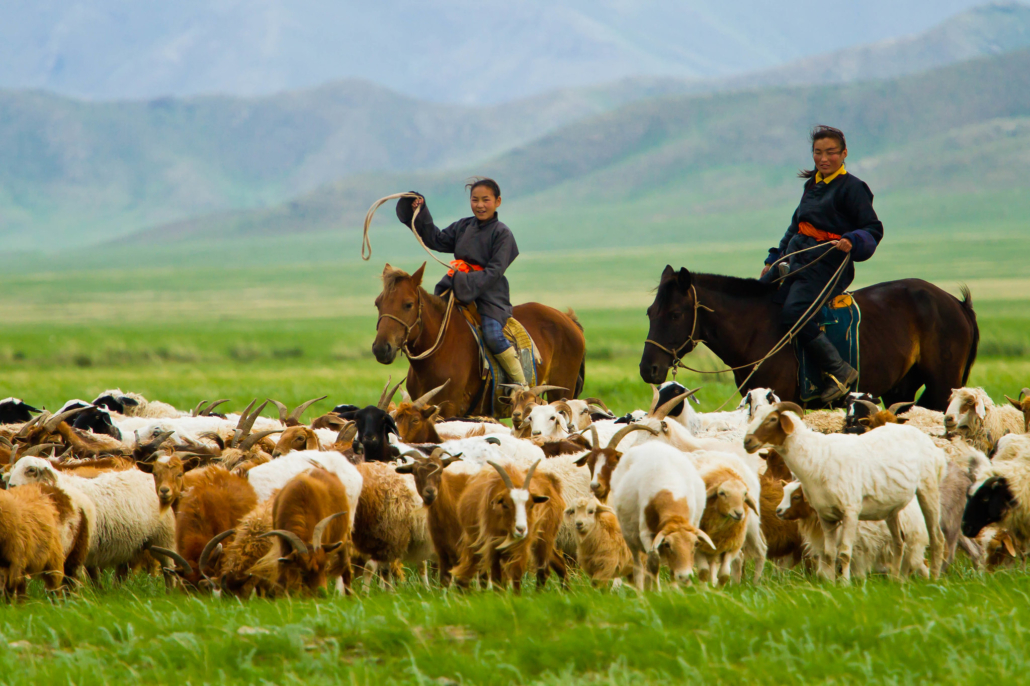
Notably, the poverty reduction rate has been on a decline in recent years, largely due to a lack of quality jobs and labor market inclusion for youth. In 2021, about eight out of 100 Mongolians of the total labor force were unemployed. Poverty is typically worse in rural areas and among the nomadic/herder communities in Mongolia. Steppe and Hoof is an NGO working to reduce poverty among nomads in Mongolia.
Resource Curse: The Mining Industry and Outcomes
The mining industry has high hopes of becoming the powerhouse of Mongolia’s national economy. In 2001, Canadian mining company Ivanhoe Mines discovered one of the world’s largest and highest-grade deposits of gold, copper and molybdenum in Oyu Tolgoi, the south of Mongolia. Tavan Tolgoi and Khushuut also house the world’s largest coking coal deposits. The exciting discovery created a promising prospect for Mongolia’s development. However, the outcome disappointed many. Two decades later, the rich natural resources still have not translated into sustainable economic growth that benefits all.
Meanwhile, environmental concerns are on the rise: Mongolia faces severe water shortage and contamination. Ulaanbaatar ranked as the most polluted capital city in the world in 2021. As the mining industry emerges as the backbone of national economic development, the country with a long tradition of nomadic rural activities is losing its vitality in the vast countryside. Many nomads in Mongolia have faced internal displacement due to mining operations. Others have quit their ancestral living style and started working within the mining sector to escape poverty in Mongolia.
Rural poverty in Mongolia is characterized by a high level of economic vulnerability. In the event of dzud, or a succession of extreme droughts and severe winters that cause massive livestock deaths, herders have no choice but to look for employment in the city. This year, agriculture production is projected to face difficulties due to the harsh weather in spring and winter.
Problematic Urbanization
From 1950 to 2022, the urban population in Mongolia leaped from 20% to 70%. The internal displacement due to mining operations puts tremendous pressure on urban planning and management in Ulaanbaatar. Originally constructed for a 500,000-habitant scale, the capital city now hosts 50% of the entire country’s population–1.7 million people–who struggle in the overcrowded environment. Newcomers from rural areas still flood into the urban settlements despite the deteriorating environment. They join those who have renounced the nomadic lifestyle in the hope of finding more profitable jobs.
On the outskirts of the capital, the “ger” districts are rapidly expanding, where former herders from rural areas would live in informally built yurts with underdeveloped infrastructure. By 2022, around 60% of the Ulaanbaatar inhabitants lived in the unplanned urban periphery. This exceeds the number of those who live in formal housing. The poorly integrated urban economy in the “ger” districts fails to provide inhabitants with the necessary services and facilities for families to survive the harsh winter. The only choice for heating is burning coal. As a result, the informal urban settlements around Ulaanbaatar further exaggerate the already perilous air pollution in the city. This poses serious concerns for the health of the population, especially for small children and pregnant women. Internal displacement and drastic urbanization make urban and rural poverty in Mongolia an intertwined issue requiring an effective, urgent response.
Steppe and Hoof: Revitalizing the Countryside
Mongolian grassroots NGO Steppe and Hoof was founded in 2018 with the aim of mitigating unsustainable urbanization and improving nomads’ living conditions in rural areas in Mongolia. The founder Shatra Galbadrakh told The Borgen Project about her journey. Starting to work closely with nomads in 2009, Galbadrakh was struck by the unfortunate reality many herders face. She decided to make a change. “Many herders lose their livestock for different reasons and have no choice but to move to the capital city, substantially increasing density and unemployment in the city and adding to the pollution,” Galbadrakh comments. “I started small, asking friends and family members to donate first aid kits for herders.”
Today, merely 190,000 nomads continue the traditional herding, while 121,753 people have moved to Ulaanbaatar in the past five years. Living in remote, rural areas, herders face great challenges. They frequently cannot access modern medicines, technologies or the proper training to respond to climatic extremities. “Providing them with first aid, trauma education, practical practice, veterinary knowledge and proper medicine usage empowers herders and reinforces their survival abilities in unexpected natural phenomena and emergency situations,” Galbadrakh told The Borgen Project. “Our program enables them to respond intelligently and proactively to overcome natural disasters and abrupt challenges. Thus, it further eliminates the need for urban migration for herders to the cities.”
Steppe and Hoof now has five board members, an operational team of contractual workers and over 30 international volunteers. Members have different skills and come from distinct backgrounds, including doctors, paramedics, veterinarians and professionals from around the world.
Veterinary Education and Medical Assistance
Steppe and Hoof’s operations concentrate on two aspects: native horse preservation and veterinary education and first aid kit and medical assistance. The veterinary training spans from basic animal wound cleaning techniques to recognizing animal infectious diseases. Steppe and Hoof transmits knowledge of veterinary medicines with their appropriate usages and veterinary law coherent to herders’ lives. It also provides animal checkups by Mongolian and international veterinarians and animal treatment practical training. Galbadrakh recognizes the importance of borrowing from experience. “We strive to help and supplement what herders have been doing successfully for so long with modern medicines and animal practices,” she says.
As for medical assistance, Steppe and Hoof provides services free of charge. It delivers first aid kits to herders in their pastures, conducts preliminary health checkups and sonography diagnoses and offers consultation and medical advice. Herders participating in the program often actively seek help when facing health concerns to prevent diseases at the earliest opportunity. “It is of great importance to set a considerate mindset with proper medical care, first aid, trauma response and disaster response in both the veterinary and medical parts. The outcome of our projects is invaluable and will be shown in the long term in herders’ lives,” Galbadrakh says with confidence.
A Sustainable Future in Honor of Nomads in Mongolia
In three years, Steppe and Hoof’s program has seen drastic expansion and increased effectiveness. Despite extreme weather, poor conditions of country roads and a lack of electricity and facilities, it successfully conducts programs and reaches the targeted herders and their families. Steppe and Hoof usually travels thousands of kilometers to reach herders in remote areas during a project.
Approximately 1,000 herder families so far have had first aid and trauma training and emergency preparation in five of the 21 provinces in Mongolia. In 2022, Steppe and Hoof became the official charity organization of Mongol Derby, the longest and most demanding horse race in the world. Along with other international partnerships, the grassroots NGO is securing recurring funds and building multilateral collaboration for a sustainable prospect of the programs.
“Since there are only a few non-governmental organizations doing this kind of work in Mongolia, our organization’s contribution can bring positive change and great support to Mongolian livestock welfare and nomads’ lives,” Galbadrakh says. “New global issues are triggering and endangering our nomadic tradition and way of life, but we are here to help preserve and sustain their distinctive nomadic lifestyle that has been passed from generation to generation.”
– Shixin Zhao
Photo: Flickr
