Goat Loan Schemes and Malnutrition in Darfur
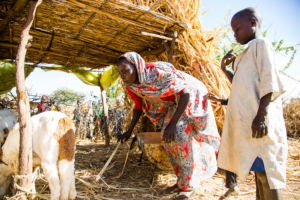 Infant malnutrition in Darfur has burgeoned due to worsening conflict in Sudan. However, the nonprofit organization Kids for Kids has made strides in combating these health concerns with a goat loan microfinance scheme.
The Ongoing Crisis in Darfur: Basics
In recent months, Sudan’s western region of Darfur has been embroiled in ongoing civil conflict. For the last two decades, the area has been restive and is currently suffering from ongoing military rivalries. Perhaps the most striking implication of the hostilities is an unprecedented refugee crisis, which has displaced up to 1.5 million Sudanese civilians.
Continued volatility on the ground has deprived the Darfur region of essential aid and support. One of the most pressing issues facing refugees is that of child malnutrition. UNICEF has estimated that 3.4 million children under the age of 5 are suffering from acute malnutrition in Sudan. This number has accelerated sharply since conflict broke out earlier this year.
With food shortages limiting daily meals, aid workers have noted a reduction in women’s breast milk as a result. A lack of breast milk can be detrimental to the growth and brain development of infants. While there are around 1,500 U.N.-based nutrition sites across Sudan, a relatively small proportion of these in Darfur means that infant malnutrition can go undetected.
Kids for Kids Goat Loan Scheme
Since 2001, Kids for Kids (KFK) has been working to provide solutions for malnutrition in Darfur. One project undertaken by the group has not only shown great promise on the ground but has influenced other aid groups and public figures to follow suit. It has been regarded as one of the best microfinance schemes to date.
After seeing firsthand the effects of malnutrition in Darfur, KFK CEO Patricia Parker implemented a goat loan scheme. Goat milk is often the only source of nutrition for infants and children in Darfur, and is relied upon heavily by families in the region.
In order to sustain the poorest households in KFK-adopted villages, five nanny goats are loaned to the poorest 15% of communities over a two-year period. After this time, during which a shared billy goat helps to breed a flock of kids, nanny goats are passed to another family in need.
Encouraging Science
Milk from the flock serves as a vital source of protein for babies and young children. Health professionals have advocated the use of goat milk in combating infant malnutrition in recent years.
Recent studies suggest that goat milk proteins are more easily digested than cow milk and can minimize symptoms of abdominal illness. This in turn prevents further malnutrition from diseases such as dysentery and parasitic infections. Moreover, goat milk has been shown to provide higher “satiating effects” in infants thus reducing prolonged hunger.
Commitment to Goat Breeding
Goat husbandry combats infant malnutrition in Darfur while also remaining an integral source of household income. It is particularly apposite in small, developing communities owing to low-cost, low-feed requirements. Goats are able to survive on dried twigs and leaves and can find sustenance in arid climates. Excess milk can also be sold to the rest of the community for profit.
As such, KFK has robust measures in place to ensure that goat flocks continue to alleviate poverty and starvation at a community level. Husbandry training is provided to educate families about harmful plants and disease prevention. KFK has also introduced an Animal Loan Committee and a Children’s Shepherds’ Committee. The former oversees animal care on a weekly basis, while the latter educates children on raising goats. This is particularly important as children in Darfur are often tasked with caring for flocks.
As many as 310,000 Darfuri civilians across 70 villages are currently benefiting from KFK’s work. The success of the Goat Loan Scheme has resulted in further projects involving chicken and donkey husbandry.
The Ongoing Influence of KFK
The success of KFK has influenced celebrities and other notables to take action against infant malnutrition in Darfur. These include British celebrities such as Joanna Lumley, Miriam Margolyes and Timothy West. Locally, the Wali (governor) of northern Darfur has started his own goat loan project based on the successes of the organization.
– Cara Jenkins
Photo: Flickr
