Amparo Confidence Sockets and Kenyan Amputees
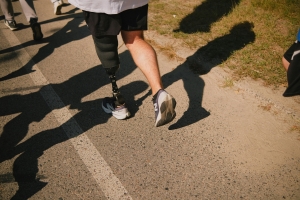 In Kenya, as of 2025, approximately 0.9% of the population is living with disabilities. Of that population, 42% experience disabilities related to motor function and 80% live in more rural parts of Kenya. Due to the nature of Kenya’s public health facilities, which often lack adequate equipment to provide more adapted amenities for Kenyans with mobility-related disabilities, a large number of Kenyans live with only the most basic levels of aid.
Despite this, technology being deployed in the form of the Amparo Confidence Socket in Kenya has the capacity to modernize and revolutionize the lives of Kenyan amputees.
Causes of Amputations in Kenya
Around the world, amputations happen often for a plethora of reasons. In Kenya, a disproportionate number of amputations occur due to many different factors. For instance, in Kenya, around 550,000 people are living with diabetes, with more than one in three undiagnosed.
When diabetes is not managed, which can be the case when someone is living with undiagnosed diabetes, amputations may end up being the only form of treatment. Another factor is amputations related to trauma. In Kenya, 35.7% of amputations are a result of trauma-related incidents.
Part of the high number of trauma-related incidents includes poor road infrastructure, which has the capacity to cause accidents weekly. Even with the different reasons as to how Kenya, as a country, ended up with a high portion of its population requiring aid in relation to their motor-related disabilities, there are still many barriers to achieving access to technology that could help. These barriers limit the availability and use of such technology.
The Amparo Confidence Socket
Designed for individuals with amputations in areas that often lack resources, the Amparo Confidence Socket was created as an “off-the-shelf prosthetic socket technology.” This allows for a more streamlined fitting process and increased portability. It makes the technology accessible to more rural communities.
The company Amparo, in partnership with the Global Disability Innovation Hub at University College London, deployed the Confidence Socket in Kenya as part of a clinical trial. The aim was to evaluate its effectiveness. It was later found that participants in the study had improved mobility after being fitted with the Confidence Socket.
Despite some later complaints about decreased comfort, the Amparo Confidence Socket notably increased users’ access to prosthetic services. It also supported improved mobility outcomes.
Going Forward
The Amparo Confidence Socket has the capacity to truly revolutionize the experience of amputees in Kenya. There is still room for improvement in the comfort and long-term use of the Amparo Confidence Socket in Kenya. However, its introduction, along with its flexibility in transportation and fit, has the potential to revolutionize the lives of Kenyan amputees.
– Bernice Attawia
Bernice is based in London, UK and focuses on Global Health and Politics for The Borgen Project.
Photo: Unsplash
