Insecticide-Treated Bed Nets Key in Fight Against Malaria
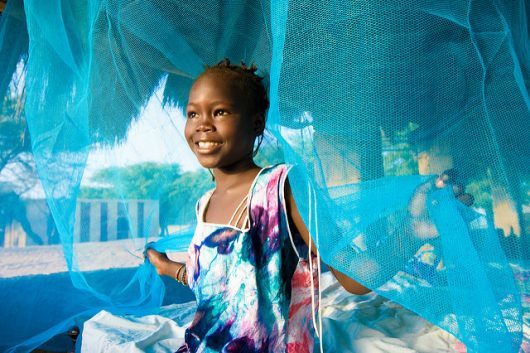 Despite the overall decrease in malaria deaths, which comes in at a solid 29 percent drop from 2010 to 2016, the reality is that the fight against malaria is still an ongoing battle with massive casualties. Some 429,000 malaria deaths occurred in 2015 alone. In fact, over half of the world’s population is still at risk of malarial contraction, and those living in sub-Saharan Africa are particularly vulnerable due to the area’s malarial-conducive environment. The risk of contraction in this particular region can be greatly mitigated through the use of a simple tool: insecticide-treated bed nets (ITN). The product has revolutionized the fight against malaria and ultimately become the cornerstone of malaria prevention in sub-Saharan Africa.
In a study conducted in the three northern regions of Ghana in 2015, it was found that the mortality rate for children under five that slept beneath ITNs was 18.8 percent lower than those that did not sleep beneath an insecticide-treated bed net. Furthermore, the majority of gathered research shows a significant correlation between widespread ITN usage and decreased malarial death levels. This is attributed to the fact that insecticide-treated bed nets prevent the spread of malaria by not only physically inhibiting mosquitoes from infecting individuals, but also by killing those mosquitoes which encounter the net. This is significant, as it reduces the population of malarial transmitters.
The fact that insecticide-treated bed nets actually kill, and consequently decrease, potential malaria transmitters is exactly why insecticide-treated nets are so essential in the campaign against malaria. Yet, most ITNs require that the nets be periodically retreated with insecticides every three to six months. Such repeated treatments are both expensive and time-consuming, a combination which means that most re-treatments are never done. This ultimately means that ITNs are no better than the average bed net. The identification of this weakness led to the birth of the long-lasting insecticide net (LLIN).
The LLIN was a product that was created in 2003, in a Tanzanian textile factory called A to Z Textiles. After gaining support from Acumen Fund, an internationally-renowned venture-capital organization, A to Z was able to collaborate with Sumitomo Chemical and ExxonMobil to begin producing chemically-treated bed nets that are effective for up to 5 years. This is a huge shift from the previous technologies that required repeated treatments.
By injecting the nets with long-lasting insecticide, A to Z ignited its collaboration with the World Health Organization and UNICEF in an effort to distribute the nets to the most vulnerable individuals. Today, the factory employs over 7,000 people, most of whom are women, and is the largest producer of LLINs in Africa, with a total production of over 29 million bed nets a year. It maintains a commitment to accessibility and has engineered a way to reduce production costs to only five dollars in order to make the nets more financially accessible to those who need it the most.
Though the battle against malaria in sub-Saharan Africa is ongoing, it is greatly aided by the increased usage of ITNs, and LLINs specifically. As long as organizations like A to Z continue to innovate new and accessible methods of prevention, there can be hope for a malaria-free world.
– Kailee Nardi
Photo: Flickr
