The Sprawling Indian Slum Economy: Dharavi
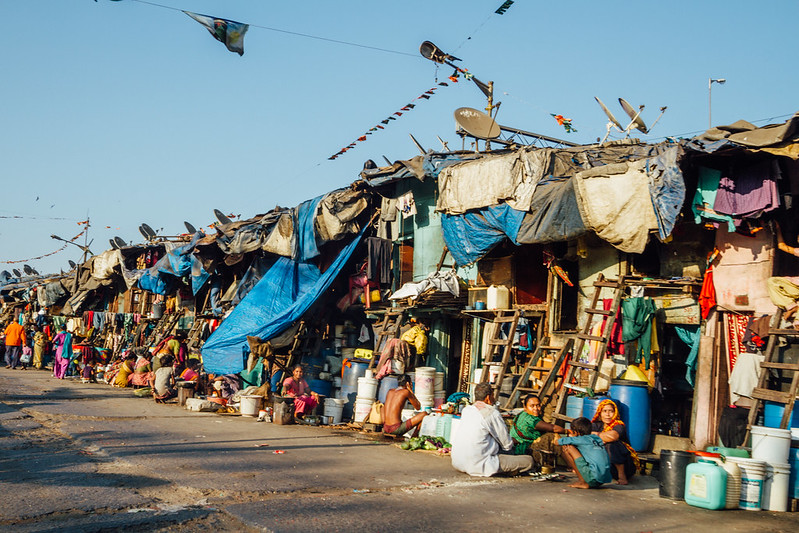 Dharavi, Asia’s largest slum, is located in the heart of Mumbai. It is a symbol of urban poverty. Beneath the visual chaos and tightly packed lanes lies a highly functional Indian slum economy. This informal economy includes thousands of micro-enterprises such as leather workshops, recycling businesses and garment units, among many others. Offering employment to tens of thousands, this remarkable local economy generates an estimated $1 billion annually.
The Invisible Engine
Dharavi has thousands of small workshops and micro-enterprises. Many homes function as production units, producing goods such as leather products, textiles and jewelry, as well as niche items like plastic weaving, with some reportedly being exported. Although these claims cannot be fully verified through official documentation, word-of-mouth accounts suggest widespread trade activity. Some sources cite that there are upwards of 20,000 mini-manufacturing units with cumulative annual outputs close to $1 billion.
Margins of the Marketplace
While the Indian slum economy is flourishing, it also harbors limitations. Informality contributes to a lack of protection, precarious working conditions and exploitation. Most workers lack formal contracts and statutory benefits. Many face unsafe factory and construction conditions that can result in illness or even death, as safety measures are rarely enforced.
These problems have become part of a broader debate around redevelopment. Some advocates, such as Adani Group and its supporters, have cited poor working conditions as justification for redevelopment plans that could dismantle the existing economy and lifestyle.
Risks of Redevelopment
Redevelopment could, in theory, benefit the informal economy through formalization, safety measures and improved infrastructure. However, current plans—particularly the Adani Group’s redevelopment project—have raised significant concerns. According to the opposition government of India, the project appears to prioritize private gain over community welfare, with the potential to displace up to 700,000 people. Some alternative residential sites proposed by the government are located far from the existing economy and income sources of current residents.
Rahul Gandhi stated, “This government handed over Dharavi to Adani,” accusing it of “enriching cronies.” For many Dharavi vendors, the plan “has raised significant fears amongst residents over their livelihood, education and opportunities,” according to Land Conflict Watch. The industries that thrive here cannot be confined to traditional business models based on standardized land parcels or enclosed units without open yards or foot traffic access.
What Dharavi Needs
Dharavi does not need to be replaced—it has the potential to be part of India’s urban future. While redevelopment is often framed as a way to bring safety, order and opportunity, the current plans, particularly those led by private players like Adani, risk doing the opposite. The Dharavi Bachao Andolan (Save Dharavi Movement) fears that redevelopment could prioritize land acquisition over community welfare.
The informal economy here is not accidental but rather a functional system with a “thriving micro-economy” built on proximity, shared space and dense networks, according to a report by the Toda Peace Institute. For redevelopment to genuinely benefit this community, it must consider how residents already live and work. As Land Conflict Watch notes, the government’s decisions “indicate that the government is prioritising profits for [the] developer over the interests of Dharavi residents.”
If implemented inclusively, redevelopment could bring safer conditions, better infrastructure and stronger worker protections. However, that would require ensuring that residents are active participants in planning processes, as noted by Slum Dwellers International. This case highlights the importance of approaching informal economies through inclusion and collaboration rather than replacement.
Looking Ahead
Dharavi’s resilience shows that progress and preservation can coexist. With inclusive planning that safeguards jobs, strengthens safety and involves residents in decision-making, redevelopment can improve living conditions while protecting livelihoods. If done responsibly, Dharavi can stand as a model for community-driven urban renewal in India.
– Maryam Qutbuddin
Maryam is based in Reading, UK and focuses on Business and New Markets for The Borgen Project.
Photo: Flickr
