Income Inequality in the Philippines
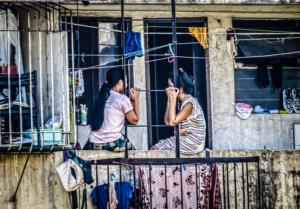 The Philippines continues to grapple with the complex challenge of income inequality. Although the nation has made significant strides in poverty reduction and economic development, income inequality in the Philippines, if failed to be addressed, can affect economic stability, hamper social progress and perpetuate intergenerational poverty.
Reducing Income Inequality in the Philippines
The Gini index measures the extent to which the income distribution among individuals and households strays from a perfectly equal distribution. A Gini index score of zero indicates perfect equality, and a Gini index score of 100 suggests perfect inequality. As of 2021, the Philippines has a Gini index score of 40.7, a significant decline from the country’s index of 47.7 in 2000.
The World Bank reported that, as of 2018, the Philippines’ middle-class and economically-secure population had increased to nearly 12 million and 44 million people, respectively.
The percentage of workers with an elementary education or less drastically declined from 52% in 1988 to 25% in 2020. The number of workers with a high school education as well as a college education or above increased by eight percentage points between 1988 and 2020.
The shift from agricultural work to productive jobs has been more significant among bottom-income earners. The percentage of lowest earners engaging in productive wage work increased by 21 percentage points between 2000 and 2018 — in general, workers engaging in productive wage work only increased by nine percentage points during this time period.
Active efforts to reduce income inequality in the Philippines, such as expanding social assistance coverage to 50% of the poorest quintile by 2018, successfully lowered the poverty incidence by 10% and the depth of poverty by 15%.
Ongoing Challenges
In a 2022 report by the World Bank, the Philippines ranked 15th out of 63 countries in income inequality. The top 1% of income earners contributed 17% of the national income, while the bottom 50% only captured 14%. Additionally, the nation has one of the highest income inequality rates in East Asia.
The 2022 World Bank report also highlighted the intergenerational cycle of poverty perpetuating income inequality in the Philippines. Skilled antenatal care (ANC) utilization stands at 69% for families with limited financial resources and lower educational backgrounds, in comparison with the national average of 94%. Similarly, the postnatal care (PNC) rate is 51% among families with limited financial resources and lower educational backgrounds, as opposed to the higher national figure of 86%. The rates of stunting (42%), underweight (27%) and wasting (8%) are markedly elevated in economically disadvantaged households, in stark contrast to the prevalence among wealthier counterparts (11%, 7% and 4%, respectively).
Age-appropriate vaccinations are 35 percentage points higher for children with college-educated mothers and 17 points higher in the richest quintile. Children of lower-income households face reduced enrollment rates and are less likely to be placed in the age-appropriate grade. Conversely, students from more affluent households can invest more extensively in education, with a per capita expenditure on education more than 22 times that of the poorest households. The limited access to health care, education and opportunities for skill development constrains upward mobility, culminating in the intergenerational transmission of poverty.
Economic recovery from COVID-19 is uneven. In May 2022, 40% of the poorest quintile divulged income loss compared to 19% of the highest quintile. 51% of the richest quintile reported being fully immunized, but only 12% of the poorest quintile reported being fully immunized. Poor households estimate 68% less effectiveness with remote learning, significantly higher than the national estimate of 50%. Prolonged distance learning could reduce effective schooling by a year, coupled with de-skilling from unemployment, leading to substantial future earnings loss for low-income families.
Job polarization grows as work changes. From 2016 to 2021, middle-skilled jobs decreased while low and high-skilled jobs rose, potentially deepening income inequality in the Philippines.
Looking at the Future
Recently, the Philippines announced the AmBisyon Natin 2040 project, which envisions a resilient, prosperous and content country. To ensure improved living standards, secure homes and the absence of poverty and hunger, the goal encompasses economic growth that requires substantial growth in per capita income, broad-based development across sectors and regions and a reduction in income inequality.
The eradication of poverty and the promotion of health and wellness, quality education and innovation require policies focusing on expanding access to quality health care, education and skills development for vulnerable populations. Strengthening social safety nets, enhancing educational technology for remote learning and promoting employment opportunities in productive sectors can help mitigate the adverse effects of COVID-19. Implementing these measures can help ensure more equitable economic growth for the Philippines.
– Freya Ngo
Photo: Flickr
