How Hydrogel in Zambia Could Help Women Protect Livelihoods
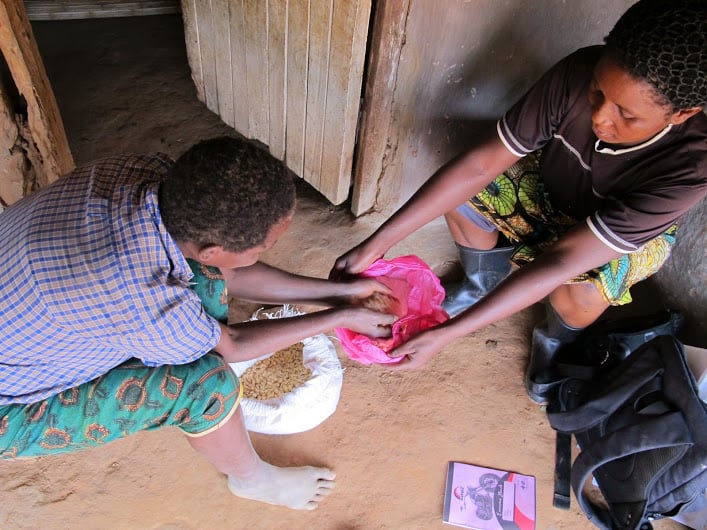
Forests can be an important source of income for families in rural Zambia. Forest products contribute about 20% of rural household income, while forests and other natural resources support the livelihoods of about 60% of rural households. For women who depend on these resources, environmental degradation can put an existing source of income under pressure.
The Booma Women Cooperative
In Southern Province, the Booma Women Cooperative is investigating whether hydrogel can help recently planted trees withstand dry conditions. The cooperative uses natural resources such as mongongo to produce oils and cosmetics, linking forest resources to women’s existing livelihood activities.
Women in Mukuni Village, Southern Province, collect forest resources for food and income. Mongongo nuts are one such resource, traditionally collected and processed by local communities. The Booma Women Cooperative buys mongongo seeds from local women and processes them into cooking and cosmetic oils for local shops, lodging facilities and wellness centers. The cooperative also produces cosmetic oils and butters from other locally sourced forest products.
Mendel University reports that the cooperative gives women opportunities to earn income by collecting and selling mongongo products.
Drought and Forest Pressure
These livelihoods face pressure from environmental degradation. Drought, logging, charcoal production, agricultural expansion and uncontrolled fires can place additional pressure on forests. Research from the International Growth Centre found that drought-related crop failures can push smallholder farmers toward charcoal production as a coping strategy, increasing pressure on forests.
Testing Hydrogel in Drought-Prone Areas
Hydrogel absorbs water in soil and gradually releases moisture as surrounding conditions become drier. Hydrogel can retain water in soil and release moisture gradually; its effects on seedling survival vary by species and conditions.
At the Booma Women Cooperative, researchers from Mendel University in Brno are testing whether hydrogel can support tree establishment in drought-prone areas. The project receives funding and support from the Czech Ministry of Foreign Affairs through the Czech-UNDP Partnership. It initially aimed to support at least 400 native and oil-bearing trees. By early November 2025, more than 1,500 seedlings from eight species had been sown, and more than 1,000 had germinated. Six species are native and two are introduced.
Women receive training in planting, hydrogel application and early seedling care, while researchers collect field data and use sensors to monitor tree growth and local conditions. A 2023 field study of four Central European tree species found that hydrogel treatment reduced seedling mortality by 1% to 9%, although responses varied by species.
Future Income Benefits Remain Uncertain
The potential economic benefit of the Booma project depends on whether the seedlings survive and mature. If they do, the trees could eventually contribute to forest resources used for activities such as mongongo collection and processing. However, the project has not yet demonstrated that hydrogel will produce this outcome in Southern Zambia.
It remains uncertain how many seedlings will survive and mature, whether the technique will perform similarly under local conditions and whether healthier trees will eventually produce enough forest products to affect women’s incomes. The cost and scalability of hydrogel also remain questions.
Most importantly, Booma members have not yet received measurable income benefits from the project. Evidence that hydrogel can improve seedling survival under some conditions does not establish that it will increase incomes in Southern Zambia.
The Booma project is testing whether a drought-adaptation technique can help protect forest resources connected to existing women’s livelihoods. Whether the approach eventually strengthens those livelihoods remains to be determined.
– Zeba Vagh
Zeba is based in Melbourne, Victoria, Australia and focuses on Technology and Solutions for The Borgen Project.
Photo: Flickr
