The Modernization of India’s Railways Can Support Poverty Reduction
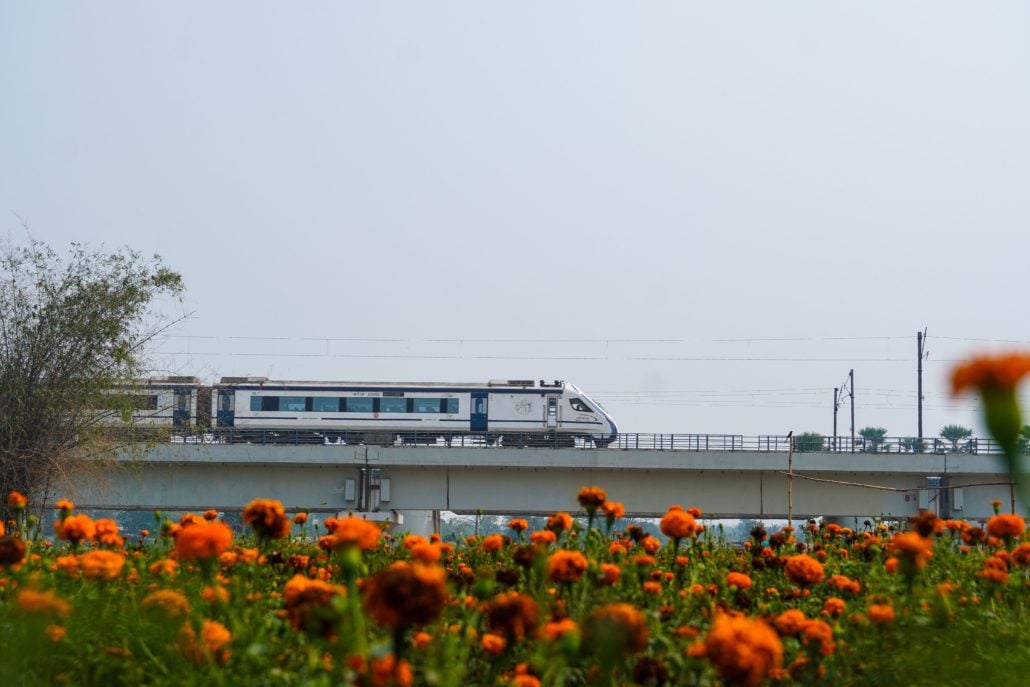
India’s railways transport millions of passengers daily, connecting cities and communities across the country. However, connectivity between major cities and tier-2 and tier-3 cities has been historically uneven. Since the turn of the century, increased government investment has accelerated railway modernization, including faster trains, upgraded stations and new safety technologies. Services such as Vande Bharat and Amrit Bharat, alongside the Amrit Bharat Station scheme, are reshaping passenger rail connectivity across the country. This article examines how these investments can expand economic opportunities and potentially contribute to poverty reduction.
Why Does Railway Connectivity Matter?
Smaller cities, rural communities and remote regions often have weaker connections to jobs, education and health care. Poor connectivity can limit businesses’ access to larger markets and make it harder for workers to pursue opportunities outside their immediate areas. Better connectivity can also encourage tourism and increase spending in less-developed regions. The Borgen Project spoke with Lakshya Bafna, an international business student with a scholarship from Macquarie University. He said, “From an economic-development perspective, improved railway connectivity reduces generalized transportation costs—not just the ticket price, but also travel time, reliability and the cost of accessing economic opportunities.”
Vande Bharat: Faster Connectivity and Economic Opportunity
The first Vande Bharat service was launched in 2019 between New Delhi and Varanasi. Since then, the service has expanded across India. While its fares may make it inaccessible to some lower-income households, its economic effects can extend beyond direct passengers. Faster connections can help workers reach economic centers, facilitate business activity and increase access to tourism destinations. These effects may contribute to the growth of smaller cities along its routes. Bafna explained that “positive externalities and indirect economic benefits” are important, noting that Vande Bharat can contribute to “positive effects on labor market forces, increased productivity and business activity, increased tourism, infrastructure spillovers, and improved railway network effects.”
Amrit Bharat: Expanding Affordable Connectivity
Amrit Bharat is a non-air-conditioned long-distance train service operated by Indian Railways, designed to provide affordable travel for low- and middle-income passengers. By reducing the cost of long-distance rail travel, it can make employment and economic opportunities more accessible to lower-income households. While Vande Bharat demonstrates how faster connectivity can create economic spillovers, Amrit Bharat illustrates how affordability can make those opportunities accessible to a wider population. Bafna said, “This is arguably a more direct poverty-reduction mechanism because affordability determines whether lower-income households can actually participate in the transport network. Affordable rail services can reduce the cost of accessing employment.” He continued, “For example, suppose someone lives in a smaller town but works in a larger city. If affordable rail makes daily or weekly commuting economically viable, the worker gains access to a much larger labor market.”
Amrit Bharat Station Scheme: Modernizing India’s Railway Gateways
The Amrit Bharat Station Scheme is a railway station redevelopment program aimed at modernizing facilities across India. Announced in 2022, the scheme targets more than 1,300 stations for redevelopment. Upgrades include improved passenger facilities, accessibility infrastructure and wider platforms designed to accommodate growing passenger numbers. By making stations more accessible and functional, the scheme can improve people’s ability to use rail services and connect with employment, education, health care and markets. Better stations can therefore complement improved train services by making the wider railway network more accessible to communities.
How Can Railway Modernization Support Poverty Reduction?
Better rail connectivity can expand the geographical area in which people can seek employment. Railway construction, maintenance and associated activities can also generate jobs. Improved mobility can give workers and businesses greater access to markets and suppliers, while lower transportation costs can make economic activity more efficient.
Railway modernization can also support local economic activity around stations. Bafna said, “A railway station can function as an economic node, not merely a place where passengers board trains.” He explained that modernization can create opportunities in construction, maintenance, retail and services, while potentially increasing demand for hospitality, taxis and logistics. Better stations could also make surrounding areas more attractive to businesses and investors, creating additional opportunities for employment and economic activity.
Kavach: Strengthening Railway Safety
Kavach is an indigenous Automatic Train Protection (ATP) system that the Research Designs and Standards Organisation (RDSO) developed to improve railway safety. The system provides automated train protection and collision-prevention capabilities, including protection against Signal Passing at Danger (SPAD), overspeeding, rollback and certain side, head-on and rear-end collisions. Kavach can also automatically apply brakes in specified situations, including when a train exceeds its permitted speed or when the system detects two trains moving toward each other on the same track section.
By adding another layer of protection to train operations, the system can support safer and more reliable rail services. Reliable rail services matter to passengers and businesses that depend on trains for mobility and the movement of goods. However, Kavach should not be presented as a direct poverty-reduction measure. Instead, safer, more reliable railway operations may limit disruptions to the movement of people and goods, complementing broader railway investments in connectivity and affordability.
Who Benefits From Railway Modernization?
The modernization of India’s railways requires significant public investment and can create employment through construction and infrastructure projects. Upgraded stations, including wider platforms, escalators and lifts, can also make rail services more accessible to passengers such as students, migrant workers, vendors and transport operators. However, connecting a poorer region with a wealthier one does not automatically make its residents richer. The benefits depend on affordability, accessibility, employment opportunities and local economic capacity. Bafna said the economic impact of railway modernization should be evaluated “not only by passenger numbers or travel-time savings,” but also by its effects on productivity, labor mobility, market access, employment, regional development and the distribution of benefits across income groups.
Conclusion
The modernization of India’s railways does not directly reduce poverty, but it can support the economic conditions that help communities escape it. Better rail connectivity can reduce transportation and logistics costs, expand access to employment and markets and create opportunities for businesses, tourists, students and migrant workers. If lower-income communities can access these opportunities, railway modernization may contribute to higher incomes and long-term poverty reduction. Ultimately, rail infrastructure is not a cure for poverty, but a tool connecting communities to economic opportunities.
– Dhruv Bandhu
Dhruv is based in Bengaluru, India and focuses on Good News, Technology and Solutions, and Global Health for The Borgen Project.
Photo: Pexels
