How a Better Healthcare System in Angola Can Help Fight Overpopulation
The Republic of Angola is a large country in Central Africa with a continuously growing population of 31 million people. Angola is on the west coast of Sub-Saharan Africa and is one of the continent’s largest countries with 1.2 million square kilometers. As a comparison, it is a little less than twice the size of the state of Texas. With the current growth, Angola‘s population will triple in less than 50 years. This could pose a problem for the healthcare system in Angola as overpopulation is already becoming an issue.
Overpopulation
Angola has one of the world’s highest fertility rates as the average woman will have more than five children in her lifetime. However, the country also has the highest child mortality rate in the world with 187 per 1,000 live births. For those who do survive infancy, one in five children will die before reaching their fifth birthday. Angola ranks 23rd in the world due to its high maternal mortality rates with 477 deaths per 100,000 births.
But how exactly does the mortality rate result in overpopulation? It is all about the odds. Since one in five children on average die before they reach the age of five, families are more inclined to have more children so they have a higher chance to have at least one child reaching adulthood. A number of causes are responsible for the deaths in Angola. Among them are malaria, acute respiratory and diarrhoeal diseases, tetanus, malnutrition and more. More than just because of these initial causes, the mortality rate is so high due to the inadequate health system still being rebuilt.
A weak healthcare system
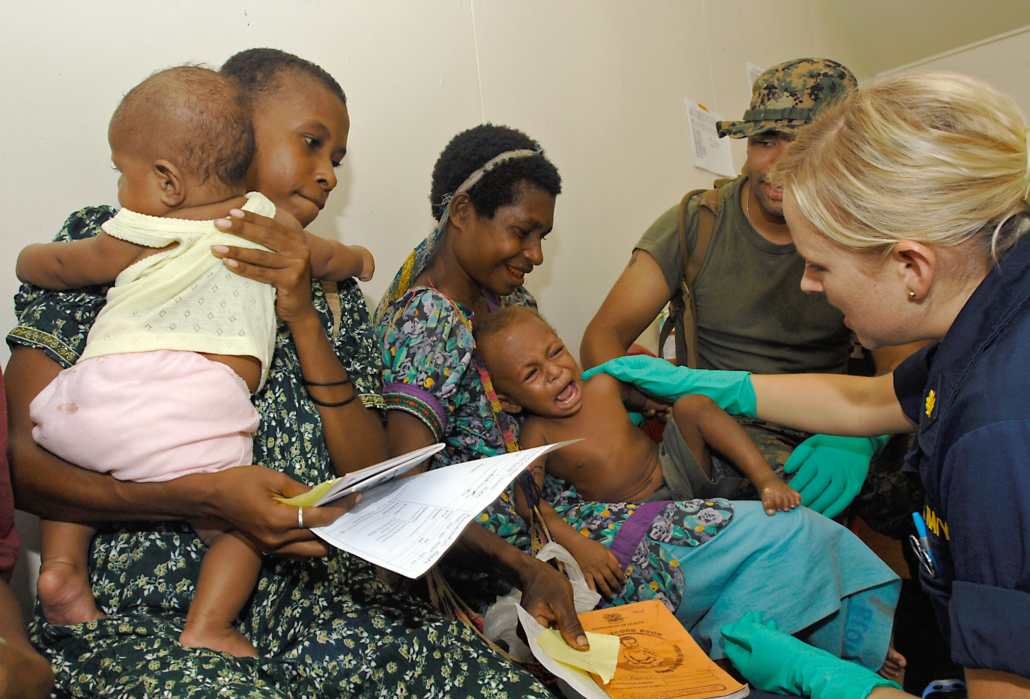
The healthcare system in Angola is split into two parts: private and public. A majority of the hospitals and clinics are close to the capital, Luanda, and very few are located in other parts of the country. Although treatment at the public level is free, the majority of the population is still limited when it comes to medical care. Due to the understaffed, underfunded and underprepared personnel, often times locals and visitors alike choose to receive treatment at the private level instead. While private clinics are considered to be better than public clinics, there is still much to improve. Pharmacies are mostly in the capital and are often extremely understocked. Hospitals will sometimes lack the necessary equipment or funds for important procedures. Angola also faces a significant shortage of physicians, with only 2,000 in the entire country.
By improving the healthcare system in Angola, the mortality rate would decrease enough to stabilize the fertility rates. Vaccines can heavily improve the current health of Angola’s population and prevent diseases from spreading. Currently, 929 health facilities out of 2409 perform routine vaccination activities. With access to sustainable clinics that provide vaccines throughout the country, the healthcare system in Angola would start to improve the lives of the citizens and lower the mortality rates.
Through strategic planning and patience, the healthcare system in Angola will be able to stabilize the current health status of its residents and help slow the overpopulation process in the country.
– Madeline Oden
Photo: Wikimedia Commons
