Highest Number of Refugees Recorded
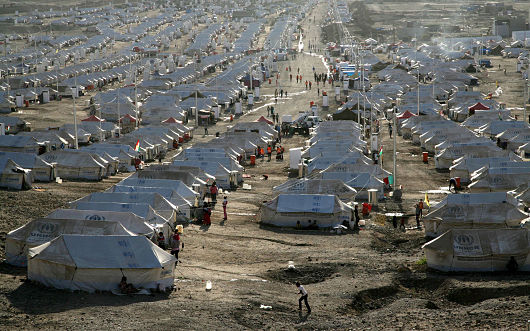
The Office of the U.N. High Commissioner for Refugees (UNHCR) recently reported that nearly 60 million people were forcibly displaced in 2014, which is the highest number of refugees ever recorded. Of those displaced, over 38 million were displaced within the borders of their home countries. The amount of refugees worldwide is now so high that every 1 in 122 people is displaced or seeking asylum. Of those refugees, only 126,800 of them were able to return home, and over half are children. Additionally, the majority of these refugees live in protracted displacement for at least ten years, and many have children during this time.
So where are the refugees coming from? Where are they going and why?
The majority of these refugees are fleeing the civil war in Syria and most of them are going to Turkey. But with such high rates of displacement, the problem is clearly widespread. People are fleeing from sub-Saharan Africa, Myanmar and Central America. The main driver in the displacement is civil war.
Experts are calling this the worst refugee crisis since World War II. With the advancements we have made globally since World War II, we should not be seeing such record-breaking highs in displacement rates. The situation in Syria is not likely to be resolved anytime in the near future,due to the widespread destruction and Islamic hold on the nation.
As we see a more prolonged period of civil war in various countries around the world, we will continue to see high displacement rates and see these displaced people staying displaced for longer periods. The mass migrations of populations around the world have huge implications on changing culture, foreign relations and the economy.
These displaced people start to make up subpopulations in their own countries or in neighboring countries and bring with them their culture. It is no easy feat to integrate into these other countries and refugees often face harsh discrimination that results in low living conditions, inadequate access to basic services and low employment rates. These displaced people face human rights violations, even after fleeing horrific circumstances, and the governments that accept them are faced with the strain they place on their own nation. We can expect to see more internal and external tension in these countries.
Because 53 percent of all refugees worldwide come from only three countries – Syria, Afghanistan and Somalia – solutions can be targeted. But first these solutions need to be developed. There needs to be an international focus on reducing the rates at which people are fleeing. The most pressing issue is that of civil war because it destroys a nation’s infrastructure on all levels. Civil war often involves widespread human rights violations both during and after the conflict, as the huge masses of people that fled the conflict face additional problems elsewhere.
The problems that arise from civil war, including but not limited to displaced persons, are spread across large geographical areas. By addressing the three major sources of the world’s refugees, we can hopefully prevent the problem from expanding any further. Displacement is largely a political issue and to alleviate it, there must be agreements and regulations set forth by the world’s political leaders.
– Emma Dowd
Sources: CNN, Foreign Policy 1, Foreign Policy 2
Photo: Al Jazeera America
