Awaaz-e-Sehat: AI Health Care in Pakistan
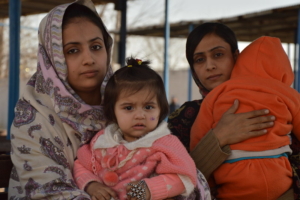 Pakistan’s poor health care standards for pregnant women has left the country facing some of the worst infant and maternal mortality rates in the world. According to UNICEF, Pakistan’s infant mortality rate stands at 63.3 deaths per 1,000 live births. Comparatively, the United States has an infant mortality rate of 5.4 out of 1,000, the CDC states. Maternal mortality rates in Pakistan also determine the dire situation, with 186 deaths among mothers per 100,000 live births. In developed nations, this number sits at just 12 deaths per 100,000. A new AI assistant, Awaaz-e-Sehat, is being developed to combat this problem and set the standard for AI health care in Pakistan.
Mothers and Children at Risk
Even among other developing nations, Pakistan stands out as having alarmingly low pregnancy outcomes. Poverty plays a major role in this situation as a lack of education in underdeveloped areas and poor socioeconomic conditions exacerbate the problem. Low literacy rates in underdeveloped areas contribute to an unawareness of the importance of contraceptives, check-ups, blood testing and nutrition. Women in these areas also have difficulties improving their socioeconomic standing and young, unmarried women often face discrimination due to taboos surrounding contraceptive use.
Adequate health facilities and staff can similarly determine the outcome of pregnancies. A general lack of quality health care services places pregnant women at a disadvantage. Other factors, such as the distance to facilities in rural areas, make dangerous home births a common occurrence. One of the most significant challenges is a lack of medical records. Without documented background information, medical professionals cannot make accurate diagnoses and prepare personalized care plans that factor in lifestyle and socioeconomic components.
Funding from Gates
Earlier this year, philanthropist Bill Gates remarked on artificial intelligence’s ability to improve health care for developing nations. He believes AI can perform everyday tasks, such as filing insurance claims and preparing doctors’ notes, reducing the workload for medical professionals.
Determining the severity of medical conditions through AI-linked devices to lower child mortality rates is another endeavor he hopes to achieve in the future. Gates has already developed an ultrasound tool utilizing AI software to determine whether a pregnancy is high-risk, which has the potential to save the lives of both mothers and children.
On Aug. 9, 2023, the Bill and Melinda Gates Foundation announced the 48 recipients of its Grand Challenges grant. The $5 million grant gives each recipient $100,000 to fund projects that tackle global health and development issues using AI in low- and middle-income countries. Dr. Maryam Mustafa, Assistant Professor of Computer Science at Lahore University of Management Sciences in Pakistan, is one such recipient. Her work is set to pioneer maternal AI health care in Pakistan and decrease the country’s high mortality rates.
AI as a Solution
Dr. Mustafa and her team are developing an AI assistant called Awaaz-e-Sehat, meaning “voice of health.” Health care workers will use the voice-enabled conversational AI assistant on mobile phones to electronically create and file medical records. Developed using a large language model (LLM), Awaaz-e-Sehat utilizes an intuitive user interface, speech recognition and text generation modules. The assistant will cut down paperwork, leaving more time to address patients and create the valuable records that Pakistan’s maternal health care system has been sorely lacking.
The innovation will be tested for its ability to collect data from 500 patients at Shalamar Hospital in Lahore. The AI assistant will initially be distributed to maternal health care workers in rural areas, but Mustafa hopes it will eventually be used in all maternal health facilities in Pakistan. Mustafa says, “It has the potential to significantly improve not just patient treatment but also create datasets to train diagnostic AI tools that tackle maternal health outcomes in Pakistan.”
With the help of Dr. Mustafa’s innovation and Gates’ funding, AI health care in Pakistan could become a lifesaver for expecting mothers. Establishing electronic medical records changes the field of medicine in Pakistan for the better and Awaaz-e-Sehat is the first step toward a bright future.
– Isabella Rothe
Photo: Flickr<
