Managing Global Aid Cuts
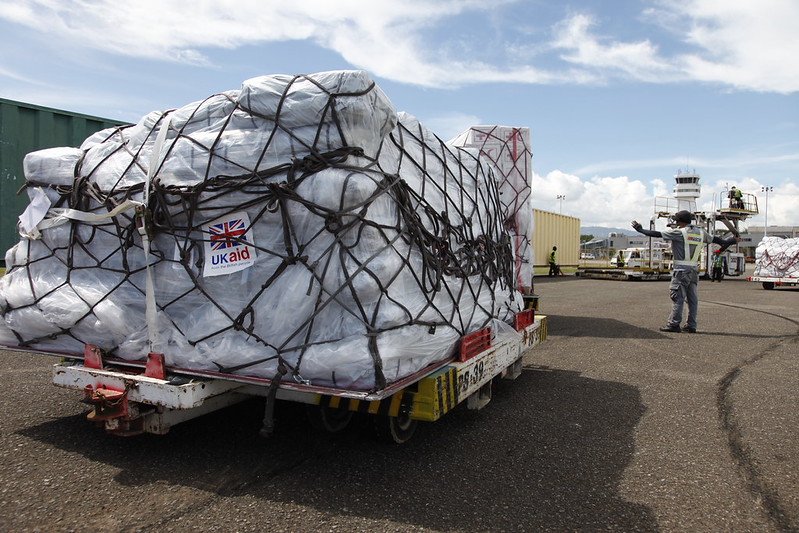 Global aid funding has recently undergone a significant reduction, catching many aid beneficiaries off guard. Major donors like the United Kingdom (U.K.) temporarily reduced overseas development assistance, and the United States (U.S.) paused and suspended many programs. However, human ingenuity knows no boundaries. Nongovernmental organizations (NGOs) have started shifting strategies and coming up with innovative approaches to manage the reductions. These include shifting toward impact investing, reorienting humanitarian responses for greater sustainability and empowering local organizations. All of the solutions exhibit great resilience in underdeveloped parts of the world and provide hope for the vulnerable.
Impact Investing
Disruption of financial flows from traditional sources has forced some NGOs to start thinking more about private investors. In other words, it is about redesigning international development to function as investments. While the social impact of new projects remains a priority, generating income arises as a new factor to consider. This way, aid organizations can diversify income sources, preventing overreliance.
It requires NGOs to adapt their work, though. Investor partners will not feel confident about impact investing unless there is greater transparency and accountability of actions. New projects must set clear measurable objectives and be able to effectively demonstrate success to attract funding.
This, however, is not a novel approach. Some international organizations like Mercy Corps have been involved in impact investing for around 10 years now. In 2015, they established the Social Venture Fund (SVF) to support innovative ventures with a positive social impact. Scott Onder, the managing director of the fund, said that “the organisation recognised that the traditional grant-based model of funding international development can be limiting and rarely promotes […] flexibility.” Money from SVF gathered from private investors was used in Kenya to set up Lynk, a platform connecting workers and businesses in need of services, or Arifu, a site offering learning tools to improve income and escape poverty.
By shifting focus from government grants to attracting individuals and private firms, NGOs can manage the reduction of aid budgets globally and aim to maintain a stable budget allowing continuous development work.
Reorientation of Humanitarian Response
Reduced aid budgets have forced beneficiaries to start thinking outside the box. While sustainability has usually been a central focus of many humanitarian projects, its importance becomes undeniable nowadays. Help can no longer assume constant flow of grants but has to reorient itself to design resilient and robust projects that can survive all kinds of crises and shocks.
For instance, the recent Kenyan law amendment represents such change. Since as early as the 1990s, the country has hosted almost a million refugees in designated camps across the country. These relied on funding from the U.S., which was mostly used to cover essential services like food and protection. To offset the impact of reductions, greater focus has been placed on integration of refugees. As Refugees International says, “the new policy would transition camps into settlements by granting refugees the right to work, freedom of movement, and property ownership.”
Another type of reorientation for sustainability is anticipatory action, a strategy already employed by some large international actors like the Food and Agriculture Organization (FAO). Anticipatory action is still primarily concerned with the social impact but also considers cost-efficiency. Addressing problems before they appear reduces repair and recovery costs while saving lives. For instance, Shaheda, a Bangladeshi woman, received support from FAO before the anticipated floods predicted to hit her region in July 2024. A silo donated to her helped protect fodder, seeds and other valuable belongings, allowing her to replant afterward.
Local Organizations Taking Over
The decreased international cooperation has forced local organizations to step up, forming another approach toward aid cuts. Local actors are becoming more4 engaged in helping their communities. Their extensive knowledge of the area, the people and the circumstances is often superior to international aid organizations.
In South Sudan and Kenya, it is the national actors that are leaders in delivery of life-saving help to isolated areas that are frequently out of reach for non-locals. The Catholic Agency for Overseas Development (CAFOD) urges a strengthened and more cohesive cooperation between international organizations and local ones.
A report into the impact of global aid cuts conducted by CAFOD frames the situation as an opportunity for local organizations to strengthen their role in humanitarian responses. Already, their contributions are valuable and sufficient to contribute substantively to food security reduction, based on their presence in South Sudan and Kenya.
Interview with The Borgen Project
An interview with The Borgen Project and Joy Ojinmah, the executive director of Unique Royal Sisters (URS), reveals firsthand experience of managing a grassroots NGO in times of global aid cuts. URS is a group helping female sex workers, the LGBT community and young girls in southeastern Nigeria. In the conversation, URS acknowledged the impact of the cuts and said that their partners and the community they work with felt it as well. Reduced funding makes it difficult to access some of the essential commodities needed for their work, including HIV test kits, PrEP and STI treatments.
“We are trying our best. Most of us started from scratch without having any donors of course. We started working for our community just for the passion that we have for the community,” she said. Despite not having enough funding, they keep their work going, looking for domestic financing or coming up with cost-efficient workarounds like promoting WhatsApp contact with their clients to save on transportation costs. Some operations were able to be restored by collaborating domestically with Caritas Nigeria or Abia State Action Control on AIDS.
Even with restricted funding, URS identified 22 new HIV-infected clients over just three months. However, Ojinmah stresses their impact could be much bigger with higher funding, considering they were only able to operate in 4 out of 17 local governments in the state of Abia. Despite challenges, she remains confident in the abilities of URS and hopes “to have the recognition and support we actually need to keep pushing.”
Looking Ahead
Overall, despite the obstacles posed by global aid cuts, NGOs and grassroots communities keep innovating and working toward their goals. Whether it is impact investing or redesigning current projects, the hopeful and determined people like Joy from Unique Royal Sisters keep fighting for the world to become a better place.
– Karol Hejduk
Karol is based in London, UK and focuses on Good News and Politics for The Borgen Project.
Photo: Flickr
