10 Facts About Girls’ Education in Macedonia
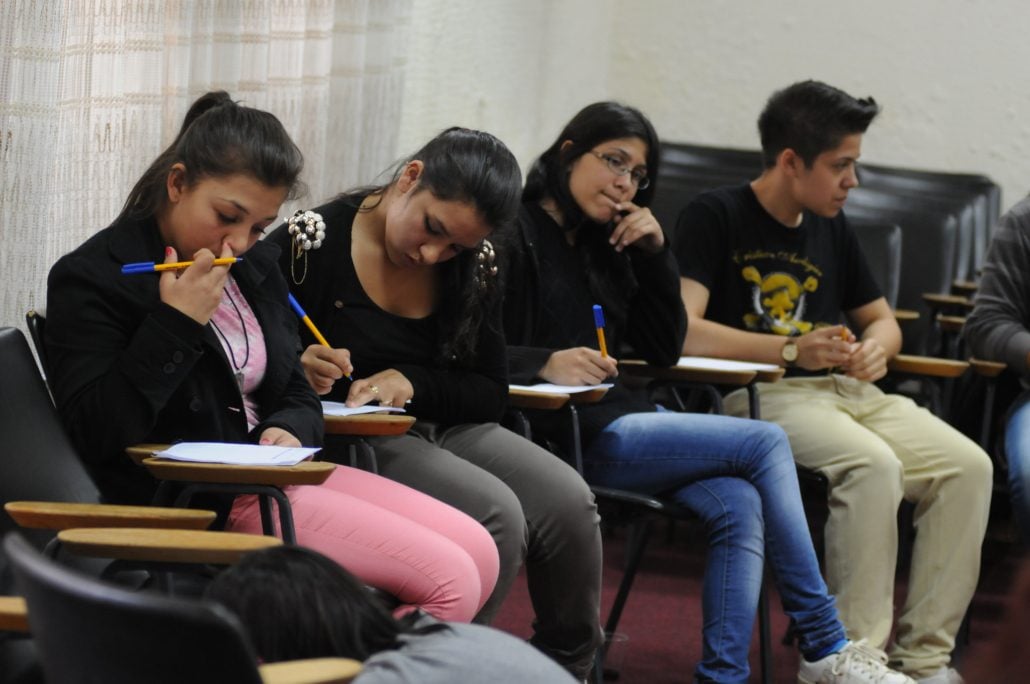
The Republic of North Macedonia, located in the Balkan Peninsula, has made significant progress in strengthening its education system since gaining independence in 1991. In recent years, gender equality—particularly girls’ education—has become a key national priority. Here are 10 facts about girls’ education in Macedonia.
10 Facts About Girls’ Education in Macedonia
- Mandatory Education: Both primary and secondary education are mandatory in Macedonia. Primary education lasts for nine years for all children aged 6 to 15. Secondary education is for students aged 15 or older and is divided into general and vocational schools, with general schools lasting four years and vocational schools lasting either four, three or two years. Students must attend secondary school for four years and pass the State Matura exam in order to pursue higher education.
- Decentralized Education System: Given its ethnic diversity, North Macedonia implemented the 2001 Ohrid Framework Agreement to decentralize its education system. Although municipalities can cooperate with the central government, both the administrative and financial responsibilities of public education are in the hands of local governments. Such responsibility has strained municipalities, with many unable to effectively run the education system and falling into debt.
- Roma Girls: The Romani people, commonly called Roma, are one of the ethnic minorities in Macedonia. In 2019, an estimated 2.2% of the Macedonian population was Romani. Roma girls are especially vulnerable to early marriage and childbirth, with 22.6% of girls aged 15-19 married or in a similar arrangement and 29.2% having given birth by the age of 18 (as of 2019). This results in lower school-completion rates, as many Roma girls have to tend to their families instead of going to school.
- Roma Women’s Illiteracy: Illiteracy among Roma women is high. Due in large part to their high dropout rates, in 2019, only 71.8% of Roma women were literate. Poverty among Roma women exacerbates illiteracy even further: of the poorest 25% of Roma women, only 46.1% were literate. Both of these rates are far below the national average of almost 100%.
- Girls’ Enrollment: Overall, enrollment rates among children in Macedonia are high, as over 90% attend compulsory school. However, girls consistently leave school at higher rates than boys: as of 2019, the early school-leaving rate for girls was 8.4%, while the early school-leaving rate for boys was only 5.9%. On the other hand, it is worth noting that women make up a larger share of higher education students than men, with women representing 54% of students enrolled in higher education in 2020.
- Women in STEM: Although girls and women are often underrepresented in STEM fields worldwide, women in North Macedonia are well-represented in several STEM disciplines, particularly in natural sciences and mathematics. Women graduate from higher education at higher rates than men overall, as well as in some STEM fields in particular. In 2019, more than 60% of the graduates from Natural Sciences and Mathematics programs at all levels were women, and at the Master’s level, more than 80% of graduates in the Medical Sciences were women. While men outnumbered women in the Technical and Technological Sciences and the Biotechnical Sciences, nearly as many women graduated from undergraduate programs in these fields in 2019. However, it is worth noting that men graduate from secondary vocational schools in engineering fields at much higher rates than women, and that the gap between men and women in the Technical and Technological Sciences and the Biotechnical Sciences widens at the Ph.D. level.
- Girls’ Performance in School: According to the OECD’s 2019 review and assessment of North Macedonia’s education system, girls in Macedonia are outperforming boys in school. According to the report, Macedonian girls are outperforming boys by 20 score points in science and seven score points in mathematics.
- STEM Policy: As Minister of Energy, Mining and Mineral Resources, Sanja Bozhinovska said in 2025, “North Macedonia is one of the few countries where the number of women researchers exceeds 50% of the total number of researchers, which is a sign of the immense potential we have. However, this does not mean we should stop – on the contrary, even greater support is needed for girls and young women to be encouraged to follow their interests in science, engineering, and energy.” To this end, the United Nations Development Program implemented the Global Engineer Girls in North Macedonia to increase the participation of women in STEM and help them gain employment in these fields. For example, in 2023, the organization provided 20 women with engineering scholarships. Although women in North Macedonia already study some STEM fields at high rates, the country is working to further promote women’s participation and employment in STEM.
- Inclusive Education: UNICEF has supported efforts to expand inclusive education in North Macedonia, particularly in communities where children face socioeconomic and educational barriers. Through its inclusive education program, UNICEF has trained teachers to provide individualized support based on students’ needs rather than relying on a one-size-fits-all approach. The program, launched as a pilot in 12 schools in 2012, has since expanded to 20 schools, including seven in Roma communities.
- Tackling Child Marriage: In 2019, Macedonia’s government promised to eliminate child marriage by 2030. Since then, the National Roma Centrum in North Macedonia has conducted a door-to-door campaign to try to reduce gender-based violence, inequality and child marriage in the Roma community. As of 2022, the campaign reached 450 women and established networks across five Roma communities to continue to discourage harmful and discriminatory practices. Macedonia has resolved to try to fix the issue of child marriage, which in turn would promote increased educational attainment among girls, especially Roma girls.
Looking Ahead
While there is certainly room for improvement in girls’ education in Macedonia, it is clear that Macedonia is taking steps toward improving education. Girls’ education in Macedonia is not a one-dimensional issue. Rather, it is a diverse issue that has its roots in the socio-economic backgrounds and the race of the girls in Macedonia. With the help of international groups such as UNDP and UNICEF, Macedonia is improving the education of girls.
– YongJin Yi, Jackson Mayer
Photo: Flickr
