Women-Led Government Drives Gender Equality in Namibia
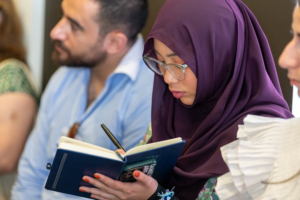 In the last 18 months, Namibia has emerged as a leader of gender equality in sub-Saharan Africa. In the World Economic Forum’s 2025 Global Gender Gap Index, Namibia ranks first among African nations and 8th globally. The country’s progress reflects decades of gender-focused policies and increasing representation of women in political leadership.
The U.N., the World Economic Forum and the World Bank widely recognize that when women hold political power, they often prioritize reforms that strengthen economies and make governments more responsive to citizens’ needs. As the U.N. notes, “Women’s equal participation and leadership in political and public life are essential to achieving the Sustainable Development Goals by 2030.”
In the wake of International Women’s Day 2026, The Borgen Project is highlighting Namibia’s women-led government and the recent reforms that demonstrate how this leadership can drive tangible social and economic progress.
Female Political Leadership in Namibia
The key factor distinguishing Namibia’s progress toward gender equality from that of other nations is the strong representation of women across its government, which has enabled significant social, economic and civic reforms. Currently, Namibia’s president, vice president, speaker of the National Assembly and eight of its 14 cabinet ministers are women. According to the U.N. Women and Inter-Parliamentary Union ranking, Namibia ranks first in the world for women’s representation in government leadership.
This level of representation has also led to greater policy and fiscal prioritization of social reform and education, contributing to poverty reduction in the country.
Gender Equality in Namibia: Driving Policy Reform
Several reforms in Namibia have both contributed to and benefited from women’s presence in political leadership. The National Gender Policy, renewed for another decade in 2025 by the Ministry of Gender Equality, Poverty Eradication and Social Welfare, strengthens gender equality by providing a framework to address the intersections of poverty, social attitudes and gender-based violence.
Since 1998, Namibia’s employment law has been shaped by the Affirmative Action Act, which promotes fair hiring practices, expands employment opportunities for women and protects against pay disparities. These measures help normalize a gender-equal workforce in which women are hired, paid and treated equally in the workplace.
Namibia is often referred to as the birthplace of the U.N.’s Women, Peace and Security agenda, which was adopted as a resolution in 2000. The country presided over its adoption 26 years ago and now has one of the world’s most gender-balanced cabinets.
Expanding Economic Opportunities for Namibian Women
The Ministry of Gender Equality’s Beijing+30 Country Report highlights Namibia’s recent progress in advancing gender equality. In economic development, the government has focused on equal pay, ending workplace harassment and improving women’s access to financial infrastructure and services. Supported by U.N. Women and the World Bank, Namibia’s Affirmative Action Act has increased women’s participation in executive, management and public service roles.
As a result, women now represent a larger share of employed professionals than men, reflecting the impact of broader equality policies in the country. In 2014, the Namibian government adopted Gender-Responsive Budgeting Guidelines to direct public funds toward gender equality and equitable socioeconomic development for women, men and children. In practice, this has meant allocating millions of Namibian dollars to community development centers, education, agricultural infrastructure and income grants, all identified for their roles in improving the livelihoods of women and children.
However, in 2025, less than 2% of the national budget was allocated through gender-responsive budgeting. Namibia’s speaker of the National Assembly has argued that for the policy to have a lasting impact, it must be implemented consistently rather than only when the need arises, noting that “sporadic success isn’t systemic transformation.”
Education and Social Development
Primary education has been free in Namibia since 2013 and secondary education since 2016. Enrollment now stands at about 90% and the country has achieved near gender parity, with similar numbers of boys and girls attending school. In the classroom, students have access to programs that support girls’ pathways into STEM and leadership, alongside curriculum campaigns promoting girls’ rights and gender equality in Namibia.
These initiatives aim to expand educational and professional opportunities for young women, particularly in fields where they have been historically underrepresented. Research from the World Bank shows that universal education for girls is closely linked to higher future earnings, improved health outcomes and long-term poverty reduction.
What Namibia’s Progress Means Globally
The trickle-down effect of women holding political power has undoubtedly improved gender equality in Namibia. These figures have directly influenced the creation and development of gender-focused policies that target social and economic reforms nationwide. The reforms reach workplaces and classrooms, giving women and girls the knowledge, tools and institutional support to contribute to the country’s sustainable development for generations to follow.
Namibia’s experience demonstrates that sustained political commitment to gender equality can lead to measurable social and economic gains. This commitment, which itself becomes both a cause and effect of representative leadership, can move the country and the African continent closer to achieving the Sustainable Development Goals by 2030, with women leading the charge.
– Hannah Michie
Hannah is based in Nice, France and focuses on Good News and Politics for The Borgen Project.
Photo: Flickr
