Food Systems in Costa Rica: Advancing Nutrition Accessibility
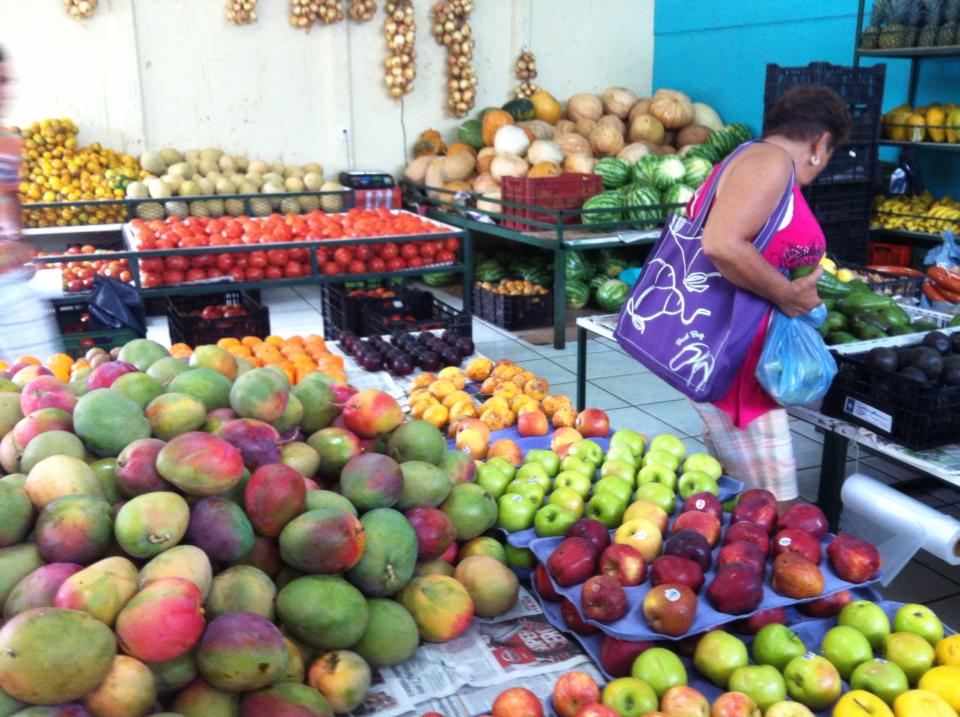 Costa Rica is a hotspot of global biodiversity, containing 5% to 6% of all estimated species life on Earth despite being only 51,100 sq km (19,730 sq mi), or 0.03% of the world’s landmass. Bordered by Nicaragua and Panama, it in fact ranks third among the smallest countries in Central America, leaving the country little to work with.
Costa Rica was traditionally an agrarian export-based economy, supplying coffee, bananas and cocoa to countries around the world. However, from private-public industry diversification and policy adaptation leveraging Free Trade Zones, it is now has become one of Latin America’s largest high-value services and high-tech manufacturing providers. In short, Costa Rica is very different from the narrative one might expect. It is a modernized powerhouse, featuring growing population density, declining birth rates, steady immigration inflow and a population overwhelmingly concentrated in urban areas. It is a competitive high-income economy, particularly stark as the only OECD country in Central America, concentrated into a small biodiverse and climate-prone geographic area.
The same is true of food systems in Costa Rica. With all these factors at play, Costa Rica has faced a difficult task in achieving a robust and interconnected network of farm to fork food production and distribution in its food systems. However, rejecting assumptions once more, Costa Rica has continued to rise above expectations in developing globally-leading food system strategies.
Food Insecurity Solutions for Underserved Communities
Despite Costa Rica’s high-income status, many households still experience strong impacts from poverty. About 18% of households across the country lived in poverty in 2024, with an additional 4.8% living in extreme poverty conditions. Economic inequality has also increased according to measures of Costa Rica’s Gini coefficient (a figure which evaluates wealth distribution among a population), made even more starkly apparent by almost a third of all Costa Rican children experiencing poverty or extreme poverty conditions.
The country has worked heavily to expand food accessibility to more rural communities through the national initiative “Empowering Communities in Sustainable Agri-food Systems,” a program that the SDG Fund and UNICEF and the Scaling Up Nutrition (SUN) Movement supported. Costa Rica’s Ministry of Health found that food insecurity in 2020 impacted 11.76% and 22.65% of households in the cities of Buenos Aires and Guatuso respectively. Efforts have therefore been especially focused on working to assist these hard-hit cities and rural communities surrounding them, in addition to reducing overall food insecurity from a national average of 16.42% of Costa Ricans without clear or quality food.
Community and Government Coordination
Multisectoral partnerships among government and community bodies are have also been a key focus of the SUN Movement, with agencies responsible for agriculture and health working alongside local governments and community organizations to create more realistic and community-centered approaches to nutrition awareness.
The SUN Movement’s efforts have trained more than 180 Costa Ricans in nutrition-awareness activities through the SUN Movement’s efforts. SUN has additionally been effective in helping to integrate integrating community-led food strategies into formal national policy, revitalizing the national food and nutrition body Secretaria de la Politica Nacional de Alimentacion y Nutricion (SEPAN) and aiding EU4SUN and Universidad EARTH to expand early childhood nutritional access and integrate Mesoamerican farming traditions into the National Plan for Sustainable and Healthy Gastronomy. Ultimately, the initiative hopes to improve agri-food system governance, sustainable production practices and Costa Rican eating habits with strategies encompassing the often-overlooked role of women, children and indigenous peoples in creating change.
Affordability and Accessibility Policy Problems
Some have still raised concerns regarding the affordability of nutrition, however, even as the Costa Rican government works to meet the United Nation (UN)’s 2030 Agenda for Sustainable Development Goals (SDGs). A 2024 UN report on the State of Food Security and Nutrition in the World found that an average healthy diet in Costa Rica costs $4.56 per day, 60 cents higher than the worldwide average. Costa Rica also features some of the highest rates of obesity in Central America due to cheap and accessible modern ultra-processed foods, underscoring the complex web of challenges Costa Rica faces in ensuring not just food access but complete quality nutrition in its food systems.
To address these issues, Costa Rica has tried innovative new approaches. In 2023, the Costa Rican government implemented a value-added tax (VAT) on food with explicitly defined positive nutritional content, becoming the first country in the world to attempt basic tax basket reform meant to encourage more balanced dietary improvements. While not entirely successful, the 2023 VAT and its subsequent 2024 amendments represent a conscious and continuous effort to address longstanding nutritional issues in the country, especially for lower-income populations more highly affected by incomplete food systems.
Costa Rica’s Robust Environmental Sustainability Efforts
Even while addressing affordability, nutritional program implementation and economic shifts away from agriculture in its food systems, Costa Rica is notably still conscious of environmental sustainability. Given the country’s diverse topography and biological life and its high concentration of volcanic sites, Costa Rica has historically been a global leader in leading environmentally sustainable climate action, despite even with agriculture accounting for more than a third of the country’s land use and a seventh of its overall employment.
Several plans, namely Costa Rica’s National Climate Change Adaptation Policy (2018-2030), National Development Plan (2019-2022) and National Decarbonization Plan (2018-2050), present the country’s ecological and environmental adaptation and carbon neutrality ambitions. Costa Rica has also developed national low-emission livestock, coffee and banana production strategies, export industries which the country still relies on heavily. It has involved significant partnerships, most notably SCALA, or Scaling up Climate Ambition on Land Use and Agriculture, a 2020-2028 joint initiative by the UNDP Climate Change Adaptation and the Food and Agriculture Organization to develop low-carbon farming systems for the country’s beef and coffee sectors.
In addition, Costa Rica has innovated sustainable direct interventions to great success. The Payment for Ecosystem Services (PES) program of 1997, which provided financial incentives to landowners to protect forested area, has resulted in a net negative to deforestation countrywide. Digital traceability has been improved by a $120 million initiative to modernize 10,500 small and medium agricultural producers, allowing for digital registration systems and food-tracking networks. Methods like crop rotation, companion planting and natural repellents, polyculture planting and indigenous natural nutrient cycling have all been practical strategies advocated for long-term sustainable farming.
An Optimistic Food System Future
Costa Rica’s food system combines an urbanized population and a strong agricultural export economy with ambitious sustainability goals. Despite challenges in rural food insecurity, nutritional accessibility and climate and environmental concerns, the country has managed to develop strategies focused on creating a more sustainable, healthy and resilient food system that supports both people and ecosystems. With a clear commitment to using community, policy and environmental solutions to drive change, Costa Rica appears well-suited to solving its food system shortfalls with a variety of effective and concrete means.
– Matthew Hecomovich
Matthew is based in Santa Clara, CA, USA and focuses on Good News and Technology for The Borgen Project.
Photo: Wikimedia Commons
