Improved Food Security in the Sahel
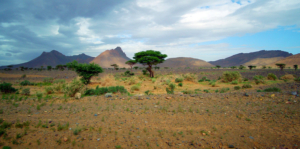 The Sahel and Sub-Saharan Africa are grappling with severe challenges, including poverty, food insecurity and the impacts of the changing climate. More than 300 million individuals endure chronic hunger, as agricultural systems struggle under soil degradation, unpredictable rainfall patterns and excessive dependence on basic staple crops. Launched in 2023 by the U.S. Department of State alongside the African Union and the Food and Agriculture Organization (FAO), the Vision for Adapted Crops and Soils (VACS) serves as a framework to bolster food systems through an emphasis on crops resilient to climate change and eco-friendly soil practices.
VACS addresses the demand for varied, nutrient-packed farming that can endure ecological disruptions while enhancing livelihoods in rural areas. The program highlights “opportunity crops” — resilient yet underused varieties such as millets, sorghum and cowpeas — alongside efforts to rehabilitate depleted soils. This evidence-based approach seeks to interrupt ongoing patterns of poverty and malnutrition across the region. By combining climate adaptation strategies, nutritional safeguards and farmer empowerment, VACS delivers a roadmap for enduring agricultural progress in at-risk populations, ultimately contributing to improved food security in the Sahel.
Exploring the VACS Initiative
VACS functions as a multilateral trust fund integrated within the International Fund for Agricultural Development’s (IFAD) Rural Resilience Program (2RP). It consolidates climate financing, adaptation resources and development funds into a comprehensive strategy designed specifically for small-scale farmers. Four primary strategies guide VACS:
First, the promotion of crop diversity to enhance climate resilience addresses Africa’s dependence on a limited range of staple crops such as maize, rice and wheat, which are susceptible to environmental stress. VACS advocates for cultivating underutilized indigenous crops such as fonio and teff, which thrive in arid conditions and offer strong nutritional benefits. Although research and policy have historically neglected these crops, they hold significant potential for improving food security in the Sahel.
Second, restoring soils and adopting sustainable land management practices address Africa’s widespread soil erosion challenges. More than 65% of the continent’s soils are degraded, leading to productivity declines of up to 30%.
VACS supports restorative practices such as conservation agriculture, agroforestry and the use of natural soil amendments to enhance water retention, nutrient content and long-term sustainability.
Third, empowering farmers and establishing knowledge networks ensures that smallholders have access to essential resources and education for climate-smart agriculture. VACS strengthens community-based seed systems, provides training on climate-adaptive farming techniques and improves financial access, facilitating transitions to more resilient agricultural practices.
Finally, developing markets for opportunity crops ensures economic incentives for farmers to cultivate adapted varieties. By connecting smallholders with buyers such as school meal programs and expanding access to local and international markets, VACS enhances income stability and promotes economic growth in rural areas.
VACS’s Impact on Breaking Cycles of Poverty and Hunger
In the Sahel and Sub-Saharan Africa, food systems remain trapped in a damaging cycle: environmental disruptions reduce harvests, triggering shortages, undernutrition and financial instability. VACS intervenes by targeting the underlying sources of fragility. Nearly 40% of Sahelian children experience micronutrient deficiencies stemming from diets high in calories but low in nutrients.
VACS emphasizes nutrient-rich crops such as amaranth and pigeon peas, which provide iron, zinc and protein. Through diet diversification, the program addresses stunting, anemia and malnutrition, particularly among women and youth, contributing to improved food security in the Sahel.
Projections indicate that without intervention, climate change could reduce crop outputs by 20% by 2050.
VACS’s resilient crops, including drought-resistant sorghum and heat-tolerant millets, help shield smallholders from irregular weather. In Niger, where drought-prone rain-dependent farming prevails, those using mixed cropping have maintained consistent yields amid worsening climate conditions.
VACS also strengthens economic resilience by creating equitable supply chains for opportunity crops. The fonio supply network in West Africa, supported by entities such as Yolélé Foods, has generated employment, increased farmer earnings by as much as 30% and opened new export opportunities.
Soil health remains central to VACS’s strategy. Degraded soils reduce yields while worsening water scarcity and emissions. Through comprehensive soil nutrient strategies, including organic composting and eco-farming methods, VACS has demonstrated yield increases of up to 28% in pilot areas such as Ethiopia, further supporting food security in the Sahel.
Tools for digital soil analysis further support targeted farming by aligning actions with specific locations for optimal results.
Advancing VACS: Key Policies and Future Directions
Realizing VACS’s full potential requires coordinated action among governments, aid organizations and commercial entities. Increasing investment in climate-resilient agriculture remains essential. Currently, just 1.7% of global climate funding benefits smallholder farmers, limiting access to critical resources needed for sustainable practices.
Governments and international contributors should prioritize VACS-compatible initiatives in agricultural budgets and climate adaptation funds. Strengthening seed systems and advisory services will also accelerate adoption. Many opportunity crops lack improved seed varieties due to prolonged underfunding in crop research. Expanding research and development, alongside digital-based farmer education and collaborative learning, will help address this gap.
Emphasizing fair land tenure and gender equity remains vital. Women manage approximately 60% of African farms but often lack secure land rights, which restricts investment in long-term soil care. Legal reforms supporting equitable land ownership and targeted initiatives for women farmers are key to VACS’s success.
Private-sector involvement is also a key to success. Incentives such as tax reductions, subsidies and public-private partnerships can spur investment in processing and marketing opportunity crops. Examples such as Kenya’s “Super Porridge” program, which incorporates nutrient-rich crops into school meals, demonstrate how consumer demand can drive broader adoption.</span>
Embedding VACS within broader regional climate strategies will further amplify its impact. Alignment with initiatives such as the Great Green Wall and the African Union’s Agenda 2063 can strengthen collaboration on ecosystem restoration, nutrition security and poverty reduction, advancing food security in the Sahel.
Looking Ahead
VACS extends beyond technical fixes and represents a shift in agricultural development for climate-vulnerable regions. By integrating scientific research, policy coordination and community-driven action, the initiative outlines a pathway to disrupt cycles of poverty and hunger. With sustained commitment from governments, farmers and partners, VACS has the potential to strengthen resilience, improve nutrition and support long-term livelihoods across the Sahel and Sub-Saharan Africa.
– Christopher Pellant
Christopher is based in Evansville, IN, USA and focuses on Technology and Global Health for The Borgen Project.
Photo: Flickr
