Energy Storage and Flow Batteries in Africa
 Nations across the African continent are developing renewable energy projects at an impressive pace. With some of the world’s best solar exposure, the continent is harnessing the sun’s potential through large-scale solar farms. This paves the way for cleaner air, sustainable industrialization and new economic opportunities.
However, a fundamental challenge has long constrained this progress. Solar panels only generate electricity when the sun is shining. This limitation means power can be unreliable for a hospital, school or business. Such an inconsistency has traditionally tethered grids to expensive, polluting fossil fuels and hindered the ultimate goal of true energy independence.
To capture the full benefits of the sun, the continent has to invest in a crucial parallel technology: energy storage. Fortunately, in 2025, this is not a secret and several African countries have now pledged gigawatts of storage in the near term.
A Surge in Battery Deployment
According to the African Solar Industry Association, operational energy storage in Africa skyrocketed from 31 megawatt-hours in 2017 to an estimated 1,600 megawatt-hours in 2024. This growth is driven by falling battery costs and a clear understanding that storage is the key to unlocking the full value of renewables.
In 2024, South Africa brought one of the world’s largest solar-and-battery projects online. The Kenhardt hybrid complex in the Northern Cape combines 540 megawatts of solar with a 225-megawatt, 1,140-megawatt-hour battery system, delivering reliable clean energy to the grid and strengthening power supply for industries, including mining.
Energy Sovereignty as a Path to Development
The foundation of energy sovereignty is the ability to generate, store and deploy energy locally. More than just energy independence, sovereignty is the right and ability of a nation to define its energy policies, control its resources and ensure that its energy systems are designed to meet the specific needs of its people. Today, battery storage empowers nations to build resilient, decentralized systems that are owned and operated by Africans, for Africans. This shift is a direct pathway to systemic poverty reduction.
Consistent electricity creates tangible benefits across society. It allows children to study after dark, improving educational outcomes. It enables health clinics to refrigerate vaccines and power essential medical equipment, saving lives. It empowers small businesses to operate machinery, access digital markets and create local jobs.
Furthermore, countries can capture even more economic value by developing domestic supply chains for these technologies. An example is South Africa’s initiative to manufacture batteries locally using its vast vanadium reserves. This creates high-skill jobs in manufacturing and engineering instead of simply exporting raw materials, fostering sustainable and equitable development.
Using Flow Batteries in Africa
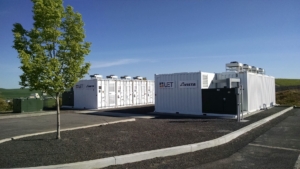
Technological breakthroughs are making the future of energy storage in Africa even more attainable. While lithium-ion batteries have led the charge, next-generation technologies suited for African climates are emerging. Vanadium redox flow batteries, for example, are gaining significant traction in Africa. Unlike solid-state batteries, these batteries use two tanks of a vanadium electrolyte solution to store and release charge. This design means they do not degrade over thousands of cycles. Additionally, they have an operational lifespan of more than 20 years and pose virtually no fire risk, making them exceptionally safe and durable.
Such characteristics make flow batteries ideal for many African renewable energy sites, often with hot and remote conditions. Alongside these systems, innovations in chemistries like sodium-ion promise to drive down costs even further by eliminating the need for expensive and environmentally complex minerals like cobalt and lithium. These are not advancements of the far future, either, only validated on paper. They are currently in production phases.
With this future coming fast, Africa is proving through strategic energy storage development that they are ready to generate and hold onto the benefits of a green future.
– Levi Ravnsborg
Levi is based in Summerland, BC, Canada and focuses on Technology and Solutions for The Borgen Project.
Photo: Wikimedia Commons
