How Can $4 Billion Help Education in Underdeveloped Countries?
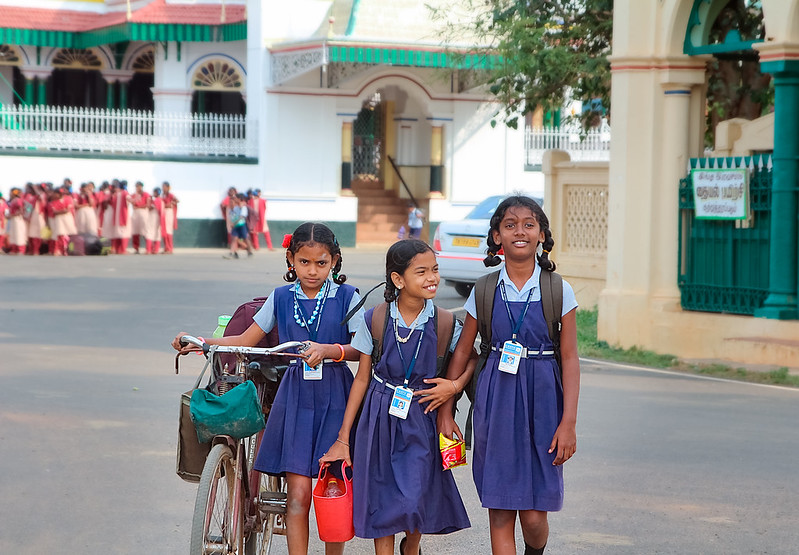 The 2021 Global Education Summit raised more than $4 billion for the Global Partnership for Education (GPE) and 19 world governments pledged to allocate a minimum of 20% of their budgets to education. The GPE provides for education in 90 countries and territories, aiming to raise “at least $5 billion over the next five years.” Reaching this goal will allow education in underdeveloped countries to thrive, safeguarding the education of 175 million children and enabling the learning of 88 million additional children by 2025.
The Importance of Education
In developing countries, there is a significant gap in learning and schooling. Roughly 53% of all children in these countries “cannot read and understand a short story by the time they” complete primary education. This rate of learning poverty could potentially rise to 63% without immediate global action. However, despite these statistics, more children are in school globally than ever before.
Equality in education is critical for the development of individuals and societies. Education in underdeveloped countries helps assist with poverty reduction, improving health and gender equality. With education, more people will be able to secure higher-paying, skilled employment and health outcomes will improve across nations. With more girls in school, the rate of global child marriage will reduce.
In the wake of the COVID-19 pandemic, education is suffering, but the United States commits to efforts to improve education for all.
How the United States is Helping
In the past, although the U.S. has made efforts to advance global education, considering its status as a global powerhouse, many view these efforts as insufficient. Realizing the need for improvement, the U.S. is advancing its focus on education in underdeveloped countries.
At the recent Global Education Summit, the United States pledged $305 million to the GPE for 2021. The Let Girls Learn Initiative was started in 2015 by former President Obama and First Lady Michelle Obama. The initiative invested millions of dollars while partnering with the private sector to improve education for girls in more than 50 countries.
On Sep. 8, 2017, the Reinforcing Education Accountability in Development (READ) Act was signed into law. The Act ensures that the United States uses its resources to improve global education through programs focusing on literacy skills, mathematics and basic fundamental skills.
The International Basic Education Caucus was launched in 2015 with the ultimate goal of alleviating global poverty through education. Congressman Dave Reichert and Congressman Mike Quigley began this bipartisan caucus with the belief that education is the unrivaled way to promote freedom, peace and stability around the world.
When the United States invests in worldwide learning, it brings benefits not only for other countries but for the U.S. as well. Education can improve global and national security and it can contribute to better global health while providing more economic safety.
What Does This Mean for Poverty?
Education not only provides children with the necessary tools to learn and develop but also has significant impacts on poverty. Education paves the road to successful careers, allowing individuals to earn an income and break cycles of poverty.
Each additional year of education an individual receives provides “a 9% increase in hourly earnings.” This increase in earnings allows an individual to contribute more to the economy, affecting entire societies as health improves and others are inspired to look to education to provide a brighter future.
The recent contribution of more than $4 billion toward global education is one major step toward ending poverty. Advancing education in underdeveloped countries will lead to immense progress in countries around the world by breaking cycles of poverty.
– Delaney Gilmore
Photo: Flickr
