• Link to X
  • Link to Facebook
  • Link to Instagram
  • Link to TikTok
  • Link to Youtube
  • About
    • About Us
      • President
      • Board of Directors
      • Board of Advisors
      • Financials
      • Our Methodology
      • Success Tracker
      • Contact
  • Act Now
    • 30 Ways to Help
      • Email Congress
      • Call Congress
      • Volunteer
      • Courses & Certificates
      • Be a Donor
    • Internships
      • In-Office Internships
      • Remote Internships
    • Legislation
      • Politics 101
  • The Blog
  • The Podcast
  • Magazine
  • Donate
  • Click to open the search input field Click to open the search input field Search
  • Menu Menu
Blog - Latest News
Education, Global Poverty

Education in Costa Rica – A Progress Report
costa_rican_education
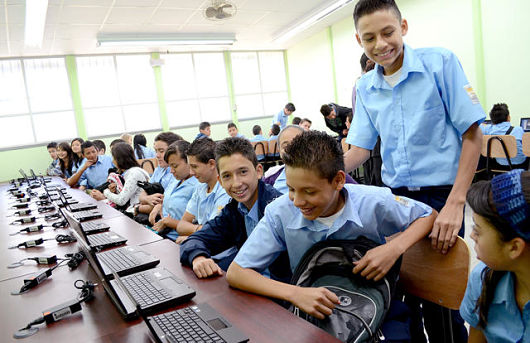
Education in Costa Rica has been a hot button topic for many years. In 1990, the country pledged to work toward the targets set out by Education for All (EFA) under the direction of UNESCO. EFA is used to help achieve UNESCO’s education goals of quality education for everyone and for education being a fundamental part of development.

During the first years of the initiative to improve the standards of education in Costa Rica, the country faced numerous challenges. Some of these challenges included students repeating class levels, high drop out rates, and limited training courses for teachers. In addition, it was found that the education system suffered from a lack of innovative, and passionate teachers.

Poverty has also had a significant impact on education in Costa Rica. Families where the parents have less than six years of education tended to have a lower income and their children usually did not finish school. This only perpetuated the cycle and government support was required to improve the system overall.

In addition, providing quality teachers has boosted education goals. The government pays education professionals more to attract young bright high school and college graduates to go into education. It encourages students to finish school and have a decent paying job, which helps break the low-level education and poverty cycle. There are training programs aimed to improve the quality of teachers as well.

In rural areas, there are special programs to compensate for the lack of teachers. There is a movement to bring technology in and have one computer per student. This way the students can complete high school with a quality education.

Currently, Costa Rica has a 93.6 percent rate for access to education. For youth literacy (ages 15-24) there is an average of 98 percent. Primary school attendance is about 96 percent of the youth population. Costa Rica has one of the highest literacy rates and school attendance in Latin America and South America.

– Katherine Hewitt

Sources: Costa Rica Gold Country, HDR, Social Progress Imperative, Tico Times, ASCOA
Photo: Tico Times

August 7, 2015
Share this entry
  • Share on Facebook
  • Share on X
  • Share on WhatsApp
  • Share on Pinterest
  • Share on LinkedIn
  • Share on Tumblr
  • Share on Vk
  • Share on Reddit
  • Share by Mail
https://borgenproject.org/wp-content/uploads/borgen-project-logo.svg 0 0 Borgen Project https://borgenproject.org/wp-content/uploads/borgen-project-logo.svg Borgen Project2015-08-07 01:30:052020-02-28 08:55:16Education in Costa Rica – A Progress Report

Get Smarter

  • Global Poverty 101
  • Global Poverty… The Good News
  • Global Poverty & U.S. Jobs
  • Global Poverty and National Security
  • Innovative Solutions to Poverty
  • Global Poverty & Aid FAQ’s
Search Search

Take Action

  • Call Congress
  • Email Congress
  • Donate
  • 30 Ways to Help
  • Volunteer Ops
  • Internships
  • Courses & Certificates
  • The Podcast
Borgen Project

“The Borgen Project is an incredible nonprofit organization that is addressing poverty and hunger and working towards ending them.”

-The Huffington Post

Inside The Borgen Project

  • Contact
  • About
  • Financials
  • President
  • Board of Directors
  • Board of Advisors

International Links

  • UK Email Parliament
  • UK Donate
  • Canada Email Parliament

Get Smarter

  • Global Poverty 101
  • Global Poverty… The Good News
  • Global Poverty & U.S. Jobs
  • Global Poverty and National Security
  • Innovative Solutions to Poverty
  • Global Poverty & Aid FAQ’s

Ways to Help

  • Call Congress
  • Email Congress
  • Donate
  • 30 Ways to Help
  • Volunteer Ops
  • Internships
  • Courses & Certificates
  • The Podcast
Link to: Facts About Poverty in Kenya Link to: Facts About Poverty in Kenya Facts About Poverty in Kenya Link to: Save the Children: Healing Through Art Link to: Save the Children: Healing Through Art Save the Children: Healing Through Art
Scroll to top Scroll to top Scroll to top