Eco-Art: From Trash to Treasure
Eco-art, also known as contemporary environmental art, is art that is concerned with local and global environmental situations. It strives to strengthen human relationships with the natural world by expressing the development of new, creative ways for humans to co-exist with nature.
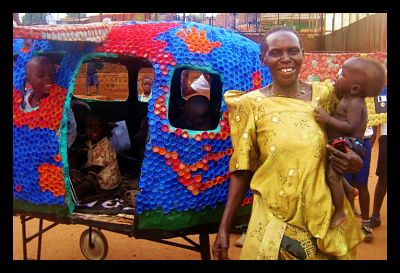
In the context of Ugandan artist Ruganzu Bruno’s newly-constructed amusement park, eco-art takes on two purposes. The 30-year-old artist and community organizer found a way to handle Kampala’s Kireka neighborhood’s acute waste management problem while engaging and empowering children through the act of play. Using a variety of recycled materials collected by the community, Bruno and his team constructed this amusement park for the children living in Kampala’s congested slums. Completed last September, the eco-park contains a myriad of exciting structures that include recycled swings and life-size board games made from plastic bottles.
However, according to Bruno, the value in the amusement park comes not only from the park itself but also from the lessons it will continue to teach the people of Kireka for generations to come. In what Bruno hopes to be an important step toward sustainability, the children and parents were taught how to make repairs to the park during its construction. Bruno, who was orphaned as a child, places particular importance upon the positive impact on children’s education that the new project promises to keep bringing.
“The attention of children in class is improved; the number of children who are dropping out [is falling] because now they have something to keep them busy there,” Bruno says, adding that the project is helping students to express themselves.
Four years ago, when Bruno was still a student at the Kyambogo University Fine Arts School, the personal goals for his work evolved from mere self-expression to wanting to make a positive impact on his community. He teamed up with a few of his fellow eco-artists to create “The Hand That Speaks,” a gigantic structure made of recycled materials in the shape of a hand. This was the first of its kind in Kampala. It was intended to serve as a reminder of how human hands can impact the environment in negative and positive ways; the same hand that throws garbage on the ground can also collect it.
The next year, in 2010, Bruno founded Eco Art Uganda, a collective of artists dedicated to the promotion of environmental awareness within their communities. They focus on transforming any waste they find – from broken electronics to scrap metal – into functional art that inspires changes in attitudes toward the environment. In April of last year, Bruno was awarded the world’s first City 2.0 Award at the TEDx summit in Doha, Qatar for the eco-park project. Currently, he is using the $10,000 prize money to fund a loan program designed to help local eco-artists in Kireka. In a continuing effort to serve his community’s needs, the young artist’s goal is to recreate “as many as 100” new eco-parks in Uganda.
Bruno’s community work is just one example of how eco-art is helping to engage communities all over the world while also keeping them clean and litter-free. The functional form of art is a promising step toward alleviating two of the world’s biggest problems; the disenchantment of the developing world’s youth and the litter that surrounds them.
– Kathryn Cassibry
Source: CNN
Photo: Ruganzu Bruno
