Displacement in Asia as Natural Disasters Sweep the Continent
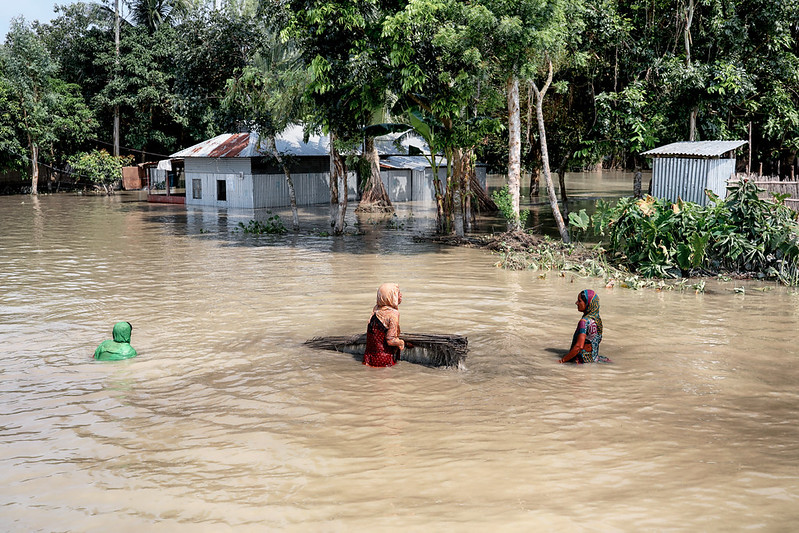 In 2025, a series of extreme weather events swept through the eastern hemisphere, causing widespread displacement in Asia. Hundreds of families and refugees are unhoused or experience forced displacement from floods or sudden land erosion, leading many to lose food resources when livestock and crops are adversely affected by the damage.
Sri Lanka, Bangladesh, and Thailand are a few of the many countries with a rising number of people who are struggle with displacement in Asia because of natural disasters. Hundreds have died or gone missing after getting trapped by the elements, blocking them inside the villages they live. Increasing water levels and blockages from large boulders or mud cause houses to get submerged by the aftermath of a mudslide.
Local government shelters provide temporary housing for the unhoused populations, including residents living along the Kelani River in Sri Lanka, northern Kurigram, Bangladesh, and even in Diourbel, Senegal.
Sri Lanka
During the monsoon season, Sri Lanka experienced damage from mudslides and floods, causing forced displacement and homelessness. According to the BBC, the Disaster Management Centre reported that, with the destruction of 20,000 homes due to severe natural disasters, 108,000 people had to relocate to temporary shelters.
The island is still recovering from the devastation of Cyclone Ditwah, which left a portion of the country without access to water or power, resulting in emergency evacuations.
Since it is monsoon season in Sri Lanka, the effects of intense weather and the changing climate are having adverse effects. These deadly floods have not only killed hundreds of people, but these disasters impacted Indonesia, as well as Thailand and Malaysia, with a high number of deaths in Kandy and Badulla, Sri Lanka.
Consequently, the latest natural disasters are the worst in Sri Lanka’s history, making it challenging to rebuild. However, resources are limited, forcing the Sri Lankan government to resort to sending an appeal for international aid and encouraging residents to raise money for struggling communities. Saman Kumara from the Badulla village of Maspanna shared his experience with the BBC via telephone, saying, “We lost two people in our village… others are sheltering in a temple and a house that is still standing. There is no food, and we are running out of clean water.”
Bangladesh
In certain parts of Bangladesh, the collapse of riverbanks continues to erode land each year. Hundreds of families and refugees face dispdue todisplacement from sudden land erosion, leading many to lose food resources when livestock and crops face damages. Data from the World Bank reveals that one in seven Bangladeshis face displacement due to severe natural disasters by 2050.
Extreme weather events, such as monsoons and melting glaciers, destroy land near rivers. Displacement affects families suffering from the loss of vital resources.
Despite these hardships, Bangladesh invests heavily in the country’s infrastructure. Modern preventive measures include the addition of embankments, quality storm forecasting, and modifications that focus on supporting communities, Reuters reports.
In addition, communities in Kheyar Alga Char, Bangladesh, were able to continue living in their homes. This was possible because community groups collaborated to implement resistant materials, including Geobags that reinforce the stability of riverbanks. Local NGOs are assisting with rebuilding villages by constructing homes raised above ground, keeping water out. In an Interview with Reuters, Johurul Islam lost his home multiple times before relocating to benefit from the modern infrastructure in Kheyar Alga Char, Bangladesh. Islam said, “Geobags have made a huge difference. For the last three years, the river did not take our land. For the first time, I feel a little confident about the future.”
Refugees
Since 2010, refugees from Bangladesh and Senegal have been fleeing from repeated storms and flooding, making parts of these regions uninhabitable. Ultimately, this pressures displaced migrants to seek asylum in other countries to avoid displacement in Asia. Reporting from The Guardian found that displaced people from Feni, Bangladesh and Diourbel, Senegal, struggled with environmental destruction, causing more than 237,000 asylum seekers to find emergency shelter in New York City since April 2022.
Severe weather storms destroyed homes and the vitality of crops in the western and central regions of Senegal. Columbia Journalism Investigations notes that more than 1,800 displaced Senegalese migrants fled an aggressive series of storms between 2019 and 2024.
Felipe Navarro, Associate Director of Policy and Advocacy for the Center for Gender and Refugee Studies at the University of California’s College of the Law, explains how Irreparable damage, in combination with inefficient government responses to hurricanes and floods, force people to leave. While some residents, like Mohamed’s family from Diourbel in Senegal, were able to minimize the damage themselves. According to The Guardian, Mohamed’s brother a teacher living in Senegal, built a house with a solid foundation constructed using sand, gravel, and cement, preventing water from flooding the home.
The Path Forward
Within Asia, some countries are predisposed to cycles of floods and storms, benefiting from UNICEF’s programs and partners. These programs provide preventative treatments, such as vaccines given to children to protect them from diseases. Providing malnutrition intervention to improve health. Emergency hygiene materials and equipment, shielding children from severe weather conditions, has also assisted in preserving the lives of children in South Asian countries.
Although UNICEF directs its services towards children, there have been expansions to support families and communities that suffer from climate-related emergencies. UNICEF partners with donors, governments, and civil society groups to continue reducing the number of displaced in Asia.
Advancing services to support vulnerable populations is UNICEF’s priority, while its efforts assist displaced children and families by preserving lives and reducing displacement in Asia.
– Lala McCullough
Lala is based in Brentwood, CA, USA and focuses on Good News for The Borgen Project.
Photo: Flickr
