Disability and Poverty in Tuvalu
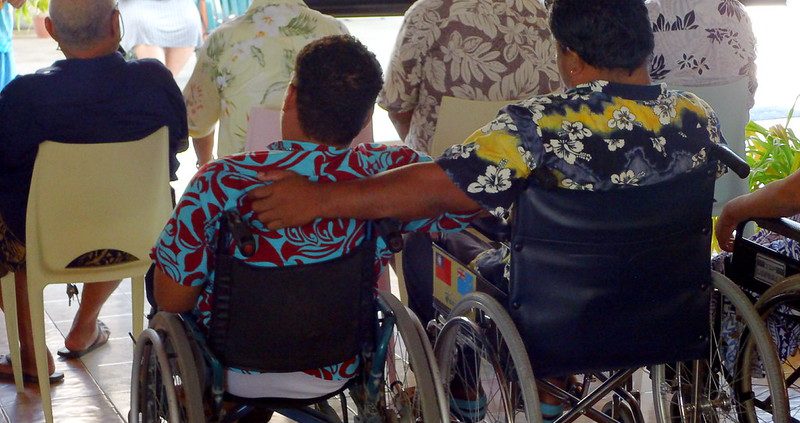 According to a 2018 study by PacificData.org, 466 people in Tuvalu live with a disability. With little accessibility around the islands and in workplaces, many of these individuals tragically fall into disability poverty. Here is more information about disability and poverty in Tuvalu.
About Tuvalu
Tuvalu is a collection of small South Pacific islands with a population of approximately 11,500 people. It is a developing nation but is full of coconut trees, which provide the country’s main export.
Formally a British colony, Tuvalu’s population significantly diminished in the mid-nineteenth century from 20,000 to a mere 3,000. Multiple factors affected this shift, but most notably: the severe European enslavement of Tuvaluan people (more than half the population by 1863) and diseases brought over from Europe.
The islands were named the Ellice Islands in 1819 after a British MP who travelled there. However, after gaining independence from Britain in 1975, the islands were renamed Tuvalu, meaning ‘eight standing together’ in reference to the eight islands that made up the country, with a ninth later being included as part of the state as well.
Disability Poverty in Tuvalu Today
Life can be tough in Tuvalu; as a small nation with little foreign trade, work is scarce. A Tuvaluan may work in the agricultural or farming industries to make use of the country’s natural resources; however, this type of work typically involves hard labor, which further limits career opportunities for people with physical disabilities.
People like Sinkiagi Taulamati (a former carpenter) had to give up work in the wake of amputation surgery. In a 2021 interview with the United Nations Development Programme (UNDP), Taulamati noted that thereafter, he struggled to provide for his family as there were no other suitable work opportunities for him.
Welfare for Disabled Tuvaluans
In 2015, Tuvalu introduced the ‘Disability Support Scheme’ for those struggling in disability poverty. This was a welfare benefit scheme for disabled Tuvaluans which provided money for people who could not work due to their disability. However, access to this benefit was extremely limited, only including the congenitally disabled (from birth) and paralyzed people.
This act excluded disabilities that developed later in life, including amputees such as Sinkiagi Taulamati. Although Tuvalu amended it the following year, Pacific Data found that only eighty-seven people were receiving the benefit in 2018.
Progress for Disabled Tuvaluans
Despite little government intervention, the Tuvaluan people have not given up on those living in disability poverty. In 2009, the first and only non-government organization in aid of disabled people in the country originated.
Fusi Alofa Association (FAA) advocates for disabled welfare in Tuvalu through lobbying activities in an effort to draw attention to the difficulties faced by disabled Tuvaluans, such as poverty, inaccessibility around the islands and education.
While the FAA remains the only organization of its kind in Tuvalu, it has amassed support from the Commonwealth Foundation, which has provided funding that allows the organization to flourish in its mission to stand up for disabled Tuvaluans.
In 2017, partnering with the Australian government, the FAA conducted a study to provide important data on disability and poverty in Tuvalu. This study not only demonstrated that a great deal of disabled Tuvaluans live in poverty but the FAA ensured jobs for disabled people like Taupaka Uatea, through the project, who worked as an FAA researcher.
Looking Ahead
Although disability poverty remains an issue in Tuvalu, the FAA has helped to provide work for disabled individuals as well as conduct surveys that accurately demonstrate the widespread problem and raise awareness of the difficulties that disabled Tuvaluans face.
– Lisa Jane Bryant
Lisa is based in Glasgow, Scotland and focuses on Good News and Global Health for The Borgen Project.
Photo: Flickr
