Fighting Climate-Driven Poverty in Mexico
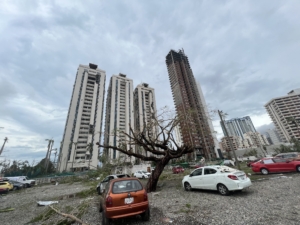 In Mexico, 36.3% of the population lives in poverty and is unable to earn the bare minimum income to afford to feed their families. However, this number has fallen drastically over the years. This promising progress has been accomplished through programs, including government welfare and raising the minimum wage.
Nonetheless, significant progress still needs to be made, especially in rural areas, where more than 40% of the population lives in poverty. For many of these communities, the economy is based on agriculture. In recent years, this source of income has been increasingly unstable as climate emergencies disrupt weather patterns.
Shifting Weather Patterns
In Mexico’s Yucatán state, the rainy season once began “roughly the same week every year… like clockwork,” said Dr. Ken Seligson, an anthropology professor at California State University, Dominguez Hills and an archaeologist based in Yucatán, in an interview with The Borgen Project.
With shifting weather patterns, the rainy season is much more unpredictable, affecting the livelihoods of subsistence farmers who need to optimize their schedules for planting crops. When their farms have lower yields, they are forced to pick up extra jobs, not to supplement their incomes, but to be able to put food on the table.
Climate-driven poverty in Mexico uproots routine. According to Seligson, this instability sparks desperation, forcing Mexican farmers with no choice but their last resort: “leaving their homes, going to the larger cities and seeking employment in the service industry.”
Low Water Supply
Seligson excavated an archaeological site in the hilly Puuc region in Yucatan, where groundwater only exists hundreds of feet below ground. Thus, families in Puuc address the destructive effects of the changing climate on their lives by utilizing traditional Mayan methods like harvesting rainwater in cisterns.
Even when long-awaited rain finally arrives, it’s often still not enough. In Mexico City, 2025 has seen one of the rainiest Junes in recent history. Yet the water supply remains low, severely affecting the most underserved communities and forcing the general population to conserve before taps run dry.
The infrastructure, such as pipes, is heavily damaged and leaking, preventing the supply of precious water to those who need it. Plus, the effects of sudden precipitation can be more destructive than beneficial for farmers as land now unaccustomed to rain suddenly experiences a dramatic downpour.
Organizations Staving Off Disaster in Mexico
Global nonprofit CADENA works to fight the effects of climate-driven poverty in Mexico, particularly among people in Chiapas. The organization provides humanitarian aid, but beyond that, it proactively engages with communities to train Mexicans to respond to coming disasters.
Some of CADENA’s key accomplishments:
- Reconstructed the town of Miguel Hidalgo after multiple earthquakes destroyed hundreds of homes.
- Supported Mexican communities facing El Niño-related disasters by teaching irrigation and traditional water collection methods like rainwater harvesting. These efforts help reduce the risk of water-related conflict, even if they can’t reverse the effects of the climate crisis.
- Responded to Hurricane Otis in 2023, assisting with rebuilding thousands of homes after one of the most devastating storms in Mexico’s history.
Founded in 2007, the nonprofit Cantaro Azul ensures access to safe drinking water and sanitation in rural Mexico. In addition to its core mission, the organization has responded to several national crises, including:
- The 2007 floods in Tabasco
- The H1N1 epidemic in 2009–2010
- Earthquakes in 2017
- The 2019 migrant caravan arrivals
- The COVID-19 pandemic
During the COVID-19 pandemic, Cantaro Azul launched a public awareness campaign and distributed hand sanitizer to vulnerable communities. The nonprofit also installed dozens of public handwashing stations, known as Safe Water Systems, which used UV Pitcher technology to purify water on-site and promote hygiene in areas with limited infrastructure.
In the wake of Hurricane Otis and Hurricane John, UNESCO supported Mexico’s coastal communities by using its Heritage Emergency Fund to restore cultural and educational institutions. It restaffed the San Diego Fort Historical Museum, a public space for learning and celebrating local culture. By doing so, people affected by disasters can become more resilient despite the struggles they have overcome. UNESCO’s workshops also tackled sexual abuse, migrant inclusion and recovering from grief.
Final Remarks
Besides its detrimental impacts on the planet, changing climatic conditions ultimately drive human problems, especially poverty. Climate-driven poverty in Mexico only exacerbates the instability of employment opportunities while also causing water scarcity and along with that, many other issues. Climate resilience looks a little different for every community. However, each nation unites in the global fight to protect the environment and, most importantly, its people.
– Klara Jones
Klara is based in Los Angeles, CA, USA and focuses on Good News and Technology for The Borgen Project.
Photo: Wikimedia Commons
