Recycling Human Waste In Biochar to Diminish Fertilizer Shortage
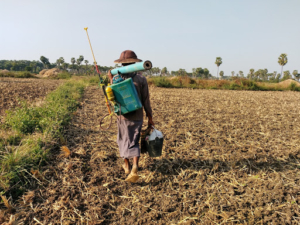 With farmers across the globe facing growing prices and increasing inaccessibility to fertilizer, labor representatives like the National Corn Growers Association (NCGA) have warned their public officials of said resource and distribution complications. Many farmers’ economic climate uncertainty is mainly rooted in geopolitical tensions. The availability of components such as phosphorus, potassium and nitrogen has reduced, increasing the price of the internationally manufactured fertilizers that farmers rely on.
Many farmers in developed nations such as China and the United States have been disproportionately affected by the current global trade crisis. In June 2024, China implemented new restrictions on fertilizer exports, including a significant reduction in urea exports by 83% compared to the previous year, solidifying the existing imbalance in the world’s trade economy. Many farmers in developing nations without access to Urea-Ammonium Nitrate (UAN) or other nitrogen-based fertilizers grapple with tighter supplies. They are forced to reevaluate spending as uncertainty rises.
Human Waste and Biochar: How it’s Manufactured
Morocco, Russia, China, the U.S. and Saudi Arabia are the five countries that dominate the phosphate market, in turn, steadily taking control of fertilizer accessibility to global trade partners. Although this economic system has been reliable in the past, depletion of attainable resources and market tensions have made agricultural production less feasible. However, new studies on agricultural advancements have emerged, bringing attention to an innovative solution to reducing fertilizer shortages.
While not the most flattering topic, human waste may be an international golden ticket to making fertilizer more accessible for farmers. Studies have shown that human excrements can be applied annually to 15% of phosphorus, 25% of potassium and 17% of nitrogen in biochar fertilizer. If acted on, biochar could begin mitigating agricultural failures in developing nations by introducing a more accessible way to obtain fertilizer.
Biochar fertilizer is a soil amendment made from heating organic solids (or even fluids) at very high temperatures with negligible oxygen, creating a fertilizer that improves soil structure. Although the biochar process converts only solids, nutrients taken from urine could be added. Compared to treated sewage, researchers can separate waste at the source from harmful microplastics, heavy metals, PFAS, pathogens and pharmaceuticals in biochar fertilizer. On top of the many beneficiaries, biochar can have its nutritional proportions altered depending on the needs of the individual crop, increasing its versatility across all types of farmland.
What it Could Lead to
Among the leading benefits for farmers and product growth in farmland, biochar is one of the most innovative solutions against climate instability caused by agriculture. As agriculture and related land use account for 25% of the world’s greenhouse gas emissions, biochar is starting to be considered a promising alternative to reducing this percentage.
Studies estimate that the process of manufacturing biochar removes up to 90% of human waste, improving the efficiency of transportation. In addition, the production acts as a carbon sink, removing its man-made excess from the atmosphere. As humanity faces an uncertain future in its relationship with ecological sustainability, taking the first steps toward a green transition, such as the global adoption of biochar fertilizer from human waste within a circular economy, can benefit countless communities.
– Sam Barbagallo
Sam is based in Tewksbury, MA, USA and focuses on Business and Technology for The Borgen Project.
Photo: Wikimedia Commons
