Working Without Pay: Aid Workers in Somalia
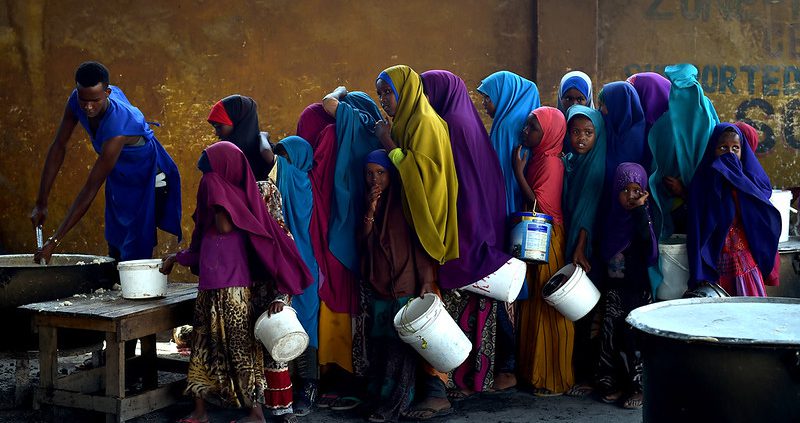 The Suuqa Xoolaha Center for Mothers and Children in southern Somalia, like many health facilities in the country, faced indefinite closure following the shuttering of the U.S. Agency for International Development (USAID) by the Trump administration in January 2025. Up until that point, the U.S. had been by far the largest international donor to Somalia, donating hundreds of millions each year, which were distributed through United Nations (U.N.) bodies like the World Food Programme (WFP) in addition to other nongovernmental organizations (NGOs). Much of this financial aid was used to fund health facilities and outposts run by international relief organizations like the United Nations Children’s Fund (UNICEF), located predominantly in the south of the country.
Desperate Times, Desperate Measures
When word spread of a young woman who had begun to give birth outside the doors of a shuttered health facility—before she was brought in by neighbors—the former employees of the Suuqa Xoolaha Center quickly sprang to action to reopen the hospital, despite now receiving no pay. Many of those interviewed at the hospital speak of protecting a sense of community in the area, one determined to survive notwithstanding the foreign aid system that can cause vital funds to dry up at a moment’s notice.
Pilgrimage in Vain
As the need for humanitarian aid becomes more urgent in Somalia, opportunities for relief continue to diminish. In a recent interview with The New York Times, Abdullahi Abdi Abdirahman states how he and his wife and their seven children walked for nine days from their drought-ravaged home toward Dollow, a town on the Ethiopian border, which until recently was an international relief outpost. When they arrived, they found tents—but no aid. The outpost at Dollow was one of many across Somalia that had not made the cut following the U.N.’s hyper-prioritization of resources in response to global aid cuts.
Yet Abdullahi’s family is just one example of the estimated 3.8 million Somalians who have been internally displaced due to factors including severe drought, floods, forced eviction and the country’s ongoing civil war. For many, these former aid outposts and facilities were a vital lifeline that provided food, water and medical assistance to the country’s most vulnerable people. Without them, UNICEF Executive Director Catherine Russell warns that almost 2 million children are at risk of acute malnutrition, with 205 of the former 800 health clinics that helped to treat malnutrition having been closed in the last year.
Aid Workers in Somalia Fighting the ‘Era of Indifference’
Kate Phillips-Barrasso, head of global advocacy at Mercy Corps, an American aid group that organizes global relief programs, states that we are living in the era of indifference. This is marked by the decision of many of the world’s wealthiest nations—principally the U.S., but also France, Germany and the United Kingdom (U.K.)—to backtrack on their former commitments to the world’s neediest. Yet where governments flounder, individuals often step forward. One such example is Abdulnasir Mohamed Farah, a 30-year-old teacher in a school previously operated within a UNICEF camp in Dollow. Despite the loss of funding, he and other aid workers in Somalia have stayed behind, working without pay. Mohamed Farah stays, primarily because his fingerprint unlocks a digital payment card provided by the WFP, which he uses to buy the meager daily meal of rice and beans for his students.
A Further Challenge
It remains to be seen how remaining aid workers in Somalia, already under significant pressure, will be further affected by the global economic consequences of the recent war in the Middle East. As the cost of food, fuel and fertilizer rise due to the prolonged closure of the Strait of Hormuz, aid workers will be forced to stretch already scarce resources even further to tend to the needs of the most vulnerable. Speaking from a stabilization center in Dollow, Russell warns of a situation whereby multiple crises continue to converge, with the global economic shock caused by the war in the Middle East further exacerbating the plight of Somalians experiencing displacement due to severe drought and ongoing conflict. Water costs, for example, have more than doubled recently in regions worst affected by drought. Somalia also relies on imports for 70% of its food, and many families who were already on the brink of acute food insecurity may have been pushed further into crisis by this latest shock. The WFP warns that an additional 45 million people globally could be confronting acute hunger as a result of the conflict in the Middle East. While individual heroics are by no means a substitute for a collapsing aid infrastructure, they do illustrate the willingness of ordinary people to spread themselves out and assume the sharpest edges of a burden imposed on them.
– Tomás Quinn
Tomás is based in Glasgow, UK and focuses on Global Health and Politics for The Borgen Project.
Photo: Flickr
